 Australian Politics
Wednesday, June 07, 2017
ZEG
In his latest offering, conservative Australian cartoonist ZEG rejects the view that we have to accept Muslim terrorism
Black madman gets off lightly
Looks like an African
A MAN who went on a violent rampage through a suburban shopping centre while affected by an undiagnosed mental illness will spend the next 32 months under close supervision.
On Wednesday, the Adelaide Magistrates Court imposed a mental health limiting term upon Baryea Billy, warning he would be taken into custody if he disobeyed its conditions.
Magistrate Maria Panagiotidis told Billy his unprovoked assault on six shoppers was “very serious offending” borne not of criminality, but illness.
“It’s clear that you behaved violently, but it’s also clear that was due to your mental condition,” she said.
“Now that your condition has been diagnosed and you are getting the treatment you need, I’m releasing you under licence.
CCTV footage from Baryea Billy’s attacks at the Regency Plaza shopping centre.
“You are being allowed to stay at home with your mother and family, and live your life, but you need to take your medication.
“If you don’t, the licence will be revoked and you will find yourself not at liberty and back in custody.”
Billy, 20, was found not guilty of multiple assault and violence offences over incidents in January and May last year.
The second of those incidents was the most serious — Billy assaulted six people at the Regency Plaza shopping centre.
He was recorded on CCTV dragging one man along the floor before inflicting a series of kicks, and assaulting a woman, before pizza bar owner Adam Lobb intervened.
Pizza shop owner Adam Lobb went to the aid of people attacked, in the Sefton Plaza Shopping Centre, by Baryea Billy. Picture: Bianca De Marchi.
Mr Lobb used his walking stick to fend Billy off, resulting in the younger man’s arrest.
In August, the court accepted a specialist’s “clear diagnosis of schizophrenia” and ruled Billy not guilty of the offences.
That left him subject to the imposition of a limiting term — a period under community mental health supervision equal to the jail term an unafflicted person would receive.
On Wednesday, the court heard Billy had spent four months in custody at Mount Gambier Prison and a further three months at the secure James Nash House mental health facility.
CCTV footage from Baryea Billy’s attacks at the Regency Plaza shopping centre.
He had been on home detention bail since his release from James Nash House, following diagnosis and stabilisation of his illness.
Prosecutors asked Billy receive the maximum 36-month limiting term, due to the seriousness of his conduct, and defence counsel agreed that was appropriate.
Ms Panagiotidis told Billy his actions had “particularly affected” those he had attacked.
“One of them was so frightened, her life has basically been put on hold now ... I will make it a condition of your licence that you are not to go back to that shopping centre,” she said.
“There are going to be very strict conditions — you will have to report to the Department of Community Corrections, take your medication and make appointments as required.”
She deducted four months from the maximum term to reflect his time in custody.
SOURCE
Big new coal mine starting up, despite Greenie threats
ADANI has given the green light for work to start on the $21 billion Carmichael coal mine in Queensland’s Galilee Basin but critics are already slamming the decision as a “stunt”.
After almost seven years of legal battles and delays, Adani’s chairman announced in a statement Tuesday he had signed off on the project.
“I am proud to announce the project has Final Investment Decision (FID) approval which marks the official start of one of the largest single infrastructure — and job-creating — developments in Australia’s recent history,” Gautam Adani said.
Pre-construction work on the project is expected to begin in the September quarter.
However, the Federal Government will still need to pass changes to the Native Title Act, and to make a decision on whether to provide a $1 billion concessional loan to the project.
It’s also unclear whether Adani has secured finance to build the mine.
Queensland Greens Senator Larissa Waters said the announcement was a “PR stunt to squeeze a $1 billion handout from Australian taxpayers”.
Adani is still waiting for a decision from the Northern Australia Infrastructure Facility on whether it will be granted a $1 billion concessional loan funded by taxpayers. The loan would help pay for a new 189 kilometre rail line to link the mine to the coal terminal at Abbot Point.
“This so-called final investment decision is meaningless, Adani is still broke, and 19 banks have refused to fund their deadly mega-coal mine,” Ms Waters said.
“Today’s announcement does not mean the mine will go ahead, it’s a grab for a $1 billion handout of public funds from the Northern Australia Infrastructure Facility.
“This is desperate PR stunt from a desperate company trying to squeeze even more freebies from their mates in Labor and the Liberal Nationals.”
The fight over the Adani mine has been described as “the environmental issue of our time” by former Greens leader Bob Brown, amid concerns the mine will contribute to climate change and hurt the Great Barrier Reef.
But Mr Adani hit out at environmental activists who have long challenged the project.
“We have been challenged by activists in the courts, in inner city streets, and even outside banks that have not even been approached to finance the project,” he said.
“We are still facing activists. But we are committed to this project.”
The company says the project will create 10,000 direct and indirect jobs, though opponents have challenged that claim.
If it goes ahead, the $21.7 billion Carmichael mine near Rockhampton will be one of the biggest in the world.
It will include six open-cut pits and five underground mines across an area five times the size of Sydney Harbour. Coal mined at the site will be sent to India via the waterfront coal terminal at Abbot Point.
The giant mine will generate so much extra coal, the terminal south of Townsville will need to be expanded to accommodate it.
But there are concerns the extra coal exports may damage the Great Barrier Reef as the terminal is located on the coastline of the heritage area. Emissions from the burning of the coal will also contribute to climate change, which is the biggest threat to the reef.
SOURCE
Minimum wage increases to $18.29 an hour, cuts to Sunday penalty rates to still go ahead
$A18.29 = 13.50 USD
MINIMUM wages are set to rise by $22.20 a week starting next month. The Fair Work Commission this morning ruled the country’s lowest paid workers should have their wages increased 3.3 per cent to $18.29 an hour.
That is compared to price rises of 2.1 per cent for everyday goods and services for the year ending March, according to Australian Bureau of Statistics figures. The new minimum weekly wage is $694.90, the commission said.
In its ruling, the commission said that “modest and regular wage increases” didn’t have a significant impact in slowing growth in jobs.
The minimum wage increased by $15 per week last year, while the Australian Council of Trade Unions had been pushing for a weekly $45 rise this year.
It comes a day after the commission ruled cuts to Sunday penalty rates should be phased in over three to four years.
Sunday pay for retail workers will be lowered from 200 per cent to 195 per cent of their regular pay beginning next month. That will fall to 150 per cent by July 2020.
But retailers have already expressed unhappiness at what they say is an “excessive” phase-in time, while unions have vowed a campaign against the Turnbull government.
“Penalty rates will allow retailers to extend staff working hours and increase employment across the board, therefore these sluggish arrangements will unnecessarily delay the creation of new retail jobs,” Australian Retailers Association boss Russell Zimmerman said.
Hospitality workers will have their Sunday penalties cut from 175 per cent to 170 per cent next month, falling to 150 per cent by July 2019.
ACTU secretary Sally McManus said the cuts were “simply cruel”.
“We need a government that stands up for working people. Instead we are being told lie after lie about how these pay cuts are going to boost the economy,” she said.
Employment Minister Michaelia Cash sought to head off a backlash about the changes, which are expected to affect about four per cent of the workforce.
“It is a direct consequence of the review process put in place by Bill Shorten as workplace relations minister in the previous Labor government in 2013,” Senator Cash said.
SOURCE
Peta Credlin believes Australian police would fail to handle London-style attack and shoot terrorists dead in eight minutes
Former Prime Minister Tony Abbott's chief of staff Peta Credlin has slammed Australian counter-terrorism forces and said there should be a review into giving the military more power.
Speaking to right-wing commentator Andrew Bolt, Ms Credlin said she does not have confidence in the ability of Australian police to handle a situation similar to Saturday night's terrorist attack on London Bridge.
'The Prime Minister said today he has all confidence in the police,' she said during her segment on Sky News.
'I don't.'
She continued on to say she had no confidence that Australian officers could have contained Saturday's attack on London Bridge and Borough Market as efficiently as UK forces were able to do.
'I do not think the Australian police counter terrorism units in each of the states could have attended an incident and shot dead the perpetrators within eight minutes. I honestly don't Andrew,' she said.
Police were first called to reports of a vehicle hitting pedestrians on London Bridge a 10.08pm.
Three terrorists got out of the car and ran through Borough Market stabbing people.
At 10.16pm - only eight minutes later - the men had been shot dead by police.
Britain's 'Blue Thunder' squad - an elite Special Forces unit which can be scrambled at a moment's notice - was dispatched to join in the hunt for the attackers on Saturday night.
Soldiers in the Blue Thunder unit - which is nicknamed after its unmarked helicopter - were supported by an Apache helicopter gunship which uses powerful cameras to relay live pictures to commanders on the ground.
Ms Credlin also used her time on air to call for stronger military powers so Australia could be more prepared for a similar attack on our own shores.
'There is a discussion about whether or not we should have a review or at least stronger call out powers for the military and the engagement of commandos and the SAS should we have a similar attack in Australia,' she told Mr Bolt. 'I think that is sensible and it should happen.'
On Monday, Prime Minister Malcolm Turnbull said Australian counter-terrorism forces were 'absolutely the best in the world'. He said procedures were in place to enable the SAS to be bought in during a siege situation at the request of the government.
However it may soon be easier for commandos - Mr Turnbull said current procedures and protocols were under 'active consideration' - but police already have a lot of power.
'There is a view being put around that police do not have an ability to shoot-to-kill,' he said. 'That is quite untrue. The practice of cordon and contain, which had been used for many years, is not applied by police in situations where there is an active armed offender, an active shooter or someone with a knife, such as you saw in London.
'And the Australian police, presented with a situation as you saw in London, would respond quickly to disable, to shoot in other words, the assailants, just as the police officers in London did.'
SOURCE
Posted by John J. Ray (M.A.; Ph.D.). For a daily critique of Leftist activities, see DISSECTING LEFTISM. To keep up with attacks on free speech see Tongue Tied. Also, don't forget your daily roundup of pro-environment but anti-Greenie news and commentary at GREENIE WATCH . Email me here

Tuesday, June 06, 2017
Women speaking up for men’s rights
As a fresh-faced 18-year-old Daisy Cousens left school firmly on board the feminism bandwagon. Like many millennial women she’d been seduced by what she now sees as an “entrenched victim mentality”, convinced the scales were tipped against her because of her sex. “I assumed I’d have to work twice as hard as men for half the recognition and that violent predators lurk around every street corner,” she says.
It took her years to discover she’d been duped. “I realised the feminist view did not reflect my life experiences. I grew suspicious. I couldn’t believe that somehow in Western society women were paid less than men or had fewer rights than men. And given my experience of men, I refused to believe there was an undercurrent of misogyny among all the wonderful men in my life,” says the 28-year-old, who is part of a growing global band of female activists speaking out about the demonisation of men. Some of the leading lights in this group will hit our shores next month to speak at an international men’s issues conference.
Cousens’s turnaround happened when she was working as a research assistant at the Menzies Research Centre, which led her to start asking questions. She found, for instance, that the much heralded “wage gap” largely could be explained by differences in men and women’s work and lifestyle choices. That was the beginning.
Cousens discovered a thriving online world questioning the feminist narrative and revealing the silencing of critical issues affecting men and boys. She’s now writing — mainly in The Spectator Australia and Quadrant — about what she sees as a “silent war on men”.
She is one of many women hosting screenings of Cassie Jaye’s controversial documentary The Red Pill, in which the young feminist filmmaker looks seriously at men’s issues and decides they warrant proper attention. Jaye renounced her feminism in protest against the way extremists were silencing discussion of such matters. Ironically Australia is the only country to ban a series of screenings in response to protests from small groups of feminists.
Cousens is confident of a full house for her screening, given the media coverage planned for Jaye’s appearance at the International Conference on Men’s Issues on the Gold Coast from Friday to June 12. The conference promises to be an interesting time for Cousens because, as a wannabe Honey Badger, she’ll also be meeting Karen Straughan and that’s as good as it gets.
Straughan, another speaker at ICMI, is one of the founders of the Honey Badger Brigade, a band of brash, witty female activists who’ve taken up the fight for a better deal for men and boys. Six years ago Straughan was a Canadian waitress and divorced mother of three who started blogging about how easy it would have been to use the family law system to destroy her ex-husband. She was astonished at how law and social institutions were stacked against men.
Straughan posted a blog (girlwriteswhat) that included this pithy summary of marriage today: “For women, marriage is all benefit and zero risk, and that’s why women are whining about men’s reluctance to tie the knot. But for men, it’s the other way around — no guaranteed benefit, and the kind of risk an adrenaline junkie would eschew.” Next came a YouTube video, Feminism and the Disposable Male, that has raked up more than 1.5 million views.
Through her social media activities, Straughan got to know other women interested in men’s issues, such as Alison Tieman who, with Straughan, started a Honey Badger radio show. Then there’s blogger Janet Bloomfield, whose take-no-prisoners writing style soon attracted a big audience for her JudgyBitch blog promoting “the radical notion that women are adults”.
When protesters threatened to shut down a men’s rights conference in Detroit in 2011, the Honey Badger Brigade flew in to act as “human shields”. It helps to have women involved because female activists can’t be dismissed as sad losers, suggests Straughan. “Men run the risk of being perceived as dangerous or threatening when speaking up,” she says, adding that male activists tend to be “mocked as whiny man-babies or dismissed as dangerous extremist reactionaries who want to make it legal to beat your wife”.
And the name Honey Badgers? That came from a funny YouTube video — The Crazy Nastyass Honey Badger — that shows the vicious animal sticking its nose into bee-filled holes, gnawing on mice, tearing the heads off snakes and shaking off venomous cobra bites. It’s pretty silly, admits Straughan, but watch her shrug off the constant abuse she receives from feminists or reducing Naomi Wolf into a quivering heap on a television panel and you’ll see there’s something in it.
During Straughan’s visit to Sydney next month she will be appearing on Sky News’s Outsiders program, giving a talk at the Sydney Institute and doing a Q&A with viewers of Mark Latham’s Facebook page.
Then she’ll head up to the Gold Coast where she’ll join impressive speakers presenting at the men’s conference, including a striking number of women — such as Jaye, who is presenting a special screening of her movie.
Then there’s Erin Pizzey, world-renowned as the founder of Britain’s first women’s refuge, who back in the 1970s attracted the wrath of feminists by speaking out about women’s violence. Her determination to promote the truth about domestic violence — that it isn’t a gender issue — led to death threats, forcing her for a time to leave the country. She has been campaigning for more than 40 years about this vital social issue. Unfortunately ill-health has prevented Pizzey travelling and she’ll give her lecture via Skype.
Another Canadian speaker, Janice Fiamengo, is a professor of English literature whose hugely popular weekly YouTube program, The Fiamengo File, highlights the damaging impact of feminism in academe. She is scathing about women’s studies, which she believes has devolved into an intellectually incoherent and dishonest discipline replacing a callow set of slogans for real thought.
Local female men’s rights activists are excited about the chance to discuss with these luminaries how to get men’s issues on to the public agenda. Women such as Melbourne mental health advocate Rae Bonney, whose work with male-dominated workplaces reveals many of the contributors to the high male suicide rate, such as facing a biased family law system.
She says: “It’s both alarming and heartbreaking that so many of our social systems prevent men from getting the help and support they so desperately need. Every day I hear another story of a man who’s lost absolutely everything, often facing unproven accusations of violence and abuse.”
Bonney is on a high after hosting a recent Melbourne screening of The Red Pill, one of many I’ve organised through Fan-Force, a system that allows people to host local screenings of movies of their choice.
“We had nearly 200 people, including young women, couples and of course many men. There were a few tears and much applause before and after it ended. There’s a real sense that at last men’s issues are getting the attention they deserve,” says the delighted Bonney.
SOURCE
Regions may push Premier Annastacia Palaszczuk out at next Qld. election, says poll
REGIONAL Queensland is in revolt – and it’s poised to push Premier Annastacia Palaszczuk out of her plush Brisbane office
A ReachTEL poll of more than 3600 Queenslanders, conducted exclusively for The Sunday Mail, has given the first insight since the 2015 election into the voting intention of distinct areas of the state.
The poll has revealed that the minority Labor Government’s vote has nose-dived in north Queensland and the rest of the regions, opening the door for LNP Leader Tim Nicholls to take up office in 1 William St.
However, supporters of Pauline Hanson’s One Nation Party will decide a plethora of regional seats, and could return to the Queensland Parliament for the first time since 2009.
Job creation has surged to become the most important issue in north and regional Queensland, underscoring the need for the Palaszczuk Government’s final Budget this month to kick-start employment.
In north Queensland, Labor’s primary vote has sunk by 13 per cent to 27.6 per cent, imperilling the party’s seats throughout Townsville and Cairns. The LNP’s support in the north has dropped by 4.3 per cent. One Nation has consumed all the disenfranchised major party voters and is polling 18.6 per cent.
Throughout Queensland’s remaining regions, including western LNP strongholds like Southern Downs, Nanango and Warrego and coastal Labor areas like Gladstone and Bundaberg, the trend is similar.
The Labor vote has dropped about 9 per cent, reducing the party’s support to 26.7 per cent, compared to a 7 per cent fall for the LNP, which was left with 30.5 per cent.
One Nation polled a staggering 20.9 per cent throughout these areas, putting the party in the mix to win marginal electorates like Labor’s Keppel and the LNP’s Callide.
In southeast Queensland, the renaissance of the far-Right outfit has been less severe with the Labor vote down 5.5 per cent, the LNP down 6.6 per cent and One Nation polling 13.5 per cent.
On a statewide two-party preferred basis, the LNP led Labor 51 per cent to 49 per cent. The result could hand government to Mr Nicholls but the LNP may be forced to rely on crossbench support from One Nation and other parties.
However, the low primary vote of both major parties, the volatility of the electorate and the unpredictable preferencing patterns of One Nation supporters makes it difficult for Labor and the LNP to identify their weakest spots and forecast the outcome.
Despite Labor’s fall, Ms Palaszczuk remains popular and will be the party’s key asset at the next election, expected within six months.
Voters across Queensland seemed ambivalent about Mr Nicholls with almost 10 per cent indicating they had “never heard of him”.
SOURCE
Genitally mutilated African girls sent back to parents by Queensland’s Child Safety Dept.
Queensland’s embattled child safety department returned two young girls to their parents despite a doctor finding they had likely been subjected to female genital mutilation.
The Weekend Australian can reveal the Department of Communities, Child Safety and Disability only “temporarily” removed the girls — both preteens in April 2015 — from their parents for medical testing, after they were flown to Africa, allegedly to undergo the procedure.
Despite a Queensland paediatric specialist examining the girls and finding it was likely they had part of their clitorises removed, the department quickly returned them to the parents.
An investigation by Queensland detectives into the allegations led to police charging the girls’ parents — a man in his 50s and a woman in her 40s, at the time — in December 2015, with two counts of removing a child from the state for female genital mutilation.
The couple are the first people charged with the criminal offence in Queensland and are awaiting trial in the District Court.
A civil case in February established that “once the tests were completed and the outcome discussed with the examining doctor, the children were returned to their parents and the department’s intervention ended”.
The revelation is the latest in a series of scandals for the child safety department, including the deaths of 12-year-old Tiahleigh Palmer and toddler Mason Lee.
Mason, who died in 2016 under the care of his mother and her then-partner, was allowed to return home despite medical staff’s warnings to the department about abuse.
Queensland Minister for Communities, Women and Youth Shannon Fentiman told The Weekend Australian yesterday: “I believe we have to do everything we can to stop this barbaric practice. I am pleased the matter has been brought before the courts.”
A department spokeswoman said that, for legal reasons, it could not confirm the girls were still with their parents. “The department works closely with the Queensland Police Service to investigate, assess and respond to child safety concerns, especially when concerns involve possible criminal activity,” she said.
Police allege that in April 2015, the two daughters and two other siblings flew with their mother to the parents’ east African homeland to visit the children’s grandmother.
The sisters were then flown about 2000km north to another African country, where genital mutilation procedures remain culturally acceptable, and where it is alleged the procedure was conducted on the two girls.
The Weekend Australian can reveal that a report by the pediatric specialist who examined the children indicated they “most likely” had a “Type 1 female genital mutilation”, which involves partial removal of the clitoral prepuce — and/or part of the clitoris. The doctor also reported discussions with the girls that were consistent with them undergoing a genital procedure.
The offence of removing a child from the state for genital mutilation was introduced in 2000 and carries a maximum penalty of 14 years’ jail.
The parents, long-time Australian residents, have been estranged since 2007, though they continued to share a house.
In the civil matter, the father denied involvement in arranging surgery on his daughters, claiming he understood the reason for the trip was for the children to visit their grandmother.
A January report by the Australian Paediatric Surveillance Unit at Sydney’s Westmead children’s hospital revealed 59 genitally mutilated girls had been seen by Australian pediatricians and children’s health specialists since 2010. The study showed almost 90 per cent those victims were born in Africa.
SOURCE
Sir Lunchalot gets 10 years!
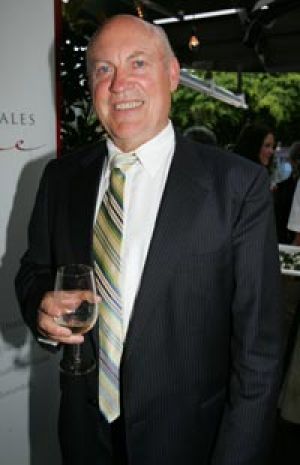
Former NSW Labor minister Ian Macdonald has been sentenced to 10 years' jail over the decision to grant a mining licence to a company run by former union boss John Maitland, who will spend at least four years behind bars.
In March, Macdonald was found guilty of misconduct in a public office.
Maitland, once the head of the Construction, Forestry, Mining and Energy Union (CFMEU), was found guilty of being an accessory.
The decision to grant the licence was made in 2008, when Macdonald was the NSW minister for Primary Industries and Mineral Resources in the Iemma Labor government.
Macdonald was given a non-parole period of seven years, while Maitland was sentenced to six years in prison, and will not be eligible for parole until 2021.
Macdonald clasped his hands and folded his arms at times during the three-hour sentencing hearing in Sydney, and appeared composed when Justice Christine Adamson eventually announced the punishment.
In sentencing, Justice Adamson described Macdonald as "devious" and said he had betrayed the people of NSW. "The coal resources of New South Wales, which should have been used for the benefit of the whole society, were squandered by the criminal conduct of the very person who was trusted to safeguard them," she said.
SOURCE
Posted by John J. Ray (M.A.; Ph.D.). For a daily critique of Leftist activities, see DISSECTING LEFTISM. To keep up with attacks on free speech see Tongue Tied. Also, don't forget your daily roundup of pro-environment but anti-Greenie news and commentary at GREENIE WATCH . Email me here
Monday, June 05, 2017
Australia isn’t the only country caught in a housing bubble
The writer below cannot find a common factor in housing price rises worldwide. I can. In China it's internal migration from peasant farms to the cities but in all the other countries mentioned there have been big inflows of "refugees". Refugees have to be accommodated and that puts pressure on the housing supply, driving up prices.
In a free market the housing supply would expand to meet the demand but we don't have anything like a free market. There are many rigidities to overcome, principally land-use restrictions supported most notably by Greenies but also by farmers and Nimbys. Slowing down the migrant intake is the only way to rein in the housing price rises
Sydney, Melbourne and Brisbane should get some temporary relief from the extraordinary boom in Chinese-financed apartment-block building but that is coming to an end so is no long-term solution
It’s only natural for Australians to be obsessed with our own property market woes, but there is a whole world of bubbles out there waiting to be popped.
We chatter endlessly about prices in Sydney and Melbourne, which is unfair to the other capital cities. But it’s understandable, as 57 per cent of the nation lives in Victoria and New South Wales, according to Australia’s statistics bureau.
And we’re right to be concerned. Only this week, Citigroup chief economist Willem Buiter said Australia is in the midst of a “spectacular housing bubble”. He joined a great host of experts worried that our two main property markets have been running way too hot.
The numbers back him up. CoreLogic, one of our most widely cited property pricers, says Australian houses now cost 7.2 times the yearly income of a household, up from 4.2 times income 15 years ago.
Between the global financial crisis and February 2017, median dwelling prices almost doubled (+99.4 per cent) in Sydney, bringing them to $850,000, and in Melbourne (+85 per cent to $640,000), according to CoreLogic.
But we should not delude ourselves that a housing crisis is a uniquely Australian phenomenon. Cries of “Bubble!” are ringing out across the globe.
Sweden’s central bank boss Stefan Ingves this week issued a warning about sky-rocketing household debt and soaring property prices. Sound familiar?
In Switzerland, the cities of Zurich, Zug, Lucerne, Basel, Lausanne and Lugano face similar risks.
Then there’s Ottawa, Vancouver and Toronto in Canada – an economy comparable in size and composition to our own. As it has for Australia, the International Monetary Fund has told the Canadian government to intervene or risk an economic crash.
The International Monetary Fund (IMF) has issued similar warnings for Denmark, which is battling soaring prices in the capital of Copenhagen.
Most important of all is China. Prices rose 22.1 per cent in Beijing, 21.1 per cent in Shanghai and 13.5 per cent in Shenzen between March 2016 and March 2017, CNBC reported.
The warnings are familiar. “If young people lose hope, the economy will suffer, as housing is a necessity,” Renmin University president Wu Xiaoqiu said recently.
The difference is, if the Chinese economy crashes because of a housing market correction, it will echo throughout the world.
Hong Kong is fighting bubbles, too. Reports on its property market are full of “handsome gains” and an impending “burst“.
Closer to home is Auckland in New Zealand, where prices have also doubled since the GFC.
Despite Brexit, the mother country is hurting, too. There are periodic predictions that London will “finally burst” after years of rampant price growth.
So what’s going on? The consensus is that these bubbles have been created by a combination of ultra-low interest rates, easy lending, rapid population growth, and an openness to foreign investment.
Saul Eslake, a renowned Australian economist, told The New Daily there are “common factors” across these affected nations, including immigration. But he cautioned against shutting the borders.
“It’s wrong, it’s factually incorrect to deny that immigration has contributed to rising house prices. It has contributed to it. But I would argue that to respond to it by, as Tony Abbott among others has advocated, cutting immigration would be the wrong approach.”
Dr Ashton De Silva, a property market expert at RMIT University, also blamed demographic change across the globe.
However, Dr De Silva said each country’s unique factors should not be ignored. “The fact that it’s happening the world over is important to note because there are many countries going through a very similar cycle, such as China,” he said.
“However, whilst we can take this overarching view, we need to be mindful that there is a very important local story going on. And that story is not always consistent.”
If Australia wants to beat its bubble, perhaps it should look to Singapore. It was fighting rampant prices too until the government intervened and did two things: boosted supply by building a whole bunch of new apartment buildings, and dampened demand by hiking stamp duty and cracking down on foreign buyers.
SOURCE
Now its koalas that are "threatened" by climate change
This is all just imagination. Not a single Koala has been inconvenienced by CO2 yet
Australia's koalas populations and their coastal gum tree habitats could be devastated by rising sea levels, which would trigger toxic die-back disease, a scientific conference has been told.
Koalas feed only on the leaves of gum trees, and spend most of their lives protected in their tall branches. The iconic marsupial is listed nationally as a vulnerable species, and its numbers are falling.
Dr Rebecca Montague-Drake, an ecologist with the Port Macquarie Council in New South Wales, has published modelling that shows 14 per cent of the area's koala habitats will experience saltwater inundation over the next 50 years, climbing to 22 per cent next century.
She said rising salinity from bigger tides and floods would increase toxins in gum trees and "reduce the koala's food availability".
"Koalas walk a really tight tightrope between the leaf that they eat, the high levels of toxins that eucalypts leaves contain, and the amount of toxin they can extract from those leaves," she said.
"When we start playing with the salinity balance in the soil, that fine balance in the leaf, between the toxins and the nutrient, values get way out of kilter."
Data suggests fewer than 40,000 koalas survive in the wild.
Dr Montague-Drake expects further destruction of coastal gum trees along a 1,000-kilometre strip between Jervis Bay and Moreton Bay, which could eliminate a third of the region's koala habitats.
She also said her modelling reflected a best-case, not worst-case, sea-rise scenario.
"We are only using a conservative estimate, because we know the trees characterised in these areas, the swamp mahoganies the forest red gum, are a little bit more resilient to salinity than some other species of eucalypts," she said.
Rising seas not the only problem
The sea level warnings add to a growing list of existing habitat threats for koalas, like forestry and unlawful land clearing.
SOURCE
Pauline Hanson mimics London Police advice in anti-Islam tweet

PAULINE Hanson has co-opted London police advice to people caught up in terrorist incidents to push her message of banning Muslims from immigrating to Australia.
As the latest terrorist attack in London was still unfolding on Sunday morning (AEST), the One Nation leader tweeted: “Stop Islamic immigration before it is too late.”
Her message was accompanied by a graphic that mimicked a “Run Hide Tell” message the Metropolitan Police tweeted earlier to advise people what to do if they found themselves caught up in the attacks.
The police message urges people to run to a place of safety, hide and turn their phones to silent, and tell the police by calling emergency services when safe to do so.
Senator Hanson’s version says: “Australia is tired of Labor, the Greens and the Liberals RUNNING their campaign that Islam is good for Australia.”
Senator Hanson has spent the past week in a dispute with Australia’s spy chief over whether there are links between Middle Eastern refugees and terrorism.
ASIO boss Duncan Lewis told Senator Hanson during a parliamentary hearing he had “absolutely no evidence to suggest there is a connection between refugees and terrorism”.
He later said the refugee program was not the source of terrorism in Australia, rather attacks were inspired by an extremist, radicalising strain of Islam. Senator Hanson campaigned last year in a Muslim immigration ban and no new mosques.
Opposition leader Bill Shorten said commentary like Senator Hanson’s played into terrorists’ hands by dividing the community.
“I just say to Pauline and everyone else - hold your horses.You’re in politics. Whatever point you want to make, make you may get an opportunity, but today it’s crass, idiotic and disgusting,” he said.
SOURCE
A simple request but Australia Post keeps getting it wrong
The speed of deliveries has slowed way down too. In many cases a letter can take two weeks to be delivered
IMAGINE paying for a service, not getting it and having no recourse. Welcome to my world and one of my current pathetic problems.
I used to like Australia Post. I used to trust Australia Post. I like my postie and I like the folk at the Norwood Post Office – but Australia Post is just not delivering or, in my case, is wrongly delivering.
When I’m lucky enough to travel I always have my mail held. In December 2015, I filled in the “Hold mail” form.
I always arrange to have this done in advance to check that it is place. It wasn’t.
Mail was delivered instead of being held. I spent a tense afternoon ringing Australia Post operatives on 13 numbers at my expense, being kept on hold and being constantly told how important my call is to Australia Post.
I eventually learned that the paperwork to hold my mail had not gone from the Norwood Post Office to the Kent Town Mail Delivery Centre.
Even though I cited customer reference and receipt numbers, I had to photograph my copy of the form and receipt and send it to someone somewhere nowhere near me.
Eventually, my case was subject to inquiry and I was eventually told my “Hold mail” fee would be refunded in six weeks.
A postie delivering mail.
Then it happened again. Despite a “Hold mail” in place while I was in China to watch the wonderful Power, mail was delivered. I paid $32.70 for a service which I didn’t get.
Same palaver. Long waits on the phone. Cue inquiry. Cue apology. Cue “We don’t know how this could have happened”.
Then: “Don’t worry, we have a new computerised system which guarantees this will never happen again.”
Oh, yeah? To screw something up you need only one human, to really screw something up you really need a computer.
Australia Post has now twice violated a contract with me. A mail delivery service did not deliver what it was contracted not to do by delivering mail.
I’m really peed off so I rang a lawyer and said: “This is your chance to be Erin Brockovich.” There is a vast amount of tiny print on the back of the form and, if you can find a magnifying glass, you will learn that, in legalese, under Limitations, Liability, Release and Indemnity that Australia Post is not responsible to deliver or not deliver mail or anything at all under the Australia Post Corporations Act of 1989.
It promises not to promise to deliver or not deliver the mail. This would be funny on Yes, Minister but it’s annoying. The form also says I’ve also signed to “release Australia Post against any loss or damages whatsoever”.
Ahmed Fahour and postie Ron Trevillian with a new delivery vehicle, in Sydney. Picture: David Smith
How is this fair? Do what you like and face no consequences? Imagine buying a washing machine and then being told that not only are you not getting what you paid for, you may or may not get a refund and have no legal recourse.
Meanwhile, former Australia Post tsar Ahmed Fahour was not denied a $4.8 million yearly salary package.
So, I decided to show the terms and conditions to a barrister who said Australia Post would be laughed out of the High Court – but you need fortitude and very deep pockets to get there.
We are being screwed daily by corporations which rely on us not wanting to wait on the phone while being told our call is important, knowing that we’ll fold and go away, lick our wounds, do nothing and let them get away with violating the once-sacred rights of the customer.
We rail against people not taking responsibility for their actions but allow the corporate world to evade responsibility and ride roughshod over our rights.
Service should be a responsibility. An honour. A contract. A duty. We are all made lesser by the lack of service and responsibility.
As the great Anton Chekhov wrote: “Any fool can survive a crisis, it’s the day-to-day living that wears you out.” Australia Post-modern is a mess. Lick it and see.
SOURCE
Posted by John J. Ray (M.A.; Ph.D.). For a daily critique of Leftist activities, see DISSECTING LEFTISM. To keep up with attacks on free speech see Tongue Tied. Also, don't forget your daily roundup of pro-environment but anti-Greenie news and commentary at GREENIE WATCH . Email me here
Sunday, June 04, 2017
Note to Margaret Court: the Bible isn't meant to be read that literally
Robyn J Whitaker, a female lecturer at a "modern" theology college, attempts below to rebut the points about homosexuality made by Australian tennis great, Margaret Court. Much of what she says below is "ad hominem", attacking Ms Court personally, and she endeavours to make points about homosexuality by generalizing from heterosexual marriage.
But the point about homosexuality is that it is NOT heterosexual marriage and the Bible consistently distinguishes between the two. Homosexuality is a separate issue in the Bible and there is no indication that it should be seen as part of the "patriarchy" as Ms Whitaker extravagantly claims.
She claims that the Bible condones homosexuality but cannot produce a single text to that effect. The OT is unrelentingly and savagely hostile to homosexuality and the Apostle Paul continues that hostility in Romans chapter 1 of the NT. The big break in the NT is not any form of condoning homosexuality but rather a lifting of the duty to stone homosexuals to death. Paul says it can be left to God to condemn and punish them.
For anyone who takes the Bible seriously as the word of God, there can be no doubt that homosexuals are in the outer darkness and not among those who will be saved. 1 Corinthians 6:9 says as much. The Bible does NOT teach universal salvation. It teaches that those wishing salvation must heed God's commands.
Ms Whitaker seems to think it important that Jesus did not explicitly condemn homosexuality. He did not need to. For him, as a devout Jew in a Jewish society, that was understood. So we see in Matthew 19 that, for him, marriage was clearly between a man and a woman and it was only they who could become "one flesh". And the authority he gave for that was what was found in the Jewish scriptures. So there is no doubt whatever about his view of sexual relationships. Only male/female marriage was on his horizons.
But Ms Whitaker says that the Bible is just a very old book from which we can pick and choose what we like. She is not a Christian. At best she is a post-Christian, not unlike the scribes and Pharisees of Jesus' day -- whom Jesus condemned in Mathew 23:3. And note the three things that Jesus there said the Pharisees neglected: "justice and mercy and faithfulness". Ms Whitaker likes the mercy teaching but seems to have no interest in justice and faithfulness. Jesus said you need all three
Margaret Court is wrong to claim marriage is "a union between a man and a woman as stated in the Bible", as she did in her open letter to Qantas, or that a "biblical view" of marriage is between one man and one woman, as she did on Channel Ten's The Project last week.
She is even more wrong to suggest she is being persecuted for her views. Here is why.
Reading the Bible to determine the shape of contemporary marriage is not an easy task. It is an ancient collection of 66 books, written in three different languages (Hebrew, Greek and Aramaic), and spanning over 1,000 years of human history.
Much of the Bible was written 2,500 years ago, when family life was very different.
In the Hebrew scriptures, Abraham fathered children with his concubine as well as his wife, and Moses likely had two wives (one of whom is presented as problematic because she was a foreigner).
Famous biblical kings, like David and Solomon, had entire palaces full of often dubiously acquired wives and concubines that served as symbols of their power and status.
The reality is families in the Bible reflect the patriarchal structures of their period. Women were considered commodities to be married off for political alliances, economic reasons, or to keep families connected. They had no autonomy to choose their partners.
Polygamy was common, as was the use of slaves as sexual concubines.
I don't hear anyone advocating a "biblical view" of marriage suggesting we return to those particular scenarios.
In the New Testament, Jesus said nothing about homosexual relationships or marriage, except that people should not divorce. This teaching is widely ignored by many Christian denominations today.
Most likely, Jesus's concern in speaking against divorce was for the vulnerable place in which it left women, given they could not usually earn their own money or inherit.
Marriage was allowed in the New Testament, but the most prolific writer, Paul, thinks celibacy is preferable for a Christian.
When Paul writes "there is no longer Jew or Greek, there is no longer slave or free, there is no longer male and female; for all of you are one in Christ Jesus" (Galatians 3:28), he presents an ideology profoundly disruptive of patriarchal family structures, gender roles and hierarchy.
This kind of Christian teaching led, if anything, to a breakdown of traditional marriage structures (in ancient terms).
For example, the option to remain celibate and live in community (such as a nunnery or monastery) was a radical, attractive and liberating alternative to arranged marriage for women in earliest Christianity.
Jesus' own mother, who is an example of faith in the church's tradition, appears to have left her husband and other children at home to follow her itinerant son.
The nuclear family and the Bible
Not all opinions are of equal weight. While Margaret Court remains one of the most phenomenal sportswomen in Australian history, this does not qualify her as a spokesperson for Christianity on marriage equality.
Nor does being a self-appointed leader of a church she created.
Indeed, if Ms Court applied the literalism with which she reads Genesis to the whole of the Bible, she'd find herself in hot water, since 1 Timothy 2:12 explicitly forbids women teaching or having any authority over men.
This kind of culturally bound ideology is precisely why biblical scholars and mainstream Christian churches do not adhere to a literal interpretation of this ancient and diverse text.
To criticise and expect a higher level of discourse from a public figure is not bullying nor persecution.
Ms Court willingly put herself into the public space by writing an open letter to Qantas. She could have lodged her complaint privately with the company if she wished to remain free of public comment.
There is nothing inherently Christian about the so-called traditional arrangement of the nuclear family.
You can find that model in the Bible if you look for it, but it is not the dominant view. Nor does the Bible condemn what we understand to be loving, mutual LGBTQI relationships today.
There is nothing like the contemporary concept of sexual orientation in the biblical text.
Where the Bible does appear to condemn homosexual acts it condemns same-sex acts that are rape, adulterous or represent imbalanced power dynamics, such as an elite male with a youth.
[Rubbish! In 1 Timothy 1: 8-10 and elsewhere homosexuality is simply listed among all the foul sins that are contrary to the law of God]
Interestingly, these same power dynamics are not critiqued when an elite male takes a young woman as a sexual concubine; a sobering reminder of the patriarchal worldview that lies behind the text and ancient fears about penetration and masculinity.
Concepts of family and marriage have evolved and changed throughout human history, including within the church.
Modern Christian families can be made up of gay couples, straight couples, single people in community, childless adults, foster parents, step-parents, grandparents and biological parents. It is their faith that makes them Christian, not their family structure nor sexuality.
Many Christians are not represented by the views we've recently heard from Margaret Court, nor those espoused by the so-called Australian Christian Lobby.
In fact, quite the opposite. Christian values of love, justice and inclusion found throughout the Bible are why so many Christians support marriage equality.
SOURCE
This could be Australia’s angriest Telstra customer
I once had to threaten to cut the Telstra cable to get some life out of them -- JR
IT’S a story of mistaken identity, phantom iPhones, pissed off police, and a ruined honeymoon.
Many of us have gone through frustrating ordeals with telco companies, but Angela McCarthy’s Telstra nightmare probably takes the cake.
It started in November when a Telstra customer with the same name ordered two new iPhones. While the phones were sent to that customer’s address on the Gold Coast, Ms McCarthy, who lives in Townsville, got a $2093 bill for the two accounts.
It seemed a Telstra employee hadn’t performed the proper identity checks and somehow the billing got sent to the wrong Angela McCarthy.
When she called Telstra to fix the problem, it was determined to be a case of identity theft. She was passed on to the fraud team, and then the Queensland police got involved.
“They had a warrant, ready to take action against this other customer,” but the police thought it was strange that the fraudster (who they believe turned out to be an older woman) had used their home address for the apparent scam, she told news.com.au.
Ms McCarthy says she was on the phone with Telstra and the police who were about to execute the warrant when Telstra admitted it was an error on their end.
“The police officer was quite pissed off, to say the least, that they’d been working on the case for the past two weeks only to find that Telstra’s like, ‘yeah sorry, our bad’”.
To make it all worse, this was happening while Ms McCarthy, 27, was on her honeymoon in Japan. That meant she has to go through the process of setting up global roaming in order to communicate with Telstra — which later turned into another fight when the telco was initially unwilling to reimburse her for the costs incurred.
In December another bill arrived for $2413. Then again in January for $2366.
When she finally succeeded in getting the services removed from her file, the victory was short-lived when she was hit with early termination fees. So back to the ombudsman she went.
For the sake of brevity, we’ll stop here. But it goes on and on including being hit with a credit blacklist barring her from getting any more Telstra services which caused further frustrations.
In total it’s been seven months, thousands of dollars in wrongful bills, three (and now maybe a fourth) Telstra case managers, complaints filed with the ombudsman, countless hours spent on the phone and plenty of stress.
Despite some lingering uncertainty, the ordeal is almost resolved. But this week after having issues trying to organise a new phone she turned to strangers on the internet to vent her frustration.
“Let me tell you a story of an angry Telstra Customer!” she wrote before detailing her story in a fist-clenching 1300 word post.
“I’m not a fan of making things public but the first two times I complained to Telstra they piss farted around,” she lamented to news.com.au.
“I feel like as a customer we shouldn’t have to go on social media and complain in order to get things sorted.”
But these days, that’s what many angry customers are doing. The social media pages of Australia’s major telcos seem to be to most effective way to be heard and, in Ms McCarthy’s case, resulted in the quickest response time. Visit the Facebook pages of Telstra or Optus and you’ll reliably see a torrent of customer complaints in the comments section under sleek PR videos.
At the moment, all the wrongful charges have been removed from her account and the ordeal is nearing a final resolution.
But Ms McCarthy says she’s expecting a call from the CEO’s office today because Telstra has told her it’s conducting a full investigation into the ordeal on her behalf.
News.com.au has repeatedly contacted Telstra to ask about the internal investigation but did not receive a response by the time of publication.
“A lot of ways they’ve gone through to handle this has been absolutely abysmal,” she said.
“As a consumer you rely on the telco to do their job and to do proper ID checks ... I need some sort of assurance that this won’t happen again but Telstra won’t give me that.”
In the latest report from the telecommunications ombudsman, Telstra reclaimed the mantle of most complained about telco, alongside Optus.
In the January-March 2017 quarter, Optus and Telstra both registered 9.3 complaints per 10,000 services — a higher than usual number due to issues arising from the complicated NBN rollout.
SOURCE
Journalists’ union calls for Leftist activist to quit Press Council
The head of the journalists’ union has called for the resignation of the Australian Press Council’s latest member, deputy chair of left-wing activist group GetUp! Carla McGrath, as Communications Minister Mitch Fifield labelled the appointment “bizarre”.
Media, Entertainment and Arts Alliance union chief executive Paul Murphy yesterday described Ms McGrath’s concurrent positions on the Press Council and GetUp! as “incompatible”, saying her appointment represented a conflict of interest that could not be ignored.
“It’s important for the Press Council to be held in great confidence, not only in the industry, but within the broader community. But there is clear perception of conflict of interest here considering the appointment is of someone who holds a position in an organisation as active and political as GetUp! is,” Mr Murphy told The Weekend Australian.
“While we have absolutely no problem with Carla McGrath, we don’t believe it is appropriate for someone to sit on the Press Council who also holds a senior position in such a politically active organisation. She should give up one position or the other because, from our perspective, she can’t be on both.”
The union’s Press Council representative, Matthew Ricketson, co-author of the Finkelstein media inquiry report, voted in favour of Ms McGrath becoming a member. But after learning of the appointment, the MEAA decided it was untenable.
Senator Fifield denounced the appointment, saying senior GetUp! representatives should not have any role adjudicating complaints against media organisations.
“GetUp! are a political extension of Labor and the Greens,” Senator Fifield told The Weekend Australian. “As partisan participants GetUp! activists have no place sitting in judgment on publishers and journalists.
“A free and independent press is an essential underpinning of our democracy. Press review bodies need to maintain industry and community confidence.”
The Australian this week decided to boycott testimony and not accept adjudications of complaints by the Press Council in which Ms McGrath took part.
The Daily Telegraph’s editor, Chris Dore, has also decided to not co-operate with Press Council inquiries involving Ms McGrath. The newspaper will also refuse to adhere to rulings in which she plays a part.
Ms McGrath’s role at GetUp! — an organisation that has raised funds to publicly campaign against News Corp Australia publications and mocked election coverage by some of the nation’s largest newspapers — has stirred serious concerns among editors, who fear they will not get a fair hearing when complaints are raised about coverage of important public-interest issues that do not with gel with GetUp’s politics.
The Australian’s editor-in-chief, Paul Whittaker, said even if Ms McGrath relinquished her executive role at GetUp!, there would remain a perception that she lacked independence, which made her appointment untenable.
“Even if she stands aside from certain complaints, her position will undermine the credibility of Press Council submissions to governments and its work in determining what it considers to be good standards for journalism,” Mr Whittaker said.
In a letter to Press Council chairman David Weisbrot, Mr Whittaker wrote yesterday that Ms McGrath’s appointment “has destroyed our confidence in the council’s decisions”.
Because she is deputy chair of an activist organisation “she is not an appropriate person to sit on the council and judge the independence, accuracy and objectivity of journalists”, Mr Whittaker’s letter said. “To ask journalists to submit to judgment from such a person is deeply insulting and her appointment makes a mockery of the council’s task of independently adjudicating complaints against member news organisations.”
Senior journalists across the nation’s wide spectrum of media outlets also criticised Ms McGrath’s appointment and the perceived conflict of interest it raised.
Ben Cubby, editor of The Sydney Morning Herald’s Monday-to-Friday print edition, tweeted that it seemed “weird that political activists would be appointed to oversee and potentially police the press. Not good.”
Chief political correspondent of The Sydney Morning Herald and The Age James Massola tweeted: “How can the deputy chair of GetUp!, which actively campaigns against one side of politics, be on the Press Council?”
Ben Eltham, national affairs correspondent of the left-leaning media outlet New Matilda also objected. “Disastrous decision. A GetUp! campaigner should not be on the Press Council, any more than someone from the IPA,” he said on Twitter.
The Press Council yesterday continued to defend Ms McGrath’s appointment, saying it was aware of its duties to disclose potential conflicts of interest and had a long history of successfully — and conservatively — managing conflicts to avoid any suggestion of bias.
“In the case of Carla McGrath, Australian Press Council chair Professor David Weisbrot specifically flagged the issue of perceived or actual conflicts of interest as a result of her multiple board and leadership roles and her long history of community engagement and advocacy on a range of issues, including indigenous and youth affairs,” a spokeswoman said.
“The issue was canvassed at length at the May meeting of council. Following that discussion, the overwhelming majority of the council members was satisfied that any potential conflicts of interest could be successfully managed, and Ms McGrath’s appointment was made.”
The spokeswoman said that as a new public member of the council, Ms McGrath would not sit on an adjudication panel for six to 12 months. “It is not anticipated that Ms McGrath will be assigned to adjudicate complaints until early to mid-2018, and all such assignments take into account potential conflict of interest issues.”
A spokesman for Fairfax Media confirmed the publisher voted in favour of Ms McGrath’s appointment. News Corp, publisher of The Australian, voted against. “Fairfax sees the Press Council as a broad church inclusive of many diverse voices. We voted in favour of Ms McGrath’s appointment. We expect anyone involved in adjudicating Press Council matters to perform their duties with professionalism and impartiality,” the Fairfax spokesman said. “The Press Council has indicated that it would not allow anyone with a conflict of interest to adjudicate stories.”
SOURCE
Don’t get hysterical over Trump’s Paris pullout
By business columnist Terry McCrann
Good. Or great. Either will do.
That’s the first and most basic thing to be said about President Trump’s decision to take the US out of the so-called Paris Climate Accord — more accurately titled, the Fake Paris Climate Accord.
Why “fake”? Because it’s got absolutely nothing to do with doing anything to the climate, if indeed that was even possible.
It was at best an exercise in pretending to do something — for those who’ve been listening to the madness over the years, a desperate attempt to recover from and to avoid another Copenhagen debacle.
Remember (very chilly) Copenhagen? Back in 2009 when a former prime minister named Kevin joined thousands of true believers spewing carbon dioxide flying into “Hopenhagen” only to slink away, spewing yet more CO2, from “Copenfloppen”?
Even one of the original promoters and most fervent believers in the whole global warming/climate change claim — indeed arguably the promoter/believer — James Hansen, has called the Paris Accord a “fraud”.
So fake or fraud, and indeed both, it was also an exercise in transferring hundreds of billions of dollars from the developed world to the developing world, and then back into Swiss bank accounts.
It was also designed to keep the great climate change boondoggle gravy train rolling on through wind and solar farms and Tesla-inspired batteries (and pumped hydro?) to the next CO2-belching climate conference.
So at its most basic and its most valuable, President Trump was making a statement in favour of sanity. He was also making a statement against fraudulence, hypocrisy, dishonesty and waste, stupidity and pointless US (and indeed global) economic impoverishment.
To my mind that’s a pretty good statement to be made.
So what does that say about our Prime Minister’s response, his “Singapore Sling”, that for him and Australia, we at least would always have Paris?
You could not have asked for a more straightforward announcement of total unfitness for the office: a PM making a statement in favour of insanity; in favour of fraudulence, hypocrisy, dishonesty and waste, stupidity and pointless Australian impoverishment.
It was also a proud, if utterly clueless, restatement of Turnbull’s “Trump Denialism”, that we have a PM who refuses to accept the reality of a Trump presidency. That in the bizarre cognitive dissonance that appears to be Turnbull’s brain we will live in a world of a Clinton presidency.
Another of those — a lengthening queue — who can no longer ever be PM, Environment and Energy Minister Josh Frydenberg, actually made Turnbull’s Trump Denialism official with his emphasis yesterday that we had gone out of our way to publicly sign on to Paris the day after Trump won the election.
Yes, Josh, we did, in stunning unnecessary stupidity. Forget the climate change argument, denying the more basic reality of a Trump presidency and a Trump administration is not a very sensible policy foundation for a PM, government and individual ministers to adopt.
It should be instructive to the (quivering) vegetables (reference: the late Maggie Thatcher) around PM and E & E minister on the front bench and behind them on the backbench. What more evidence do they need of the total hopelessness of Turnbull? That he has to go and go quickly?
That if they won’t re-embrace Tony Abbott, on the basis of abandoning either Paris or Australia’s punitive pointless CO2 emission cuts — yes, signed up to, but not formally committed to, by Abbott as PM — that they must go back to a Peter Costello future?
The reality — not the opinion, not the hope, not the real denialism that sees China’s coal-fired power stations being turned into wind and solar farms and batteries by some 21st century version of turning water into wine — is that we have the two biggest CO2 emitters now effectively out of Paris.
The US emits around 20 per cent of global emissions. China, which emits closer to 30 per cent, is allowed to keep increasing its emissions on a totally uncapped basis through 2030 inside Paris.
But surely, China says, hand on collective heart: trust us, we might even start cutting them. Indeed, we are making huge, huge investments in wind turbines and solar panels.
Yes, China is; in an impressive inversion of Lenin’s observation that the Western democracies would sell the Soviet Union the rope with which it would hang them, China is more than happy to enrich itself by selling us the turbines and solar panels to impoverish ourselves.
And this, of course, is before mentioning that none of the Paris commitments or non-commitments are binding anyway. After Copenfloppen, which tried to make them binding, this was the only way anyone would have Paris.
But I have to say I am at a loss to understand why anyone needs Paris? We are told, most immediately by Alan Kohler in this paper, that: “solar and wind power costs are at the point of becoming cheaper than coal and gas, without the RET, and in some places already are, and battery prices are collapsing”.
So why won’t the CO2 emissions, for purposes of discussion, “problem” solve itself?
If wind and solar are going to be cheaper than coal, why won’t the good old profit motive ensure that all new power generation, again for purposes of discussion, is wind and solar?
If we are all going to be driving electric cars, plugged into wind turbines and solar panels, demand for oil, coal and even gas will evaporate.
So why this insistence we must have mandatory targets for wind and solar? Why does anyone need to commit to CO2 emission reductions; they are going to plunge anyway?
Why the frenzy of hysteria in the wake of Trump’s announcement, that as a consequence it won’t just be Watts LA that burns, baby, burns, but the entire planet?
Somehow I am unconvinced that in fact, if the future is South Australia, we are going back to a 19th century future.
President Trump wants to keep the US in the 21st century. Do we want to stay there too?
SOURCE
Posted by John J. Ray (M.A.; Ph.D.). For a daily critique of Leftist activities, see DISSECTING LEFTISM. To keep up with attacks on free speech see Tongue Tied. Also, don't forget your daily roundup of pro-environment but anti-Greenie news and commentary at GREENIE WATCH . Email me here
Friday, June 02, 2017
Tony Abbott on Muslims: ‘Stop treating them with kid gloves’
Tony Abbott believes Muslims should conform to Australian rules
AUSTRALIANS should stop treating Muslims with kid gloves and those living in our country must conform to our rules, according to Tony Abbott. The former Prime Minister said Australians “pussyfoot around the fact many passages of the Muslim holy book command things that are completely incompatible with modern Western life”.
He also said it was also time we stopped making excuses for other people and there should be one set of rules for all Australians in the piece published in today’s the Daily Telegraph.
“The only safe Jihadi is one who’s been lawfully killed, lawfully imprisoned or thoroughly converted from Islamism,” Mr Abbott said.
The MP also said Australians tended to tolerate behaviour from hard line Muslims that we wouldn’t from other groups.
Speaking on Sunrise this morning Melbourne Radio 3AW’s Tom Elliott agreed the same rules should apply to everyone.
“The issue is not if there are enough rules, it’s that are we prepared to apply the rules we have and apply them equally to everyone and on that, Tony Abbott is correct,” he told Sunrise host Sam Armytage.
However advertising guru Jane Caro said Muslims should confirm to Australian laws and the reality was most already did. But she also said it was important the laws were applied to people equally.
“What we don’t want to do is have different rules for different people nor do we want to go off half-cocked,” she said.
SOURCE
Global cooling hits Australia!
IF you were feeling a little chilly this morning it’s no surprise — it was our coldest start to winter since 1943, with the mercury plummeting to a frosty 2.9C in Adelaide.
Elsewhere in the state it was even colder, with Yunta -4.7C, Renmark -3.2C and Loxton, Snowtown and Murray Bridge -1.9C, according to the Bureau of Meteorology.
“We had a cold front move across the state Monday night, Tuesday morning, and that’s brought up a lot of very cold, very dry air from over the Southern Ocean,” a Bureau of Meteorology spokesman told ABC Radio Adelaide.
“Then we had a very strong high pressure system come over the top of the state that gave us light winds and clear skies overnight, allowing the temperature to cool down.”
Fortunately, as soon as the sun came out the temperature quickly climbed.
We can expect a sunny, cloud-free day with a top of 16C today in Adelaide, with similar dry forecasts for the rest of the week.
We probably won’t see any rain until Monday, when a possible shower and 17C is expected.
SOURCE. My heading above is of course satirical
Social Services Minister Christian Porter defends drug tests for dole recipients
SOCIAL Services Minister Christian Porter has defended a plan to drug test welfare recipients while talking up jobs as “a sacred form of giving”.
In a speech to business groups at Parliament House today, the Minister rejected claims similar programs in the United States and New Zealand proved drug testing welfare recipients was costly and ultimately ineffective.
“In America, one thing that’s clear among the trials of drug testing is that the cohorts of individuals in the welfare systems where testing is applied have lower rates of drug use based on the testings in the wider population,” Mr Porter said.
“Critics of drug testing say that is evidence of failure, supporters say it’s evidence of success,” he said.
In making the case for the government’s welfare reforms, Mr Porter highlighted the massive increase in welfare recipients using drug and alcohol issues as an excuse not to turn up for job interviews and other appointments.
More than 5500 people on welfare now applied for exemptions from appointments for drug and alcohol issues, he said.
That was nearly double the number applying for the exemption five years ago.
There was also a 131 per cent increase in the number of times welfare recipients used that excuse in the last year alone to 4325 instances.
Mr Porter said the trial was “nothing to do with being punitive”.
“There is a lot of ancillary data out there that suggests both that there’s a problem and that there is a clear way in which drug testing can help that problem.
“A person who is unemployed is, based on good data, 2.4 times more likely to have addictive issues with drugs and alcohol — obviously there’s both cause and effect in there.”
“We know absolutely for certain that large numbers of people in the welfare system have barriers to employment which are caused by a drug and alcohol problems.
“I also know as a matter of fact that at the moment we are not doing anywhere near enough to first identify them and secondly assist them.”
Under the government’s proposal for a drug screening trial, welfare recipients who tested positive for drugs once would be placed on a cashless welfare card which could not be used to pay for alcohol.
A second positive test would trigger a health check by a medical professional, who would then design a plan for them to recover from their addiction.
Another measure being implemented is mandatory assessments of whether welfare recipients who applied for exemptions from appointments for drug and alcohol issues were attending or seeking treatment.
During the speech, Mr Porter outlined the government’s plan to overhaul the welfare system to ensure it was growing faster than taxpayers’ ability to pay for it.
He also rejected the notion that some low-income earners may sometimes be worse off working because they could receive a similar amount in welfare payments.
Work gave “dignity, pride and purpose” and was “a sacred form of giving” through an individual’s contribution to the greater good, he said.
“Work is more than money — it is self-worth from self-reliance, it’s friendships, it’s purpose and a meaning in life,” he said.
“All our welfare reforms are about one thing; giving more people more opportunity to grow with the benefits of work.”
SOURCE
Fake asylum seekers still coming
People-smugglers are out of business in Australia. Boats laden with asylum-seekers have stopped arriving. Yet Australia’s immigration system is under challenge from within.
Polls late last year point to large numbers of Australians wanting an end to Muslim migration, anywhere from a third to half those surveyed depending on the poll. The irony is that mislabelled “progressives” — Labor, the Greens, refugee activists, immigration lawyers, judges and other decision-makers doling out their own deluded, short-term version of compassion — are responsible for undermining support for migration to this country.
The Administrative Appeals Tribunal is made up of judges, lawyers and others with “expert” knowledge. Some of these AAT members are front and centre in the emasculation of support for Australia’s immigration system. Not even the AAT’s judicial-inspired prolix prose can hide the fact the tribunal has agreed that many asylum-seekers have deliberately lied on visa applications. In simple language, that makes them fake refugees. Yet, over and over again, the AAT has decided to reinstate a visa that has been cancelled by the Immigration Minister’s delegate.
Consider these recent cases (specific details cannot be revealed for legal reasons).
The first has already been reported. Asylum-seeker “A” arrived by boat in 2011 and was granted a protection visa the following year claiming it was not safe for him to return to Iran. Once granted a visa, A returned to Iran three times, including to marry under Islamic law. The AAT decided that, even though A kept returning to the country in relation to which he claimed fear of persecution, he was entitled to a protection visa.
The second case, not reported until now, causes more than a raised eyebrow of disbelief. Asylum-seeker “B” claimed to be a stateless Faili Kurd, not an Iranian citizen, in fear for his life in Iran. B travelled to Indonesia by plane on what he claimed to be a false Iranian passport. B’s lie came to light when, after he received a protection visa, he applied for a new Iranian passport in Australia and travelled home for a visit. B admitted to the AAT that he told lies on his visa application. He admitted he was an Iranian citizen and that he had a valid Iranian passport, which he destroyed on the advice of people-smugglers in Indonesia.
Despite the lies, B claimed his wife’s conversion to Christianity gave rise to a non-refoulement obligation not to return him to Iran. B’s wife claimed a long interest in the Christian faith. The AAT said her religious conversion was not genuine: her conversion to Christianity happened only after the couple were notified that their protection visas were being cancelled for false information. The AAT concluded B had provided incorrect information and had failed to comply with the Migration Act. Then the AAT decided, because the couple had children while in Australia, it was in the children’s best interests for the AAT to reinstate B’s protection visa.
In the year to April, the AAT overturned 4389 — or 39 per cent — of visa decisions made by the minister’s delegate. Cold numbers tell only part of the story. Consider this case, which has a certain familiar flavour: asylum-seeker “C” claimed in his protection visa application that he was stateless, was not an Iranian citizen, that he had travelled to Indonesia on a false passport and that a people-smuggler had taken that passport.
C arrived in Australia by boat with no identity documents. Except that C later applied for and received an Iranian passport, which he used to enter and leave Iran once he had a protection visa. The AAT found the inaccurate information C provided undermined the integrity of Australia’s migration program — yet, once again, the AAT reinstated C’s protection visa.
Immigration Minister Peter Dutton is right to shake his head at these decisions. Consider another case. Asylum-seeker D claimed to be a stateless Faili Kurd, not an Iranian citizen, used a false passport to travel to Indonesia and claimed he feared for his safety if returned to Iran. Once D received a protection visa, D obtained a valid Iranian passport, suggesting Iranian citizenship, and travelled to Iran for a visit. The AAT found that D had lied on the visa application, that a protection visa would not have been granted if accurate information had been provided. Yet, the AAT reinstated D’s visa, overturning the cancellation.
Notice the pattern of lies from asylum-seekers? Notice the pattern of decisions from the AAT? It’s a bit rich for the AAT to say asylum-seekers providing false information in visa applications undermine the integrity of Australia’s migration program, only to then reinstate liars’ visas.
The combination of fake refugees and misguided AAT members is a double whammy that undermines the integrity of our migration system.
It’s boringly predictable for the Law Council to slap down the Immigration Minister for being critical of some AAT decisions. No judge, lawyer or other person with apparent special expertise on the AAT is above criticism in a democracy. Outgoing AAT president Duncan Kerr says AAT members are simply applying the law. But which law? Explicit provisions in the Migration Act about providing inaccurate information in a visa application are given short shrift. The unfortunate directive to asylum-seekers emerging from AAT decisions is fake it ’til you make it.
The shy members of the AAT can expect increased curiosity about their decisions. Last week in Senate estimates, Immigration Department boss Mike Pezzullo released dynamite information: 335 visa holders are being considered for cancellation. He also set out the scale of previous rorts: since 2014, 278 protection visas have been cancelled. Two-thirds of the cancellations arose from evidence of people travelling back to countries in relation to which persecution was claimed. Another third related to people providing incorrect or false information.
Bleeding-heart faux compassionistas, be they in Labor, the Greens or on the AAT, should try to better understand our history. As a migrant nation, Australia has shown strong support for high rates of immigration and a generous humanitarian intake of refugees per capita.
Support for immigration from Australians is most stable and secure when the Australian government, not repugnant people-smugglers piling people into unsafe boats, determines our migration policy.
Profiling Dutton in Fairfax Media newspapers last weekend, Jane Cadzow wrote that “he can sometimes sound like an anti-immigration minister”. Except that it’s not anti-immigration to point out that Australia faces unprecedented security threats from terrorists, extremists and criminals who seek to exploit migration pathways to citizenship for their own ends.
It’s not anti-IMMIGRATION to deport criminals. It’s not anti-immigrant to point out that some asylum-seekers are quick to complete welfare forms but rather slow making visa applications. And it’s not anti-immigration to shake your head at decisions by the AAT that undermine the integrity of our migration system.
Posted by John J. Ray (M.A.; Ph.D.). For a daily critique of Leftist activities, see DISSECTING LEFTISM. To keep up with attacks on free speech see Tongue Tied. Also, don't forget your daily roundup of pro-environment but anti-Greenie news and commentary at GREENIE WATCH . Email me here
Thursday, June 01, 2017
Big coal mine opposed by Greenies gets a go-ahead from a Leftist State government
Royalties are a tax and seeking a taxbreak while an enterprise gets going is normal and may even be offered by a government
The $16 billion Adani coal mining project is back on track after the Indian resources giant agreed to a royalties deal with the Queensland government.
It comes a week after Premier Annastacia Palaszczuk reportedly backflipped on a deal because of divisions inside her government, which lead to a snap cabinet meeting on Friday.
Ministers unanimously agreed the company would not be given a royalties holiday on its proposed operation, and on Tuesday evening Adani announced it had agreed to the deal.
A week of warring among Labor factions was sparked when details of Ms Palaszczuk's original agreement with the company surfaced.
Under that deal, Adani would have had pay only $2 million a year over the first seven years of the mine's operation, which could have cost Queensland taxpayers up to $320 million.
No details of the new deal were available due to commercial reasons, an Adani spokesman told AAP on Tuesday evening. "The royalties arrangement means the project is back on track to generate 10,000 direct and indirect jobs in regional Queensland," the company said in a statement. "This shows a strong commitment by the state government to the project and is a benchmark decision to take this project forward."
The board of Adani's parent company will consider the deal at its next meeting, the statement said.
On Saturday, Ms Palaszczuk said her government had worked "night and day" to finalise the new framework, but denied she had backflipped on a previous deal she had struck with the firm.
SOURCE
Deported: Sex creep taxi driver to be kicked out of Australia
SEX creep taxi driver Jagdeep Singh is finally being kicked out of Australia. Several Australian Border Force officers grabbed him at his Lalor home and put him in detention prior to his deportation back to India.
The Administrative Appeals Tribunal foiled Immigration Minister Peter Dutton’s first attempt to get rid of Singh after he pleaded guilty to indecently assaulting a female passenger in December 2015.
Singh appealed against the visa cancellation decision made by a delegate for Mr Dutton. AAT senior member Miriam Holmes then overturned the delegate’s deportation decision in November last year and reinstated Singh’s visa.
She did so despite making a formal finding that Singh committed “a significant sexual offence involving a vulnerable member of the public while the applicant was engaged as a taxi driver”.
Mr Dutton last night exercised his power to overrule the AAT and ordered that Singh be detained by Australian Border Force officers and deported. A spokesman for Mr Dutton confirmed to the Herald Sun that Singh’s visa had been cancelled again.
Ms Holmes gave Singh, 34, his visa back in November last year, despite finding “it was apparent to the Tribunal that the applicant showed no remorse in relation to the criminal offence”.
In her written decision outlining why she overturned the deportation decision of Mr Dutton’s delegate, Ms Holmes said the cancellation of the visa had adversely affected Singh’s ability to manage his psychological condition with his treating psychologist.
She also said Singh’s wife had demonstrated depressive symptoms require anti-depression medication and would suffer emotional hardship if her husband’s visa was cancelled.
The decision noted that if Singh’s visa were cancelled he would become an “unlawful noncitizen” and might be liable for detention and possible removal from Australia.
Singh arrived in Australia from India in 2008 on a student visa as a dependent of his wife and started work as a taxi driver in Melbourne in 2011.
Singh’s victim hailed his cab outside Crown casino and asked Singh to driver her home to Clayton. She asked him to start the cab meter, but Singh replied for her not to worry and that something could be worked out later.
While Singh was driving he used his left hand to reach behind him to grab her leg and touch her hand. She repeatedly said “no” to Singh before eventually succeeding in pushing his hand away.
When Singh drove into the driveway of her home she put money on the centre console and got out of the taxi.
Singh jumped out of the cab and put his arms around the woman and hugged her close to his body. He told her he didn’t want her money and said “please, let’s work something out”.
She told him “no” and that he should take the money, at which point he kissed her on the neck.
The woman twisted her body to get away from Singh, but as she got to the gate he grabbed her from behind and pressed himself up against her.
She managed to get away for him again, told him to get back in the cab and leave her alone.
As she opened her front door he pushed her inside against a staircase and tried to kiss her neck and face.
Singh ran off after her screams alerted her housemate to the sexual attack.
He was caught and pleaded guilty to indecently assaulting the woman and was given an 18-month community corrections order in December 2015 requiring him to do 150 hours of unpaid community service.
SOURCE
Australia plans to deny passports to convicted paedophiles
Convicted paedophiles would be denied passports in Australia under a "world-first" plan proposed by the government.
The proposal, to be introduced to parliament, would prohibit registered sex offenders from travelling overseas.
Justice Minister Michael Keenan said it would affect about 20,000 offenders who had completed punishments but remained under monitoring by authorities. Sex offenders would be able to apply for passports if they were no longer on the register, the government said.
"No country has ever taken such decisive and strong action to stop its citizens from going overseas, often to vulnerable countries, to abuse kids," Mr Keenan said.
About 800 registered sex offenders travelled overseas from Australia in 2016, according to the government. The government said about 3,200 sex offenders would never be eligible for passports because they were being monitored for life.
Mr Keenan described child sex tourism as an "absolutely abhorrent crime".
The proposal was reached with independent Senator Derryn Hinch, long time campaigner for tougher laws to deal with sex offenders. Mr Hinch said the proposal would protect children.
"You go to Bali, you go to Phnom Penh, you go to Siem Reap, and you see these middle-aged Australian men there, Caucasian men, with a young local kid - they are not there to get a suntan," he told reporters on Tuesday.
Last year, Australian man Robert Andrew Fiddes Ellis was convicted of sexually abusing 11 girls in Indonesia and jailed for 15 years.
SOURCE
Apple-picking robot targets labour-hungry fruit sector in Australia
Goodbye to immigrant workers?
Many fruit growers across Australia were left scrambling to find pickers this season and were forced to leave fruit on the trees to rot. Would harvest be less stressful if they had a robot to do the work instead?
A team of engineers from California are close to commercialising a machine that strips a canopy of apples using a vacuum arm.
For the past five years they have been working on the prototype in orchards in Washington State and, more recently, at Warragul in south-east Victoria.
Abundant Robotics chief executive Dan Steere said the invention may just be the solution to a global labour problem. "The industry struggles to attract a large enough labour force, even when they're paying pretty high wages," he said. "This has been a growing problem for several decades in the US as well as Australia and other places.
"I think automation offers the promise of being able to relax that constraint from an industry that without it, would struggle to remain viable."
The robot the company has developed can drive itself down an orchard row of apples and look for fruit on a trellis up to 3 metres tall.
It is programmed to select fruit for colour, then using its arm, sucks in a piece of fruit off a branch.
Mr Steere said the goal was to have the robot matching the quality of fruit picked by people. "When people are picking apples today, there's a certain amount of damage that happens as you pick them or empty them from the bag into the bin," he said.
"In Victoria this past year, we were comparing the rate of damage which we saw with our machine. "It was actually measured by the packing house at 1.8 per cent to the human crews' picking.
"So that level is actually a little bit less than the amount of damage that they normally see from people picking fruit."
Tasmanian orchardist Scott Price thought he would never see an apple-picking robot in his lifetime. He reckons it will not be long before they will be driving up and down orchards on the Apple Isle. "A lot of new orchards would lend themselves very well to picking," Mr Price said.
"The biggest fear we have in the orchard game is people injuring themselves. "If the machine injures itself we'll just take it back to the workshop and try to fix it, so that would be a bonus."
Mr Price said not every farm would have the robots in the next five to 10 years, but bigger properties may. "And there may be a machine shared amongst growers," he said. "Technology will change very rapidly, I'm sure."
Abundant Robotics' commercial release of its robotic apple picker is planned for next year.
SOURCE
SOURCE
Posted by John J. Ray (M.A.; Ph.D.). For a daily critique of Leftist activities, see DISSECTING LEFTISM. To keep up with attacks on free speech see Tongue Tied. Also, don't forget your daily roundup of pro-environment but anti-Greenie news and commentary at GREENIE WATCH . Email me here
Subscribe to:
Posts (Atom)


 Evelyn Rae, a conservative Australian political commentator


 Margo Robbie -- a beautiful australian
 My son Joe at ANU
 One of the happiest pictures ever -- Cleo Smith, aged 4


