Tuesday, December 06, 2022


The wave of investment into renewables could bring forward the closure of coal plant by up to a decade


Mark Collette above

This guy is a loon. He proposes to replace dispatchable coal power by new dispatchable gas-fired generation. What a waste of capital investment! It won't please the Greenies as gas is a "fossil fuel" and it will create a huge cost burden on already high gas prices. New demand must push gas prices higher. Maybe they are banking on Russian gas becoming available again. We can hope.

Power giant EnergyAustralia has revealed plans to spend $10bn over the next decade building new electricity generation as part of a broader industry push on green spending, a move that may hasten the departure of NSW’s last coal plant by up to a decade.

Ahead of a planned intervention into Australia’s domestic energy market, the nation’s third-largest electricity retailer and generator set out the new investment target to be split across renewables, storage and solar and battery systems in households.

The wave of investment required to hit Labor’s aim of tripling renewables capacity to 82 per cent by 2030 could also bring forward the closure of EnergyAustralia’s Mt Piper coal plant by up to a decade.

The Mt Piper facility was expected to be the final NSW coal plant to shut in 2040, but that timeline may jump forward by as much as 10 years depending on how quickly replacement generation is installed in its place.

“I‘m worried more about closures happening faster than new entry at the moment,” EnergyAustralia managing director Mark Collette told The Australian. “There’s a lot of modelling out there that shows a lot of closures coming. Historically, Australia’s had maybe three big coal closures in the past 10 years, with Australia facing something like 15 in the next 15 years.”

Asked if an expected wave of green investment would accelerate the exit of Mt Piper, Mr Collette said: “All of the coal-fired power stations in the country, I’d expect all of them to be gone as soon as there’s replacement technology available.

“So for Australia, the challenge is long duration storage. At the moment, coal and gas form that insurance for the system, so we can get through all weather conditions. The date at which coal closes is purely about how quickly we can have replacement from those sorts of services.”

The September quarter produced “a massive acceleration” in the timetable for closure of coal-fired generation on the east coast, according to consultancy EnergyQuest.

EnergyAustralia’s $10bn spending plan over the next decade mirrors a plan by Canada’s Brookfield to invest an extra $20bn in Origin Energy through to 2030 to build new renewable and back-up energy capacity should it prevail with a live takeover bid under way.

The nation’s other big player, AGL Energy, has also said it would need to find up to $20bn to accelerate its exit from coal generation, after announcing plans to bring forward the closure date of its Loy Lang A power station in Victoria.

EnergyAustralia has been in talks with investors to help fund its multibillion-dollar pipeline of projects, with the company’s parent, Hong Kong-listed CLP, previously pointing to a deal with pension giant CDPQ for its Indian business as a potential model it would consider for Australia.

“Our primary areas to invest in are behind the meter to bring the best of small-scale energy technology with grid technologies for customers. And then in flexible capacity, which is the reliable capacity that underpins a very high concentration of renewables and brings it to life,” Mr Collette said.

The company plans to install a giant battery at Wooreen in Victoria’s Gippsland region, a gas-fired power station near Goulburn in NSW, Lake Lyell pumped hydro in NSW along with the Tallawarra B gas plant.

“We can quite clearly see that for our market share it’s quite easy to get to investments of $10bn over the next 10 years. The energy transition is quite expensive and like all players, we’re working on the best ways to fund that transition,” Mr Collette said.

The energy industry is bracing for an expected intervention, with the Albanese government prepared to intervene in South Australia and Victoria on a gas price cap at $11-$13 a gigajoule amid a stoush with states on imposing coal price caps to lower bills.

EnergyQuest said targeting temporary financial support for consumers who are most vulnerable to energy price shocks would be a far better solution.

“Moves to cap gas prices would not only increase east coast gas demand and reduce supply, but it would also amount to a whopping and inefficient fossil fuel subsidy of over $20 a gigajoule,” EnergyQuest chief executive Graeme Bethune said.

“The Treasurer is getting $50bn of windfall gains to his budget through the increases in company tax and Petroleum Resource Rent Tax from the spike in fossil fuel prices. The states already have a mish-mash of energy grants for energy cost relief that could be much better targeted through the Commonwealth welfare payment system.”

Large manufacturers are being offered gas contracts for 2023 at rates up to five times the level being offered last year, with the government warning factories will shut down unless it makes an urgent market intervention to cut prices.

Oil and gas industry sources, who are concerned about Jim Chalmers expanding the petroleum resource rent tax to subsidise retailers and households, have said the government would face constitutional issues if it imposes price caps on east coast gas producers and not WA producers.

***************************************************

Push for Director of Public Prosecutions Shane Drumgold to go over Lehrmann rape trial

That a "she said" / "He said" case went to trial is a disgrace

image from https://content.api.news/v3/images/bin/ebc3a96d2de5dd814914c5f7df775367

Apparatchik Drumgold

A leading Canberra criminal lawyer has called for the resignation of ACT Director of Public Prosecutions Shane Drumgold SC and an investigation by the ACT Integrity Commission into the decision to prosecute Bruce Lehrmann for the rape of Brittany Higgins.

Peter Woodhouse, the managing partner of Aulich lawyers, said an investigation by the Integrity Commission was needed after revelations by The Weekend Australian that police believed there was insufficient evidence to prosecute Mr Lehrmann, but could not stop the DPP from doing so because “there is too much political interference”.

The police reservations about prosecuting Mr Lehrmann were expressed in diary notes made by the ACT Police Manager of Criminal Investigations, Detective Superintendent Scott Moller, and in executive briefing notes made by investigators, which included serious concern for the mental health and ­wellbeing of Ms Higgins.

On Sunday, Mr Drumgold was reported to have expressed “serious concern about the potentially unlawful sharing of police material” after publication of the documents by The Australian.

Mr Woodhouse said the Integrity Commission “needs to explore whether Mr Drumgold let his own thirst for media ­attention or own political affiliations cloud what is supposed to be his independent judgment in such matters”.

He said it was “astounding” that Mr Drumgold had announced the decision via press conference and asked whether the DPP was “hoping to get on the front foot and was attempting to pre-emptively cover his backside, knowing this fallout and the exposure of the rift between his office and ACT police was coming”.

At his press conference on Friday, Mr Drumgold stood by his belief that there were reasonable prospects of securing a conviction in the case.

However, according to Mr Woodhouse, “what is abundantly clear is that there does not seem to be anybody in the ACT legal system, outside of Mr Drumgold’s office, who shared that view, including senior ­members of criminal investigations in ACT policing”.

“The DPP in jurisdictions such as ours are supposed to be politically independent.”

Mr Woodhouse notes that Mr Drumgold has tenure until December 2025, designed to allow him to operate without political interference, and can be ­removed from office only in exceptional ­circumstances.

“If Mr Drumgold’s decision to prosecute Mr Lehmann has been influenced in any way by political pressure, his position as ACT DPP is not sustainable and he must ­resign. It appears the ACT system is irreparably broken and there is only one way to quickly fix it and to restore public faith in the ­criminal justice system in the ACT. Shane Drumgold must resign as ACT DPP.

The claims of political interference in the case come from notes Superintendent Moller made of a conversation with his boss, ACT Deputy Chief Police Officer (DCPO) Michael Chew, on June 17 last year while discussing the ­Higgins/Lehrmann sexual assault case.

“DCPO (Mr Chew) advised he had a meeting with DPP who stated they will recommend prosecution. DCPO stated ‘if it was my choice I wouldn’t proceed. But it’s not my choice. There is too much political interference.”

At that point in the investigation, more than half of the witness list had yet to be interviewed by police, but it appears the DPP, led by Mr Drumgold, had already ­decided to prosecute.

Some media reports of these developments over the weekend wrongly claimed it was solely the decision of the Australian Federal Police to lay charges in the case.

A statement prepared by Detective Superintendent Moller, obtained by The Australian, reveals that on 30 July 2021, Mr Chew “directed that the investigation move to charge Bruce Lehrmann via summons … he stated that this direction was based on legal advice received from ACT DPP and the Independent Investigational Review conducted”.

Other senior legal figures have also been highly critical of Mr Drumgold, including prominent Sydney barrister Gray Connolly, who tweeted that his behaviour was “shameful” and had produced “a catastrophic result” in the case.

Mr Connolly echoed the comments of other lawyers that Mr Drumgold’s public statements on the merits of the case were “entirely improper” and that it was “a sad day for the rule of law”.

“Prosecutors speak in court through the cases they make and not through media re cases they abandon. In any serious first-world jurisdiction, Drumgold’s position would be untenable.”

Mr Connolly described Mr Drumgold as “a DPP (who) trashes centuries of prosecutorial ethics and obligations, by simultaneously withdrawing a criminal prosecution in the court & then try to continue it in the media”.

The barrister said the presumption of innocence should extend all the more strongly to a person against whom charges have been withdrawn by the DPP.

“You cannot – even as the most newly admitted lawyer let alone as a very senior prosecutor – simultaneously withdraw a case from the courts and then also try and run that same case in the media. It is simply horrific.”

*******************************************

National cabinet walking a tightrope on energy policy

This week’s national cabinet meeting is one of the most dangerous gatherings of national leaders in recent times. Inexperienced in energy complexities, politicians and public servants could easily plunge the east coast of the nation into chaos, especially as the industrial relations legislation has destroyed business trust in the Albanese government. The first energy plan that was proposed, a price cap, may be rejected on the grounds of state opposition. But those state objections were almost irrelevant: the “cap” was a recipe for chaos.

Now a tax is being proposed on energy producers, where the ­revenue will somehow be diverted to help industrial and domestic consumers. That proposal has less risk and some advantages but again has the potential to create chaos. To help readers understand the dangers facing the nation I will first detail what is likely to happen if there is a price cap and then look at some of the potential repercussions of a tax.

I strongly urge all the ministers and public servants in the national cabinet to study the research work of Commonwealth Bank energy economist Vivek Dhar, which I have found invaluable.

Each east coast state is different. We start with NSW. Purely on the basis of cash production costs, and ignoring their enormous capital costs, renewables are the cheapest form of energy. Accordingly, in a price cap regime, as the lowest cash cost source of electricity, renewables will take the first slab of demand – assuming the wind is blowing and the sun is shining.

On the basis of a proposed cap of between $11 and $13 a gigajoule, the next lowest cost level is gas-fired power stations. Unless there is some form of complex quota, gas power stations will therefore run flat out as a baseload operation, creating gas shortages.

Then comes black coal generators which, because of the gas price cap, suddenly become the highest cost power provider. But black coal power generation needs constant output and is extremely expensive and dangerous if it is forced to be the swing producer. It is a recipe for chaos in the generation of power in NSW. Queensland will be affected in a similar way but not as severely. Then comes poor old Victoria and its infamous energy policy, partly based on preserving ALP inner city lower house seats.

Victoria is more dependent on gas than any other east coast state, and the energy regulator says that Bass Strait will go into steep decline in about three years. Woodside and Exxon are prepared to spend large sums trying to extend the output for a few more years.

The WA-based Woodside has been blunt: if there is a low price cap that money will not be spent. Victoria can swing.

Victorian government politicians scoff and demand that gas should be piped down from Queensland and NSW at the low cap price. It’s nonsense, of course. Even if such a supply is legislated, the pipe network was designed to send gas north, not south and although changes can be made to improve the “south delivery”, there will be a massive shortfall for Victoria – especially as NSW and Queensland power stations will be absorbing as much gas as possible.

Daniel Andrews’ decision not to develop Victoria’s large onshore gas fields which don’t require fracking has worked: there was no green decimation of ALP inner-city seats in the recent election.

Without the Woodside/Exxon “rescue” expenditure, Victoria has the choice of developing its onshore gas or suffering huge shortfalls in about three years’ time, when the next election is due. The inner-city green seat issue remains. Victorians voted against gas development, so can’t complain if they are hit hard by the repercussions of any price cap.

The alternative of a profits tax creates even greater complexity.

Any extra profits-tax calculation somehow or other must adjust for different cost structures in different areas. It is highly likely to put out of business the wrong energy producers. And again, almost certainly, Woodside will tell the government to jump into Bass Strait if taxes are boosted.

And then comes the issue of who in the community receives the “subsidy” benefit funded by the tax. Small business is probably the most likely to benefit, but the industrial legislation has an employment definition that is problematic and will not stop carnage. It is possible the distribution of the tax will be based on a green agenda. There may be a delay between revenue collection and money distribution, which will hit both enterprises and consumers.

There is no way anyone will be happy. To try and sort out this mess we must start with the basics.

If the politicians and public servants in Canberra are prepared to do their homework between now and the cabinet meeting, they will discover that the ideal way to operate a non-nuclear power system like Australia is to have renewables and coal providing the base power loads. Gas and hydro cater for demand swings. Over time the coal runs down, replaced by extra renewables, including hydro.

And in time gas will be reduced by batteries, extra hydro and other means. Carbon-based power generators can be encouraged to engage in regeneration agriculture and growing saltbush and other plants whose root systems store carbon in the soil.

Of course, even better, maybe we boost power supplies via smaller nuclear power units — but that is hard for politicians to endorse. Nevertheless, their back is to the wall and nuclear technology is improving. The old waste problems are rapidly diminishing.

But again, there is no trust because of industrial relations. So where there is lack of trust combined with inexperience there is grave danger of a total mess.

************************************************

Mask wearing disrupts decision-making ability, Queensland study finds

Mask wearing can seriously disrupt a person’s ability to make decisions, particularly when they feel under pressure, a new Queensland study has found.

Dr David Smerdon of the University of Queensland's School of Economics studied 8500 worldwide chess players aged between 5 and 98, comparing how they played a game of chess both with and without masks on.

After analysing almost three million individual chess moves he found wearing a mask substantially reduced the quality of a player’s decisions.

But the disruption to decision making was also only temporary and players were able to recover from their initial brain fog within four to six hours, before returning to their normal playing capability.

“We found that the early part of the game you’re not playing as well as you usually would,” Dr Smerdon said.

“The data showed masks were more likely to decrease performance in situations where there was a demanding mental task with a high working memory load.

“The decrease in performance was due to the annoyance caused by the masks rather than a physiological mechanism, but people adapted to the distraction over time.

“The results suggest that the effect of masks may depend on the type of task, the duration of the task and working memory load.”

Dr Smerdon said it was important to find out what -if any- kind of effect mask wearing had on the general population, with his initial findings also indicating minimal disruptions to children’s decision making.

“From a methodical point of view, it’s been hard to get evidence on this topic and chess gave us those circumstances as it requires calculation, memory, problem-solving and pattern recognition and has been used extensively in psychology, neuroscience and economics to measure changes in cognitive performance,” he said.

“What surprised me was the level of effect for experts, particularly in very important games, the effect is very large.

“When we looked at just juniors, up to the age of 18 we didn’t find any effects of mask (wearing), and that could be because of the comparison of kids to the overall (study) numbers or maybe because they are just more adaptable.”

Dr Smerdon said understanding the impact of mask wearing could help individuals and organisations, particularly if it becomes mandatory again in future.

“A lot of communities have discussed mask policies since they were introduced,” he said.

“This is something to keep in mind for occupations in the STEM fields of science, technology, engineering and mathematics as well as other professions that demand a high level of working memory such as language interpreters, performers, waiters and teachers.

“For example, education policy makers may need to bear in mind the disruptive effects of masks when designing exam conditions to address concerns about student health and fairness.”

********************************************************

Teachers banned from Christmas activities, holiday countdowns

Queensland schools have been accused of playing the Christmas “grinch” after some teachers claim they were warned against hosting Christmas festivities or countdowns to the holidays in their classrooms.

The message has been slammed by the Teachers Professional Association of Queensland, which described the decisions as “grinch-like”, but the Education Department said it had not issued a directive on these issues and insisted it leaves these decisions to individual principals.

A state high school teacher posted in an online group that their school’s executive team had banned a Christmas holiday countdown because “it sends the wrong message”.

Several teachers responded to this post saying their current or former schools had similar views on Christmas activities and holiday countdowns.

However, many teachers replied saying their schools encouraged celebrations.

The Courier-Mail has seen correspondence in which a state high school staff member defends their support of students’ end-of-year celebrations after the staff member alleged they were criticised by their principal.

The staff member makes the point that they did not see the celebrations that spanned a matter of minutes affecting the students’ exam performances after a year of hard work.

TPAQ secretary Tracy Tully said she had received an estimated 50 reports in the past few weeks from members saying their school had issued directives around Christmas classroom celebrations, end-of-year celebrations, or holiday countdowns.

She said these reports were coming from state schools, describing them as “frightening” and “almost communistic”.

“This is abnormal what we’re seeing this term – the rhetoric is militant,” she said. “Teachers are feeling lost and sad that they can’t farewell their students in the ways they have done previously.

“The norm is for classes to have a party and kids to bring a plate of food and give gifts – this still happens in many primary and high schools.”

Even parents were saying they had always given Christmas gifts and now they were not sure whether they were allowed to, Ms Tully said.

“The Christmas lights have been turned out,” she said.

The Education Department said it did not issue directives around Christmas holiday countdowns or festive celebrations.

“Principals are best placed to make decisions about celebrating Christmas in their schools, in consultation with their local communities,” a department spokesman said.

************************************

Also see my other blogs. Main ones below:

http://dissectleft.blogspot.com (DISSECTING LEFTISM -- daily)

http://antigreen.blogspot.com (GREENIE WATCH)

http://pcwatch.blogspot.com (POLITICAL CORRECTNESS WATCH)

http://edwatch.blogspot.com (EDUCATION WATCH)

http://snorphty.blogspot.com/ (TONGUE-TIED)

http://jonjayray.com/blogall.html More blogs

***************************************

Monday, December 05, 2022


The Energy Minister's timetable for solar panel and giant wind turbine installation has collided with the roadblock of cold, hard reality

The good news is that the green jobs revolution we were promised in Labor’s Powering Australia plan has begun. The bad news is that most of the new jobs are in China, where a third of a million workers are employed manufacturing panels alone.

China controls 95 per cent of global photovoltaic panel production and its grip on the market is increasing. Manufacturing clean-energy units is a dirty business requiring a lot of energy, 60 per cent of which comes from coal. The International Energy Authority estimates that global production of solar panels is responsible for 51 mega tonnes of carbon dioxide emissions a year, some 60 per cent more than Australia’s entire industrial manufacturing sector.

Four out of 10 solar panels are manufactured in Xinjiang, the home of the Uighur ethnic minority, an estimated million of whom live in concentration camps. The US Uighur Forced Labor Prevention Act, which came into force this year, creates a presumption that anything made in Xinjiang uses modern slave labour and cannot be imported into the US without clear and compelling evidence to the contrary.

That ugly debate has barely surfaced in Australia where the virtue of Labor’s legislated targets is simply assumed. Energy Minister Chris Bowen has faced next to no scrutiny from the gallery about his failure to deliver cheaper electricity or the wisdom of relying on brutish communist China for our future energy security.

Buried in the fine print of last week’s first annual progress report to parliament by the Climate Change Authority is a warning that our dependence on China for renewable energy infrastructure leaves us vulnerable to a geopolitical shock not unlike that European nations now face because of reliance on Russian gas and coal.

High commodity prices and supply chain challenges have increased the price of solar panels by 20 per cent in a year. There are similar rises in the price of batteries and, while Australia might benefit in the short term as one of the world’s largest sources of lithium, most of it is processed in China.

Bowen said last week that the Climate Change Authority’s warning will “need to be an ongoing focus”, which is some way short of saying he is taking it particularly seriously.

The authority’s statement to parliament exposes the modelling Labor relied upon for its Powering the Nation plan as worthless. A year ago, Anthony Albanese claimed the Reputex modelling was “the most comprehensive modelling ever done for any policy by any opposition in Australia’s history since Federation”. Now we learn its key objective, a 43 per cent emissions cut by 2030, won’t be achieved with the current settings.

The forecast of a $275 decrease in household energy bills in Labor’s first term went out the window long ago. Treasury forecasts energy bills will rise by 56 per cent in the next two years.

The promise of green jobs will be partly fulfilled, but it seems highly unlikely there will be anywhere near the 600,000 Labor promised or that many of them will continue beyond the construction phase.

Our reliance on the Saudi Arabia of solar panels is only one of the risks that makes the fulfilment of Labor’s grand plan highly improbable. The authority notes community acceptance, or social licence, cannot be taken for granted.

Australians may be in favour of clean energy in theory but they don’t want a wind or solar mega-plant in their backyard. Nor do they welcome the new transmission lines that connect them. Opposition is growing in regional and rural communities from Tasmania to Townsville.

In summary, Bowen’s timetable of installing 670,000 solar panels and 40 giant wind turbines every month from now until the end of the decade has collided with the roadblock of cold, hard reality. The only way to make the grid accommodate 82 per cent of greenish energy in the mix will be to hasten the exit of coal and gas and shut down heavy industry.

Rather than admit its pre-election modelling was wrong or bow to the economic reality that the huge capital investment in wind, solar, storage and transmission will push up the cost of energy, the government is resorting to coercion. If the markets won’t conform to the government’s perfect plan, they must be forced to do so.

Placing a ceiling on the price of coal and gas is one of the crudest forms of economic interventions known to humankind. Rather than address the shortage of supply, the government plans to add another disincentive to new investment.

Milton Friedman said the surest way to turn tomatoes into scarce commodities was to pass a law to prevent them being sold for more than two cents per pound. “Instantly you’ll have a tomato shortage,” he said in 1978. “It’s the same with oil or gas.”

Rising coal and gas prices are not the fault of Vladimir Putin, greedy energy company boards or a shortage of investment in wind, solar and batteries. They are the predictable consequence of placing unreasonable financial and regulatory burdens on the investment of capital in new and expanded resource extraction.

The distortions are already apparent. Woodside Energy is threatening to withhold new gas investment on Australia’s east coast, where the shortage of gas is most keenly felt. Who can blame it if the size of the return on its capital will be determined by political decisions made in Canberra.

Bowen, sadly, is not the kind of person to reach for a plan B, even if he had one. Those who have dealt with the minister say he does not welcome contrary advice. Just ask Paul Broad, the former chief executive of Snowy Hydro, who resigned after falling out with Bowen over the technological readiness of so-called green hydrogen.

Friedrich Hayek could have been thinking of Bowen when he described the mindset of the central planner: “The man of system … so enamoured with the supposed beauty of his own ideal plan of government, that he cannot suffer the smallest deviation from any part of it.”

The Prime Minister would do well to use his Christmas break to consider an early cabinet reshuffle.

************************************************

A wrinkly ambassador -- and she's only 65


In the Biden administration, Caroline Kennedy is the ambassador to Australia.

65-year-old Caroline Kennedy — the daughter of JFK and Jackie Kennedy —has also sought to grab the political limelight. Now the ambassador to Australia, Caroline stepped into the political ring when she announced her bid for Hillary Rodham Clinton’s New York Senate seat in December 2008 after Clinton had been named Secretary of State. But Caroline quit the race two months later.

“When she found out what Democratic politics actually means, she bowed out,” said Leamer. “She didn’t want to have to answer questions or reveal her taxes. She behaved like a princess.”

Caroline went on to support Barack Obama’s campaigns for president, comparing the former president to her father in a New York Times opinion article in 2008.

“I have never had a president who inspired me the way people tell me that my father inspired them,” she wrote. “But for the first time, I believe I have found the man who could be that president, not just for me, but for a new generation of Americans.”

Caroline was named to Obama’s Vice-Presidential Search Committee and was one of the 35 national chairs of his 2012 re-election committee. A year later, Obama chose her to become ambassador to Japan, a position she occupied until 2017.

**********************************************

‘We changed everything’: How 56 schools transformed their teaching and boosted results

In Rebecca Brady’s kindergarten classroom students answer a string of rapid-fire questions about nouns and verbs as they hop between coloured hula-hoops splayed on the floor.

The energetic exchange means easily distracted six-year-olds barely have time to look away before Brady pulls their attention to the next exercise. They are captivated.

“It’s playful and fun, but the teacher is in control and leading the lesson,” she explains.

For the past two years, her school, St Bernard’s primary just south of Batemans Bay, has been in the midst of a classroom revolution.

“We’ve changed our whole approach to teaching. We use a lot of repetition, fast-paced learning and intense explicit instruction; behaviour is improving, and the children are so engaged. It’s been a huge turnaround. Kids don’t have time to disengage.”

Brady is one of hundreds of teachers across 56 Catholic schools in NSW and the ACT that have embraced “high-impact” explicit instruction, an approach partly embedded in old-school teaching methods. It shuns student-led and inquiry-based learning in favour of a direct, traditional instruction style.

Behind the teaching overhaul is Ross Fox, the head of Catholic education in the Archdiocese of Canberra and Goulburn, who fours years ago decided stagnating academic results across his stable of schools required urgent attention. He called on Lorraine Hammond, an influential explicit teaching advocate from Edith Cowan University, who has implemented “high-impact instruction programs” at more than 50 schools in Western Australia and the Kimberley region.

“Any school that takes up a teacher-led approach to instruction will achieve outstanding results because learning to read, write and spell are not naturally occurring processes,” says Hammond.

Teachers and principals from the Canberra Goulburn archdiocese visited Western Australia to see how explicit teaching, regular assessment and phonics-based reading programs were being rolled out at a handful of schools there.

“I felt a huge moral imperative to turn things around. We had to think deeply about why what we were doing in the past wasn’t translating into improved results, particularly in reading,” Fox says.

“If you want students to know something, you tell them. We know there is a way the brain learns, a science behind it, and effective classroom instruction involves breaking down information into small chunks and then building on that, rather than letting the student lead their learning.

“This approach is one way we can try and close the equity gap in student outcomes,” he says.

The 56 schools are at the end of their second year adopting the explicit, evidence-based teaching approach, known as the Catalyst program, and internal analysis of NAPLAN results shows promising signs.

“Our primary schools are showing statistically significant improvement in NAPLAN reading between 2019 and 2022 for year 3 and year 5. And results have improved relative to NSW averages, particularly for reading,” Fox says.

At St Bernard’s, where a quarter of students are from a disadvantaged background, this year’s NAPLAN results are even more pronounced: 94 per cent of year 5 students achieved the top four bands for reading. In 2017, this was just 69 per cent.

Almost 90 per cent of students achieved in the top four bands for year 5 numeracy, compared to 73 per cent in 2017.

“Before we changed everything we were throwing too much information at the kids at once. Children can only process new information when broken down in pieces and then building on that. It’s how knowledge is moved to long-term memory,” Brady, who has been a teacher for a decade, says.

Fox believes one of the key changes has been improved co-operation across the schools, largely due to the common approach and schools and teachers are now learning from each other.

“Previously we had half of school cohorts in tutoring and intervention programs. Dramatically improving results was the only option,” he says.

All the classrooms across the system are simple: desks generally face the front of the room – rather than in huddled groups – and the teacher instructs from the front of the room.

“Quite a few of our schools have had to buy new furniture because a lot of it was designed to have pupils facing each other,” Fox says.

“Teachers need to keep control of students’ attention. You don’t want children looking and talking to their friends unnecessarily as part of the lesson. Desks are now lined in rows, student face the front, and they frequently use small whiteboards to answer teacher questions to demonstrate they’ve understood a concept.”

The changes adopted at Fox’s schools are aligned with the phonics-based approach taken in NSW primary schools, which is embedded in its new kindergarten to year 2 curriculum, after internal Department of Education research found balanced literacy to be less effective.

NSW students improved in primary school reading in the latest NAPLAN results, and are ranked in the top three jurisdictions by mean scores in all domains.

“At St Bernard’s there is a sense of order and rigour in their teaching. It has it transformed the academic lives of the students but changed the culture of the school too,” says Hammond

*******************************************************

Vinyl in revival as young listeners splurge on old media

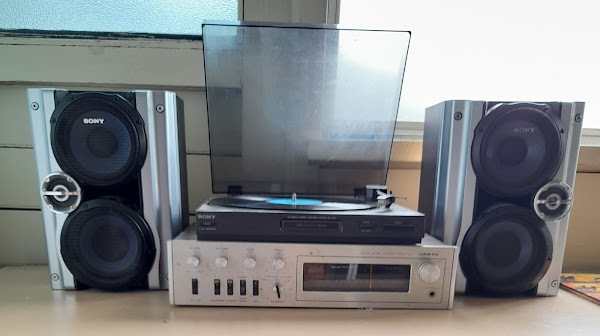
I seem to be "with it" for once. I still have all my old vinyl records and recently hooked up a turntable to play them


My setup


In Victor Milazzi’s aptly named Vinyl Revival store in Fitzroy, Melbourne, a record renaissance is underway.

While baby boomers long ago sold their extensive record collections for CDs, the twenty-something audience is rediscovering the joys of vinyl records, spurred by a quest for sound quality and a desire to support artists.

Milazzi was one of few who kept his record collection, initially selling records from an upstairs studio in North Carlton in 2010. While this retail operation still exists, it’s the hipsters browsing along Brunswick Street that are his main clientele.

The retailer not only sells records, but turntables, amplifiers and speakers. The store’s vinyl stash, all new and repressed, come in original cover designs including David Bowie’s Brilliant Adventure, Nirvana’s Nevermind, and The Cure’s Wild Mood Swings. And what would a cred record store have if it didn’t include INXS’ live recording from Wembley Studio or Duran Duran’s Future Past, complete with a couple of intertwined fluorescent figures on the front cover?

Priced from $45 to up to $100, there are also a number of contemporary artists in the mix such as Taylor Swift and Billie Eilish. When Milazzi first went into the business over 10 years ago, records were sold for considerably less, around $15 to $20.

“Of course, before vinyl took off, you could always find one or two records in second-hand stores for just a couple of dollars,” says Milazzi, whose selection of turntables ranges in price from $500 to up to $3000. “Whatever you hear on the radio or through streaming can be produced in record form.”

At the time of interviewing Milazzi, a young couple enter the store. They are upgrading their turntable (to a Project A1 priced around $700) and going through the records to add to their extensive collection.

“We got into vinyl about six years ago, listening to everything from jazz to Duran Duran and Queen,” says Oscar, 22. For Oscar and his partner, Grace, buying records is a good way of supporting artists. One of their most expensive records is by jazz musician Oscar Peterson, costing at the time $120. “It’s the quality of the sound you get from records that keeps me buying more. And it’s something that feels very tangible every time you move the needle across,” he adds.

Architect Jesse Linardi, design director of DKO Architecture, enjoys playing records on his SL 1200 in his kitchen while preparing a meal. A re-released 1970s design, his system comes with a magnetic touch plate that allows him to mix and scratch the sound he’s looking for.

“It’s a bit like driving a manual rather than an automatic,” says Linardi, who estimates the entire package including turntable, speakers and amplifiers can easily start north of $10,000. “It’s certainly the best way to listen to electronic music.”

For Milazzi, the popularity of vinyl could be attributed to nostalgia, reflecting the past. But it’s also about buying the complete ‘package’, which often includes the printed lyrics of the songs enclosed within the cover. He is also seeing vinyl as being a popular gift choice for special occasions such as weddings, where guests go in together to purchase a turntable and speakers, with individuals or couples buying records to help establish a record collection.

And while many baby boomers ditched their record collection, some are now reacquainting themselves with vinyl and enjoying the music they grew up with

************************************************

Why Millennials have fallen in love with their grandparents’ furniture

I seemto be "with it in this too. In the last couple of years I have replaced about half of my furniture with the brown varnished items of the '30s and '40s. Example below

Millennials and Gen Z are driving soaring demand for secondhand and restored mid-century furniture, with brands beloved by their grandparents’ generation such as Parker, Chiswell and Wrightbuilt attracting shoppers.

Characterised by clean lines, pieces made from teak wood and vinyl plastic, with an overriding emphasis on comfort, styles from the 1950s to 1970s are hot property on social media and online marketplaces.

Mid-century’s influence was seen in recently published tours of the mansion homes of Gen Z influencer Emma Chamberlain (in Architectural Digest) and Millennial skincare mogul Zoe Foster Blake (in Vogue Australia), each showcasing retro-inspired rooms and pieces. But the style is also prized in more humble homes.

Jessica Cale has turned her maternity leave side hustle as a suburban mid-century reseller into a full-time gig.

“Our quintessential kind of client, they live in Marrickville [in Sydney’s inner west], they’ve got a bit of disposable income but not too much, they’re under 30,” she said.

She runs her business Retro Bay out of her home in Mortdale, in the city’s southern suburbs, with her husband, Joel. They sell the salvaged and restored pieces on Facebook Marketplace, where there was a 13 per cent increase in home furniture listings in Australia between 2020 and 2021.

Furniture and household items make up more than half of the secondhand platform’s 2 million vintage listings, data from parent company Meta shows.

Joel said younger people, who grew up in the height of flat-pack popularity, were looking for more environmentally friendly ways to furnish their home.

“Buying a second-hand piece of furniture of higher quality will keep two other pieces of lesser quality out of landfill,” he said.

************************************

Also see my other blogs. Main ones below:

http://dissectleft.blogspot.com (DISSECTING LEFTISM -- daily)

http://antigreen.blogspot.com (GREENIE WATCH)

http://pcwatch.blogspot.com (POLITICAL CORRECTNESS WATCH)

http://edwatch.blogspot.com (EDUCATION WATCH)

http://snorphty.blogspot.com/ (TONGUE-TIED)

http://jonjayray.com/blogall.html More blogs

***************************************

Sunday, December 04, 2022


Her poor mental health was why Brittany Higgins went missing during first trial

And her poor mental health was why the retrial was abandoned. Ironical that she was ever taken seriously. It seems that she was delusional from the start. The claim was a he said / she said affair with no corroborating evidence. Except for feminist politics the case would never have gone to trial A serious miscarriage of justice based on an accusation from a mentally unwell woman was narrowly avoided

Brittany Higgins was hospitalised on mental health grounds during the first trial after she went missing and police were called to locate her in Canberra.

News.com.au can reveal for the first time the reason for her disappearance after the ACT Supreme Court lifted an October 10 suppression order.

The serious incident involved multiple police cars being called to search for her and an ambulance being dispatched to her hotel.

She was located by police walking in the rain and taken to the Canberra hospital before she spent five days at a Canberra mental health clinic.

At the conclusion of her treatment, she returned to court to complete her cross examination.

New evidence that the “ongoing trauma” associated with the prosecution of Bruce Lehrmann poses an unacceptable risk to the life of the complainant Brittany Higgins has prompted prosecutors to drop the rape charge and not proceed with a second trial.

Mr Lehrmann has consistently denied the allegations.

ACT Director of Public Prosecutions Shane Drumgold confirmed today he had reviewed new medical evidence regarding Ms Higgins.

“I have recently received compelling evidence from two independent medical experts, that the ongoing trauma associated with this prosecution presents an unacceptable and significant risk to the life of the complainant,’’ he said.

“The evidence makes it clear this is not limited to the harm of giving evidence in the witness box, rather applies whether or not the complainant is required to re-enter the witness box in the retrial.

“Whilst the pursuit of justice is essential for my office and the community, the safety of a complainant in a sexual assault matter, must be paramount.

“In light of the compelling independent medical opinions, and balancing all factors, I have made the difficult decision that it is no longer in the public interest to pursue a prosecution at the risk of the complainant’s life.”

Ms Higgins was readmitted to hospital on Thursday.

The former Liberal staffer granted permission for her friend and supporter Emma Webster to release the following statement.

“Brittany is in hospital getting the treatment and support she needs,’’ Ms Webster said.

“The last couple of years have been difficult and unrelenting.”

“While it’s disappointing the trial has ended this way, Brittany’s health and safety must always come first.”

“Brittany is extremely grateful for all the support she has received, particularly from our mental health care workers.”

But until now any reporting of her October 10 hospitalisation was prohibited by the Supreme Court.

The trial was briefly delayed during the second week as a result, with Ms Higgins unavailable to appear in court.

Former Liberal staffer Bruce Lehrmann, who was charged with one count of sex without consent in ministerial office of Linda Reynolds in the early hours of March 23, 2019, pleaded not guilty.

He was never convicted and the jury was discharged without reaching a verdict after an allegation of juror misconduct.

***********************************************

Police doubted Brittany Higgins but case was ‘political’

The most senior police officer on the Brittany Higgins case believed there was insufficient evidence to prosecute Bruce Lehrmann but could not stop the ACT Director of Public Prosecutions from proceeding because “there is too much political interference”, ­according to diary notes made by the ACT Police Manager of Criminal Investigations, Detective Superintendent Scott Moller.

In a separate executive briefing last year, Superintendent Moller advised that investigators “have serious concerns in relation to the strength and reliability of [Ms Higgins’] evidence but also more importantly her mental health and how any future ­prosecution may affect her ­wellbeing”.

The executive briefing lists a series of concerns by senior police, including that Ms Higgins had ­repeatedly refused to provide her original mobile phone; had ­deliberately deleted messages from a second phone; had lied about seeking medical attention after the incident; and had joked about wanting “a sex scandal” a month before the incident. Some became issues at the trial.

The briefing, dated June 9, 2021, states that “there is limited corroborative evidence of sexual intercourse taking place or ­consent being withdrawn or not provided”.

An attached minute signed by Detective Inspector Marcus Boorman, the investigation manager assigned to the case, states: “Investigators at this juncture have a number of concerns ­regarding inconsistencies in disclosures and other evidence ­obtained during the investigation. In light of the issues identified, ­serious concerns exist as to whether there is sufficient ­evidence to prove the alleged ­offence.”

The documents obtained by The Weekend Australian also ­reveal that Ms Higgins texted boyfriend David Sharaz in May last year saying: “F..k it, if they want to play hard ball I’ll cry on The Project again because of this sort of treatment.”

None of the texts or the police doubts about the case were ­revealed to the jury.

Superintendent Moller made notes of a conversation with his boss, ACT Deputy Chief Police Officer Michael Chew, on June 17 last year while discussing Operation Covina – the Higgins/Lehrmann sexual assault case.

At that point in the investigation, The Weekend Australian understands, more than half of the witness list had yet to be interviewed by police, but it appears the DPP, led by Mr Drumgold, had ­already decided to prosecute.

In the diary note, Superintendent Moller wrote: “Insufficient evidence to proceed.

“DCPO [Mr Chew] advised he had a meeting with DPP who ­stated they will recommend ­prosecution. DCPO stated ‘if it was my choice I wouldn’t proceed. But it’s not my choice. There is too much political interference’. I said: ‘That’s disappointing given I think there is insufficient evidence’.”

The following day Superintendent Moller forwarded a copy of the interim brief of evidence to Commander Andrew Smith to conduct an independent review of the investigation. The result of that review is not known.

Ms Higgins first spoke to police on April 1, 2019, a week after the events at Parliament House, but informed them two weeks later she did not wish to continue with the allegations. On February 5, 2021, she re-engaged with police, telling them she had been interviewed by the media and didn’t want to do an evidence-in-chief interview until her interview with The Project host Lisa Wilkinson had aired on television.

The following day “police ­advised Ms Higgins the intended media events … may jeopardise any subsequent criminal investigation; however Ms Higgins made it clear to police she was not willing to provide investigators with a formal statement in relation to the allegations until the media stories had been published. Ms Higgins stated that she wanted to ensure the sexual assault investigation was ‘active’ in anticipation of the media events.”

The TV program aired on February 15 and Ms Higgins sat down with police for her evidence-in-chief interview nine days later.

At that interview investigators reiterated to her the need to examine her mobile phone for potential evidence. “Ms Higgins refused to hand over her phone despite being explained the evidential value of the process,” the police report says.

The AFP statement of facts prepared by Superintendent Moller reflects police frustration over difficulties in obtaining Ms Higgins’ mobile phone after the interview to extract data.

On March 15, when police had arranged for a second time to meet Ms Higgins to obtain the phone, she failed to turn up or to respond to calls. “During the afternoon on the same date police observed Ms Higgins on commercial television at the March4Justice march at Parliament House,” Superintendent Moller wrote.

On May 5, 2021, Superintendent Moller was informed that ACT Victims of Crime Commissioner Heidi Yates had advised that any contact with Ms Higgins was now to go to her rather than directly to Ms Higgins.

Three weeks later, Superintendent Moller and other detectives met Ms Higgins, who was accompanied by Ms Yates, at the Winchester Police Centre in Canberra, where she gave a second ­interview.

“During this conversation I stressed to Ms Higgins the importance of refraining from participating in any media interviews in relation to this matter,” Superintendent Moller says in his police statement.

On this occasion Ms Higgins handed over a mobile phone.

Police recovered a text ­exchange between Ms Higgins and former boyfriend Ben ­Dillaway dated February 7, 2019, six weeks before the alleged rape, in which the pair joked about wanting a political sex scandal.

“The bar for what counts as a political sex scandal nowadays is REALLY low,” Ms Higgins wrote.

“I want a sex scandal I can be like whoa. Impressive. Didn’t think he had it in him,” Mr Dillaway wrote.

“Exactly! A sex scandal the party can be proud of. Another Barnaby but without the baby haha,” Ms Higgins responded.

On July 12 last year Superintendent Moller again met Ms Higgins and Ms Yates, this time at AFP headquarters in Brisbane to update her on the investigation.

“Ms Higgins advised that any photos taken on the night of the incident were saved on her Google drive attached to her iCloud but she could not recall taking any photos.

“Ms Higgins advised (of) the photo of an injury to her leg she took herself on WhatsApp during budget week, however she could not recall the exact date. Ms Higgins advised she shared this photo with The Project on 19 January 2021.

“Ms Higgins advised she had seven iPhones since 2019, most had been supplied by the government as part of her work and they had been returned when she changed jobs, however Ms Higgins was happy for police to take the old phones she had.”

During the conversation Superintendent Moller showed Ms Higgins text messages ­between herself and Mr Sharaz on May 21, 2021 about her sending him an audio file because she was “clearing out her phone ahead of the police”.

“Ms Higgins told me that the files she had sent to David Sharaz and deleted from her phone related to taped conversations of her talking to various ministers and she was concerned she had committed an offence by taping the ministers so she didn’t want the police to find them.”

Ms Yates returned later that day and handed over two iPhones from Ms Higgins.

**************************************************

Federal parliament overturns 25-year-old ban on euthanasia laws in ACT and Northern Territory

The federal parliament has lifted a 25-year-old ban that prevented the territories from making voluntary assisted dying laws.

Every state in Australia has already legalised voluntary euthanasia.

However, in 1997, the Commonwealth imposed a veto on the Northern Territory and the ACT, specifically barring them from doing so.

Thursday's Senate vote ends that ban, paving the way for the two territories to debate and pass their own laws.

The chamber and public gallery broke out into applause as senators agreed to repeal the ban, without a formal count of votes for and against.

Among the onlookers were several ACT MLAs, including Chief Minister Andrew Barr. Former NT chief minister Marshall Perron was also in the gallery.

Mr Perron's Country Liberal Party government had introduced the world's first legal euthanasia scheme in 1995, before then federal Liberal backbencher Kevin Andrews led the Commonwealth push to abolish it.

Thursday's Senate vote followed hours of debate across several sittings, involving almost all senators and, earlier, many MPs. The main parties had allowed parliamentarians to vote according to their conscience.

It was the fourth attempt to revoke Mr Andrews's ban on the territories, following earlier, unsuccessful efforts in 2008, 2010 and 2018.

Mr Perron thanked Prime Minister Anthony Albanese for "doing what his five predecessors didn't do".

"And that's facilitate the debate on returning power to the territories," he said. "There has been a bill before parliament to do exactly that, continuously now, for 18 years."

Advocates highlight 'unconscionable' divide

Labor had promised before this year's election that it would allow a debate on the longstanding ban.

Independent ACT senator David Pocock had also pledged to push for a vote on territory rights.

Ultimately, two Labor backbenchers — Canberra's Alicia Payne and Darwin's Luke Gosling — introduced the bill that eventually passed through parliament.

Television producer and comedian Andrew Denton, who founded the euthanasia advocacy group Go Gently, was on hand to watch the final vote.

He expressed "deep gratitude" to parliamentarians, "on behalf of all advocates, and particularly those who died painfully or had loved ones who died painfully".

"It is unconscionable that here, in the ACT, somebody dying of cancer does not have the same end-of-life choices as somebody living less than 30 kilometres away in Queanbeyan."

During the debate, NT Labor senator Malarndirri McCarthy said past justifications to intervene in and control the territories made little sense today.

"Yes, we do have a small population in the Northern Territory, but we have big hearts," she said. "We have great thinkers, we excel at so many levels."

Senator McCarthy said that since Mr Perron introduced his world-first legislation in 1995, the NT "has grown, exponentially, in skills, and knowledge, and ability to make its own decisions".

"Why is it we are constantly told we cannot make decisions for ourselves?"

*******************************************************

Climate change pest who blocked the Sydney Harbour Bridge is JAILED for her 'selfish and childish' stunt

A protester who blocked the Sydney Harbour Bridge in a protest over climate change has been sent to prison after a magistrate slammed her for her 'childish stunts' and 'selfish emotional' actions.

Magistrate Allison Hawkins sent Deanna 'Violet' Coco to prison for a minimum of eight months after she pleaded guilty to seven charges, including using an authorised explosive not as prescribed, possessing a bright light distress signal in a public place, and interfering with the safe operation of a bridge.

The 31-year-old sat at the front of the public gallery at Sydney's Downing Centre Local Court on Friday, wiping tears from her eyes as she held hands with her mother and another female supporter.

At 8.30am on April 13, Coco drove a large hire truck along the Cahill Expressway on the Sydney Harbour Bridge and purposefully blocked a lane during peak hour, the court was told.

While the truck was obstructing traffic, she stood on top of it, held a lit emergency flare and livestreamed the event.

After 25 minutes, police arrived and forcibly removed the protesters from the iconic Sydney landmark, with Coco resisting arrest.

Defence lawyer Mark Davis told the court a 'salient fact' in Coco's case was that she only blocked one lane on the Sydney Harbour Bridge when there were five.

'One lane was blocked ... it was a deliberate decision to only block one lane,' Mr Davis said.

'To put it simply, the traffic may have still been moving, there was no suggestion there was backup of traffic.'

The court was told Coco suffered from 'serious anxiety surrounding climate change' and her actions were personally motivated, as her boyfriend had been arrested for a similar protest on a football field.

Mr Davis said his client was in a 'high state of emotion' and would not have ordinarily conducted the offence.

Ms Hawkins questioned Mr Davis´ defence: 'Normal members of the community going to work and going about their ordinary business are not entitled to being disrupted because she´s in a high state of emotion.'

The defence lawyer said climate change anxiety was the 'most prevalent anxiety' in Coco´s generation.

'There may be an overwhelming threat of doom, they sense they aren´t being heard, the government isn´t doing enough, it´s leading to these types of actions,' Mr Davis said.

Ms Hawkins found there was an 'intended element of planning' in Coco´s offending.

'You stopped during peak-hour having obtained a flare and truck, and the banners and glue, to halt peak-hour traffic in the city at that particular time with the aim of gaining maximum exposure,' the magistrate said.

'You knew this was illegal, you knew you would be arrested and you knew there would be consequences.'

Ms Hawkins told Coco she let an 'entire city suffer' due to her 'emotional reaction' and failed to take into account the other people she affected.

She said the 31-year-old´s actions deserved condemnation from both the court and the community.

'You do damage to your cause when you do childish stunts like this. Why should they be disrupted by your selfish emotional actions?' Ms Hawkins said.

'You are not a political prisoner, you are a criminal.'

Coco was convicted and sentenced to 15 months imprisonment with a non-parole period of eight months.

She hugged her mother and friend before she was handcuffed and led out of the court by two corrective services officers.

************************************

Also see my other blogs. Main ones below:

http://dissectleft.blogspot.com (DISSECTING LEFTISM -- daily)

http://antigreen.blogspot.com (GREENIE WATCH)

http://pcwatch.blogspot.com (POLITICAL CORRECTNESS WATCH)

http://edwatch.blogspot.com (EDUCATION WATCH)

http://snorphty.blogspot.com/ (TONGUE-TIED)

http://jonjayray.com/blogall.html More blogs

***************************************
Friday, December 02, 2022


Top Qld oncologist found guilty of ‘unnecessary death’

The doctor has surrendered to his accusers but I don't think he needed to. Imunotherapy can work miracles and it can be argued that is should be tried first before leaping into surgery.

His decision to use ipilimumab is perhaps questionable. It is an older drug that can have severe side effects. Since Keytruda has now been approved for use with melanoma, that would have been a better choice. But it may not have been available under any protocol in 2018

But, as his colleagues say, he should have recognized the side-effects of ipilimumab as they emerged and gone straight into surgery at that point. So there was a degree of negligence there. But as a busy chief oncologist in a public hospital, such omissions can happen. It was probably his workload that was principally to blame


A top Queensland oncologist has been found guilty of professional misconduct, after a melanoma patient died “unnecessarily” due to the doctor’s multiple failures in diagnosis and treatment.

Paul Norman Mainwaring is a former director of oncology at the Mater Hospital and more recently practised at Canossa Private Hospital in Oxley.

He is now co-founder and chief executive of cancer diagnosis biotech company XING Technologies.

In a decision published on Tuesday, the Queensland Civil and Administrative Tribunal member John Robertson found that the 57-year-old’s “multiple failures” and, in particular, his initial treatment decision by immunotherapy for the melanoma patient in 2018 was “very serious”.

“The expert evidence against (Mr Mainwaring) is overwhelming, (his) multiple failures and, in particular, his initial treatment decision are therefore very serious,” Mr Robertson states in his decision.

Mr Mainwaring admitted during the tribunal hearing on September 15 that he “acted in a manner that was substantially below the standard reasonably expected of a registered health practitioner of an equivalent level of training and experience”, the decision states.

He also accepted his various failures in treatment decision-making including failure to seek other specialist opinions, and failure to keep notes amounted to professional misconduct.

He has surrendered his medical registration.

The decision states that a 76-year-old patient, known as PB, lost 11kg in weight and “tragically died” in Brisbane on 25 May 2018 after he developed an infection from severe diarrhoea and a perforated gastrointestinal wall which was a “known complication” of the immunotherapy called ipilimumab, with four doses by infusion between January and March 2018.

“Ipilimumab was not the appropriate treatment for the patient given the patient’s melanoma was either a stage IIB or stage IVa; has known side effects due to its high toxicity, including colitis and diarrhoea,” Mr Robertson wrote in his decision.

“The appropriate approach to the patient’s condition was to “wait and see”,” Mr Robertson wrote.

The tribunal heard that three experts in the field - Benjamin Brady, a specialist oncologist at the Peter MacCallum Centre in Victoria, Victoria Atkinson a medical oncologist at the Princess Alexandra Hospital and Brian Bell, the executive director of medical services at the same hospital - concurred that the choice of ipilimumab as a treatment was not clinically appropriate.

Dr Brady and Professor Atkinson told the tribunal that the patient “had an avoidable and unnecessary death” with Professor Atkinson stating that PB “had at worst, a completely resected stage IVa melanoma and had a very high likelihood that he would be cured from his cancer”.

Mr Mainwaring’s diagnosis of the man with a more serious metastatic melanoma “was neither clinically appropriate nor accurate”, when he was more likely to have a less-serious form of melanoma.

Dr Brady also considered that the risks and benefits of the treatment were not adequately emphasised to PB by Mr Mainwaring and that he failed to ask a colleague for a second opinion or for any help in managing PB’s treatment.

Mr Mainwaring has not practised for over three years and surrendered his registration in February 2019.

Prior to surrendering his registration, he had permanently retired as medical oncologist at Canossa Private Hospital and he told the QCAT hearing that he had no intention to return to practice.

“But for his voluntary cessation of practice in 2019, the seriousness of the conduct would ordinarily warrant the respondent be disqualified from practice for a lengthy period to send an appropriate message of denunciation to the medical profession and the community at large,” Mr Robertson wrote.

Mr Mainwaring told the tribunal he deeply regretted the tragic circumstances surrounding PB’s death and offered his sympathies to his family, and he was remorseful for his conduct.

*************************************************

Revenue NSW has cancelled 33,121 fines in wake of the landmark ruling this week

Australians fined thousands of dollars for flouting Covid rules let out a sigh of relief this week with 33,000 fines ruled invalid - with many more expected to be refunded soon.

A landmark court case has seen the fines of tens of thousands of NSW residents withdrawn and the validity many more across the national thrown into doubt.

A Supreme Court judge Dina Yehia SC ruled two infringements imposed by police were invalid after hearing the wording on the penalty notices did not meet the legislative requirement of the Fines Act.

The ruling saw Revenue NSW has cancelled 33,121 fines, with the validity of another 30,000 also now in doubt.

Marrickville mother Karina Williams was fined $1,000 while buying fish and chips with her boyfriend in Croydon Park, just a few hundred metres from her home.

The single mother had failed to register her movement in the Canterbuty-Bankstown council, which at the time had been considered an LGA of concern.

Ms Williams and her partner, who had not been outside his LGA, were both slapped with a $1,000 fine for the perceived breach in August 2021.

For the mother-of-two, who was supporting her two teenage children on JobKeeper, the 'unaffordable' fine became a source of major anxiety.

The unpaid fine attracted several fees before it eventually prevented her from reapplying for her driver's licence after a suspension.

Ms Williams, with the help of lawyers from the Aboriginal Legal Service, was able to quash the debt, but the fine remained on her police record.

There were 62,138 Covid fines issued in NSW totalling $56,587,740.

Of that total, 16,462 fines worth $14,688,520 had been paid as of September, and before Tuesday's decision just 1,363 had been withdrawn.

******************************************************

What is Ozempic and why is there a shortage of it?

Judie Thompson recently drove to a pharmacy 45 kilometres from home to replenish her dwindling supply of the drug she says changed her life. Thompson, 64, from Brisbane, began using the drug in March to manage her type 2 diabetes. Since then, she has lowered her insulin usage from five injections a day to just two – and lost 20 kilograms.

“It’s changed my life totally,” she says. “I was 107 kilos when I went on it, and I started losing weight as well as noticing how well my insulin was working.

“I walk my dogs, which I haven’t done in 10 years. I’m so happy to be me now.”

The drug, Ozempic, which comes as a weekly injection, has been approved in Australia for treating type 2 diabetes but is also sought after because it can help with weight loss, as is its weight-loss-specific counterpart, Wegovy, in the United States. Ozempic is now a “Hollywood drug”, according to some reports. Asked how he got to look “so ripped”, billionaire Elon Musk tweeted it was down to “fasting … and Wegovy”.

Now there’s a global shortage of Ozempic. It will not be available in Australia until April, affecting people who use the drug to manage their diabetes.

What’s causing the shortage? Who should be using Ozempic? And is it a magic shortcut for weight loss?

Ozempic was created by Danish drug company Novo Nordisk in 2012 and approved for use for type 2 diabetes in the US in 2017 and in Australia in 2019. In July 2020, it was listed on the Pharmaceuticals Benefits Scheme (PBS) so that it costs about $40 (or $6.60 with a concession card) for a monthly course of weekly injections. The same amount on a private script, or “off label”, can cost $130 or more.

About 1.3 million Australians were newly diagnosed with type 2 diabetes between 2000 and 2020, according to the Australian Institute of Health and Welfare. Diabetes is caused by the body’s inability to use and/or produce insulin, a hormone that controls blood glucose levels.

In clinical trials by Novo Nordisk, it was discovered that semaglutide, which Ozempic contains, had a dual effect: it could also lead to weight loss in patients.

Semaglutide stimulates cells that make insulin while suppressing glucagon, affecting blood glucose levels, says leading endocrinologist and obesity specialist Professor Joseph Proietto at the University of Melbourne. “Semaglutide is an analog of one of our own hormones that we make in our small bowel called glucagon-like-peptide-1 [GLP-1],” adds Proietto, who established the weight control clinic at Austin Health. He says GLP-1 slows gastric emptying “so that it makes you feel fuller for longer, and then it goes to the brain and suppresses hunger. And both of those actions help with weight loss.”

********************************************************

Rio Tinto chief scientist Nigel Steward says hydrogen ‘hype’ faces tough tests in reality

Rio Tinto’s chief scientist has fired a shot across the bows of companies and governments banking on green hydrogen “hype” as a solution to global warming, saying the company does not see hydrogen as a serious alternative to fossil fuels as an export commodity.

Speaking at Rio’s London investor day on Wednesday, Rio chief scientist Nigel Steward said the company did not believe hydrogen could be used as an “energy carrier” in the near future, given its production costs and problems with shipping it around the globe.

“Hydrogen is much hyped, particularly as an energy carrier. We don’t see hydrogen as being used as an energy carrier,” he said.

Mr Steward’s comments fly in the face of the ambitions of Andrew Forrest’s Fortescue Metals Group, which plans to spend billions in the hope of turning green hydrogen into a major seaborne commodity.

But the Rio chief scientist warned investors that recent research suggested that direct shipping of hydrogen at scale could even exacerbate global warming.

“If we want to use hydrogen as an energy carrier, and we‘re going to transport it around the world as liquid hydrogen, that’s problematic because 1 per cent of the hydrogen per day is lost to the atmosphere,” he said.

“Recent studies have shown that hydrogen actually has a global warming potential five to 16 times greater than carbon dioxide. So what this means is it is better to burn natural gas than it is to transport hydrogen around the world and then consume that later.”

Fortescue and other hydrogen hopefuls have said they plan to tackle the issue of energy loss in transporting liquid hydrogen by instead producing ammonia as a means to transport the commodity. But that would require additional chemical processes that would use even more energy, making its use less efficient.

Mr Steward said Rio believed hydrogen could have a major role to play in global energy transition, but said the mining giant believed it was best consumed where it was produced.

“We see hydrogen being used for its unique chemical properties. As a reducing agent for production of green steel, as a reducing agent for ilmenite in the smelting process to make iron and titanium, and also as a source of energy for calcining alumina in our refineries,” he said.

But even that would require a significant technological breakthrough to bring production costs down, he said, given hydrogen production requires significantly more energy to produce than even aluminium smelting.

“It’s a very, very energy intensive material. It requires four times the amount of energy per tonne to produce than aluminium – and we think of aluminium as being very energy intensive,” he said.

************************************

Also see my other blogs. Main ones below:

http://dissectleft.blogspot.com (DISSECTING LEFTISM -- daily)

http://antigreen.blogspot.com (GREENIE WATCH)

http://pcwatch.blogspot.com (POLITICAL CORRECTNESS WATCH)

http://edwatch.blogspot.com (EDUCATION WATCH)

http://snorphty.blogspot.com/ (TONGUE-TIED)

http://jonjayray.com/blogall.html More blogs

***************************************

Thursday, December 01, 2022


The Finnish example

In considering the article below, some caution is needed. One should, for instance, not mistake the initial results from a policy change for the final effects. Finland was for some time a world leader in education results on the PISA criteria but it has slipped back to sixth place recently

There are also ways in which Finns are different. Psychologically, they are famously taciturn for intstance. That may help Finns to minimize conflict

Sociologically, all Finns are clearly aware of their heroic struggles with the Soviets. That clearly fosters a sense of brotherhood among them -- something very conducive to acceptance of socialist policies

So what works well in Finland might not transfer well to other societies


The leader of the nation ranked as the happiest in the world arrives in Australia on Thursday, and it presents a great opportunity.

Prime Minister Anthony Albanese will meet his Finnish counterpart, Sanna Marin, on Friday and will surely be interested to learn more about Finland’s success and how it might apply to Australia.

Finland has led moves towards emphasising wellbeing in economic decisions, of the kind that Australian Treasurer Jim Chalmers has commenced since Labor took office in May.

Finland is famous for its well-resourced schooling and equality in education funding. This contrasts with the considerable inequalities that remain in Australian school funding almost a decade after the Gonski review’s call for change. Those recommendations lie dormant.

Finnish experience shows that equality between schools – a mutual striving for all schools to be good schools – is the best way to lift a nation’s educational excellence. That collective striving relies on valuing, trusting and fairly rewarding the teachers in those schools.

People will obviously be happier if allowed to pursue what they really want to do with their lives, rather than be pushed into an occupation their parents or others deem to be of suitable status. Encouraging those who choose different vocational paths from a professional career, for instance, contributes to Finland’s happiness. Being in a trade such as a plumber, electrician or carpenter is more valued than here.

Students in Finland are encouraged to follow their natural curiosity. We learn most effectively through trial and error. In Australia, there is too great a requirement for competitive high-stakes testing. This leads to the recitation of pre-prepared “right answers”. It causes anxiety for young people, but it also fails to foster creativity and innovation.

Finland has a remarkable history of innovation, due in part to its strong investment in research and development, which has helped it establish niches of design and production excellence for export. The best-known example is the Nokia company, which dominated global mobile phone production for more than a decade. Australia can learn from this approach to rectify our own underinvestment.

Gender equality is also advanced in Finland. Prime Minister Marin has spearheaded initiatives to increase paternity leave. Last year, paid parental leave in Finland was extended to 14 months, of which almost seven months is allocated for fathers. While some of that paternity leave can be transferred to mothers, most has to be taken by fathers for the family to gain the full entitlement. This “use it or lose it” minimum requirement is the only proven way to lift men’s role in caring for their children.

The new Australian government has made a welcome decision to extend paid parental leave to six months. However, it still needs to demonstrate how fathers will be encouraged to actually take that leave. That will support more mothers to return full-time to the workforce. The proportion of women in full-time jobs in Australia is 20 percentage points below Finland.

Finland is also the least corrupt country in the world, according to Transparency International. It stands at equal No. 1 on that index, alongside Denmark and Jacinda Ardern’s New Zealand, who Sanna Marin met on Wednesday. Australia languishes at No. 18, underlining the need for the National Anti-Corruption Commission being legislated in our federal parliament this week.

Finland has consistently pursued social democratic policies, the kind that Australia needs to revive if it is to boost its happiness, educational achievement and gender equality. Marin’s visit should provoke us to ponder the question: Do we want to become even more like America, or be more like Finland? We are poised between those two poles on so many indicators.

Measurements have shown, for instance, that an American with tertiary-educated parents is almost seven times more likely to enter tertiary education than a fellow citizen whose parents had no post-school education. In England, the difference is six times and in Australia, it is four times. In Finland, however, you are almost no more likely to get a tertiary education simply because your parents did. Finland has thus created extraordinary intergenerational opportunities for people from less privileged family backgrounds, based on genuine merit.

Australia can learn from this to further realise the full talents of our people to achieve what they want according to their interests and abilities. Our success, indeed our happiness, need not be determined by inherited advantage.

***********************************************

Police officer who shot and killed Gabriel Messo may have committed homicide, coroner says

Stupid armchair criticism of a split-second decision

A junior police officer who gunned down a man as he savagely stabbed his own mother in broad daylight may have committed homicide, according to Victoria's coroner, who has referred the case to state prosecutors.

Gabriel Messo died after being shot three times by a Victoria Police officer who confronted him as he brutally attacked his mother in a public park in Melbourne's north-west about two years ago.

The assault was so ferocious that his mother, Lilla Messo, lost an eye and developed an acquired brain injury. She ultimately survived the attack.

Mr Messo's death was being investigated by the Victorian State Coroner John Cain, who today found that the first two shots fired by Constable Emmanuel Andrew was an acceptable use of force.

"The level of force used was not disproportionate to Constable Andrew's objective to prevent the assault from continuing and to protect Lilla from really serious injury," Judge Cain said.

But Judge Cain said he was "gravely concerned" about the third shot which was fired just five seconds after Gabriel Messo, who was by that point unarmed, had stopped attacking his mother and was moving away from police as he clutched his torso.

"I have formed a belief to the requisite standard that an indictable offence may have been committed by Constable Andrew in connection with Gabriel's death," Judge Cain said.

"The indictable offences I have formed a belief to the requisite standard include but are not limited to … of homicide, causing serious injury intentionally, conduct endangering life or assault."

He has referred the case to Victoria's director of public prosecutions, who will ultimately decide whether to criminally charge Constable Andrew.

Victoria Police Chief Commissioner Shane Patton said he was confident prosecutors would assess whether to lay charges as quickly as possible.

"We will await the findings in due course," the chief commissioner said.

"I know this will be an incredibly difficult time for the member involved and Victoria Police will continue to support him during this process."

Police union backs officers involved in Messo shooting
Police Association of Victoria secretary Wayne Gatt strongly condemned the coroner's findings and said the two police officers attending the Gladstone Park assault had made the right decision.

"We've got a decision to make as a community in Victoria. I can tell you now, police forces around the world are being roundly criticised for attending scenes and doing nothing," Mr Gatt said.

"These officers did something. They went and saved the life of a Victorian, a vulnerable Victorian who had been assaulted there for 17 minutes."

Mr Gatt said the situation needed to be quickly resolved by prosecutors for the benefit of police officers who had been "tormented" by the years-long wait.

He said that he had spoken to both officers and they were shocked by the coroner's findings.

"Does that make us angry? Yes it does," he said.

"Because police officers are asked to do this each and every day, and they shouldn't have to do it under the shadow of this sort of persecution."

Mr Gatt warned the findings could have lasting implications for policing in the state.

"Most people in the community would understand the terrible message this sends to police officers across Victoria," Mr Gatt said.

"Police officers who will get out of their cars and question 'should I rush in and do something or should I sit back, save I be criticised in the cool light of day, years and years later?'"

***************************************************

Washing machine repairman wrongly targeted as a suspect in the William Tyrrell investigation is awarded almost $1.5MILLION in damages

Crooked cops again

A washing machine repairman who was wrongly named as a high-profile suspect in the investigation into William Tyrrell's disappearance will receive almost $1.5million in compensation.

Bill Spedding sued the NSW Police alleging detectives maliciously pursued him while investigating the disappearance of the three-year-old from his foster grandmother's home in Kendall, on the NSW north coast, on September 12, 2014.

His case before the NSW Supreme Court sought compensation for reputational harm and psychological treatment. Mr Spedding also sought exemplary damages to punish police for purportedly using the courts for an improper purpose.

The tradesman was an early high-profile suspect in the disappearance, with police searching Mr Spedding's Bonny Hills home and draining his septic tank in January 2015. But they found no evidence linking him to William.

Bill Spedding was awarded almost $1.5 million in damages after suing the NSW Police Force for malicious prosecution. Above, outside court on Thursday with his wife Margaret
+2
View gallery
Bill Spedding was awarded almost $1.5 million in damages after suing the NSW Police Force for malicious prosecution. Above, outside court on Thursday with his wife Margaret

A coronial inquest later found Mr Spedding had an alibi on the day of William's disappearance. He was attending a school assembly for a child in his care that day, and had a receipt from a nearby coffee shop.

During the police investigation into Mr Spedding, the tradesman was charged in April 2015 over the historical child abuse claims, spending 56 days in custody and then being released on strict bail conditions.

The charges were later dropped by prosecutors.

Mr Spedding alleged that the charges were levelled against him in a bid to intimidate and place pressure on him.

Mr Spedding's lawyers claimed a police investigation prior to those charges being laid was 'done in extreme haste' in three or four weeks.

'The investigation was not in any way professional, careful or proper,' said Mr Spedding's lawyer Adrian Canceri during closing submissions in August.

Mr Spedding has claimed the anxiety and depression he suffers were caused by the prosecution and the public attention it brought.

Clear evidence emerged that the complainants had been coached by another person to make allegations and another person's evidence undermined the case, Justice Harrison heard.

Barrister Adrian Williams, for the State of NSW, had argued that misunderstandings occurred but it didn't follow that police were acting maliciously.

William Tyrrell has never been found

****************************************************

Coalition slams proposed changes to referendum rules

The Coalition says Labor is exposing the Voice referendum to a misinformation campaign by scrapping laws requiring voters to be posted a pamphlet that outlines the arguments for the Yes and No cases.

The Albanese government on Thursday introduced legislation to the lower house to modernise laws governing how the referendum will be conducted.

Among the proposed changes contained in the Referendum (Machinery Provisions) Amendment Bill 2022, is the ditching of a provision that requires households to receive an official pamphlet outlining the proposed change to the Constitution, comprising up to 2000 words each on the Yes and No cases.

Shadow attorney-general Julian Leeser said the proposed change would compromise the quality of public debate in the lead-up to the national vote and risked creating an avenue for misinformation and interference to circulate.

“This is not about whether you vote yes or no,” Leeser said. “This is about ensuring the government provides information so that Australians can make an informed choice.

“A successful referendum will only occur if the change is clearly explained, and there is transparency and detail.”

Shadow special minister of state Jane Hume said the scrapping of the pamphlet was worrying as misinformation had already played a role in Australian elections.

“But this is more than just an election, this is changing Australia’s governing document - it could not be more important,” she said.

Introducing the bill on Thursday, Assistant Minister to the Prime Minister Patrick Gorman said while the government had decided against publicly funding formal Yes and No campaigns, it would fund a civics education campaign, which would inform voters of the facts around the referendum.

“This information will provide voters with a good understanding of Australia’s Constitution, the referendum process and factual information about the referendum proposal,” Gorman said.

He said the pamphlet requirement was first introduced in 1912 and was an outdated mechanism for informing voters in a digital age.

“As the next referendum will be the first in the digital age, there was no need for taxpayers to pay for a pamphlet to be sent to households,” he said.

“Modern technology allows parliamentarians to express their views to voters directly and regularly through a wide range of sources, such as television, email, and social media that did not exist when the pamphlet was introduced in 1912.”

The bill will be referred to the Joint Standing Committee on Electoral Matters, which will report in early 2023.

************************************

Also see my other blogs. Main ones below:

http://dissectleft.blogspot.com (DISSECTING LEFTISM -- daily)

http://antigreen.blogspot.com (GREENIE WATCH)

http://pcwatch.blogspot.com (POLITICAL CORRECTNESS WATCH)

http://edwatch.blogspot.com (EDUCATION WATCH)

http://snorphty.blogspot.com/ (TONGUE-TIED)

http://jonjayray.com/blogall.html More blogs

***************************************