 Australian Politics
Thursday, February 22, 2024
CEOs take risks if they get involved in broader social issues
The everlasting Glenda Korporaal (below) is right in saying that Banducci was forced out by his political amateurism. I had some dealings with Banducci a little while back and found him to be a pretty decent bloke. Wooworths may well do less well without him
The sudden announcement of the departure of Woolworths chief executive Brad Banducci has thrown a spotlight on the dangers of chief executives becoming involved in social issues.
While Banducci argued that the timing of his announcement on Wednesday had long been planned and had nothing to do with his disastrous interview this week on Four Corners, or his recent involvement in the controversy over not stocking Australia Day-themed goods, the timing of his announcement means he is exiting bruised by recent events.
While businesses have learned not to align themselves with any political party, given the real possibility of governments changing, high-profile business leaders have seen fit in recent years to become commentators on social issues of the day.
Issues such as same-sex marriage, the Indigenous voice to parliament, the merits of celebrating Australia Day and the war in the Middle East have become areas drawing in some business leaders.
But the pendulum may be swinging the other way, with the risks outweighing the perceived social halo – despite the prevailing corporate speak for having “purpose-led” organisations.
As Banducci found out, when his company tried to explain its reasons for not stocking Australia Day goods this year with a statement saying that not all staff supported the celebration of the day, taking a stand on social issues can be a high risk strategy.
The more he tried to explain the situation with full page advertisements and a media blitz, the worse it got, prompting Peter Dutton to call for a boycott of Woolworths stores.
While the same-sex marriage plebiscite was passed with a strong majority, with many business leaders who had supported it comforting themselves that they had been “on the right side of history”, the voice proved much more socially divisive issue.
While a majority of ASX top 20 companies publicly supported the voice, including Qantas, Wesfarmers, Coles, mining giants BHP and Rio Tinto, the big four banks and Telstra, in the end it could only garner support from about 40 per cent of voters.
Questions have been asked at shareholder meetings about the decision by company leaders to spend shareholders’ money supporting campaigns like the voice, with several large companies kicking in as much as $2m each.
Woolworths’ Big W was making public announcements in support of the voice during the campaign last year, but scrapped them after feedback from staff and customers.
While corporate support for the voice went down well with the Albanese government, it generated criticism from the opposition, with treasury spokesman Angus Taylor arguing that boards and senior executives should focus on their core business.
He said Australians had “never liked being told what to do by big business and big government”.
***************************************************
Make no mistake, PM’s resolve is on the line over return of boat arrivals
PETA CREDLIN
The last time Australia confronted a resurgence of illegal boat arrivals I had a seat at the table, and two things have always stuck in my mind from that time.
The first was the general fear from officials that if the Abbott government didn’t stop the boats, as the Coalition had successfully done in the Howard era, we would never be able to stop them.
The second memory was walking out of a meeting of the national security committee of cabinet – after those same officials had congratulated themselves for a sustained period of no boat arrivals – and thinking to myself: you are all the same people who sat in there under Rudd and Gillard and couldn’t stop the boats.
The only difference between then and now was the change of politicians in the room and a prime minister with resolute determination that he would stop at nothing to defeat the people-smugglers and restore Australia’s sovereignty.
It was a profound lesson in the power of resolve. We had it then, and under this current government it has gone missing; that and basic ministerial competence.
Illegal migration is a scourge few countries seem able or willing to solve.
In 2013, after 50,000 people arrived by boat under Labor, the fear was the people-smuggling trade was more sophisticated than ever, the supply chain of vulnerable people ever increasing, and the use of technology made things more challenging for law enforcement.
As those who there at the time will attest, just rolling out the old Howard-era measures, such as turnbacks, temporary protection visas and offshore processing weren’t enough. The smuggler gangs were using new tactics deployed in other regions so new structures were put in place, including the unified command structure known as Operation Sovereign Borders and Australian-purchased orange lifeboats to take people back to Java after they’d scuttled their fishing boats.
And it worked: from early 2014 until 2022 there were almost no illegal boat arrivals.
That was then, though, and this is now. On top of 11 boats intercepted since the election, there have been at least two that made it undetected through to the Australian mainland: one last November, another larger vessel last week.
And that’s not really surprising given the head of the Australian Border Force told the Senate late last year that surveillance flights were down more than 20 per cent and maritime patrols were down more than 10 per cent under the current government.
It’s possible Indonesian people-smugglers have come up with new tactics, such as using military-style inflatables to speed boatpeople to our northern beaches, and for the smugglers to then escape back to what looks like an innocent fishing vessel.
The government is playing down the seriousness of these border breaches. Last Friday, Anthony Albanese avoided media questions, using the Kevin Rudd-esque tactic of claiming not to have been briefed.
I know how national security matters are handled. If the Prime Minister could not be directly contacted, his travelling team would have been, or the Australian Federal Police detail with him (their phones are always on). Either the Prime Minister was being dishonest with the media or the whole national security apparatus has gone to sleep.
Polling already shows the electorate isn’t happy about the return of people-smugglers; it’s even showing up in younger voting demographics. Hence, this week, from the Prime Minister down, the government has been at pains to emphasise that Operation Sovereign Borders remains in place and that funding has been increased (notwithstanding the ABF testimony last year).
This is because of the conflation we’re now being fed about onshore funding numbers versus offshore funding. And that has been borne out by the leaks that Home Affairs Minister Clare O’Neil is racing to put in a submission for urgent extra funding in the May budget. We can but hope this extra funding materialises because the last thing we need, as the world’s security situation deteriorates, is the revival of something akin to a peaceful invasion.
Back in 2007 Rudd promised he’d be tough on borders, and we all know how that turned out. On Labor’s watch, there were almost 1000 illegal boats, more than 50,000 illegal arrivals and more than 1000 deaths at sea. Back then, at any one time there were an estimated 10,000 would-be illegal migrants to Australia who’d flown into Jakarta in the hope of picking up a people-smuggling boat to Christmas Island.
If anything, the number of people willing to try their luck crossing illegally into a rich country, in the hope of a better life or, occasionally, for more nefarious purposes has only increased. Several hundred thousand people are crossing into the US every month, often swimming the Rio Grande. Last year, 30,000 people crossed the English Channel to Britain on small boats. Last year, there were almost 400,000 irregular arrivals into the EU, mostly across the Mediterranean, with nearly 3000 thought to have drowned making the attempt.
The only way to stop people-smuggling is to make it clear their occupants will never gain permanent residency in their target country. Every people-smuggling venture that doesn’t end with boatpeople returned to their starting point is a chink in the armour. Even ending up in Nauru, as the latest arrivals have, for now, gives the smugglers something to sell – given that most boatpeople on Nauru eventually got permanent residency in a Western country.
There’s little doubt, as Peter Dutton suggests, smugglers are now testing the government’s resolve. They’d be watching the shambles of 149 released foreign criminals, now all but sure to stay forever in Australia, on welfare, and telling prospective customers that if even murderers and sex offenders can be given a new life in Australia, they too will get their chance.
And while the Prime Minister now talks a big game on borders, it must never be forgotten that as a senior frontbencher Albanese voted against turnbacks as Labor policy.
It’s telling that the only senior official from 2013 who believed that Labor’s influx of boats could be stopped, and should be stopped, was then customs head Mike Pezzullo. Last year the government sacked this former Labor staffer turned bureaucrat, on flimsy grounds. Again, this is why resolve matters – because, without it, you fall at the first sign of hardship.
The bleeding hearts who think we should just accept illegal migration as a fact of life need to be reminded that Australia is one of fewer than 30 countries in the world that permanently resettles migrants; 70 per cent of the rest of the world’s nations do not. In per capita terms, we are a world leader.
So, we should never be ashamed of demanding the right to determine who comes to this country or resile from the fact a sovereign nation is only sovereign when it controls its borders.
Back to resolve, do you credibly think the Prime Minister, at 60 years of age, has now rejected his lifelong convictions about illegal migration? I think we all know that middle-aged leopards don’t change their spots, but without his resolve our country is once again at the mercy of people-smugglers.
***************************************************
Commonwealth to pay coal generators nearly $1bn
Crazy. They take with one hand and give with the other. Greenies will be livid
Anthony Albanese will pay coal generators nearly $1bn in rebates under his market intervention which capped the price of coal used for electricity at $125 a tonne, according to the latest estimates from the Department of Climate Change and Energy.
Labor’s energy market intervention was triggered in December 2022 by the need to shield Australians from rising electricity prices, which were forecast in the October budget that year to increase by about 20 per cent over 2022-23 followed by a further 36 per cent rise in 2023-24.
Retail gas prices were also forecast to increase by up to 20 per cent in both 2022-23 and 2023-24. The government responded by working with NSW and Queensland to set a price cap on coal used for electricity generation at $125 a tonne, while imposing a price ceiling on new domestic wholesale gas contracts for east coast producers at $12 per gigajoule.
Under the intervention, additional financial support is supplied in cases where the costs of production exceed the cost of supply under the cap. Mr Albanese initially dismissed suggestions that compensation for generators under the arrangements could rise into the hundreds of millions.
But initial estimates provided to parliament’s cost of living committee in early 2023 by the Department of Climate Change and Energy suggested that the combined fiscal cost of the coal generator rebates to the Commonwealth, NSW and Queensland governments would be in the order of $1.5bn to $2bn, with the Commonwealth paying a 50 per cent share.
In a letter sent on Tuesday, Department Secretary David Fredericks provided an updated estimate based on the decline in the market price of thermal coal over the past year. The new estimate was in line with the department’s initial analysis, but slightly lower than the upper figure of $2bn.
“DCCEEW’s revised estimate of the maximum total fiscal cost of the rebates associated with the coal price caps is $1.85bn, with the Commonwealth government committed to paying half under the arrangement reached with the New South Wales and Queensland governments,” he said.
Responding to a request for the updated figure from Nationals Senator Matt Canavan, Mr Fredericks said the new estimate was “less than the previous estimate provided to the Senate Cost of Living Inquiry in February 2023.”
The update from Mr Fredericks suggests the Commonwealth will still need to fork out $925m for coal generators – half the estimated $1.85bn total fiscal cost of the rebates under the price cap.
The latest update from the Australian Energy Regulator revealed the cost of producing electricity in 2023 had fallen by as much as 64 per cent in a year and that wholesale electricity prices were running closer to longer-term averages.
The AER said milder weather, fewer coal supply issues and an increase in cheap wind and solar energy had helped drive the reduction. But it also noted another factor – lower fuel costs partly driven by the government’s intervention.
However, Senator Canavan argued that “massive government subsidies don’t lower electricity prices to our economy. Subsidies just transfer the cost of our inept energy policies from consumers to taxpayers.”
“To lift real wages we have to focus on lowering the costs of production. The government’s clumsy interventions have clearly chilled investment in new energy supplies in Australia. The US is doubling its LNG capacity while we remain at a standstill,” he said. “Our lack of investment in reliable energy supplies will continue to increase electricity prices for all over time.”
Leading energy economists have recently suggested there is no longer a strong rationale to extend Labor’s coal price cap beyond the middle of 2024, given the moderation in short-term coal prices.
*************************************************
Stop treating child criminals like ‘little angels’, says NT Labor MP Marion Scrymgour
Youth justice laws need to stop treating [Aboriginal] criminal minors as “little angels” and start applying “tough love” to lawless children, the [black] federal Labor MP representing Alice Springs has declared.
In an extraordinary intervention against her own party’s handling of the Northern Territory youth crime crisis, Marion Scrymgour says authorities need to stop “pussyfooting around” on juveniles, that the decision to raise the age of criminal responsibility is not working, and that it is time for parents to be held accountable for their children’s actions.
It came as NT Chief Minister Eva Lawler said in a “perfect world” she would not have children in detention facilities, and linked her opening of a new youth justice centre in Alice Spring on Wednesday to the British sending convicts to Australia in the 18th century.
After revelations in The Australian of children as young as 10 driving stolen cars around the streets of Alice Springs, Ms Lawler said that young people had been in criminal trouble for “the whole history of Australia” and that the nation’s history was built on the convict system.
The NT Police Association on Wednesday alleged crime statistics in the territory were “not being reported properly” and Alice Springs locals said children were getting more out of control.
Ms Scrymgour – the federal MP for Lingiari – had her own home broken into while she was sleeping last month, and said governments needed to make serious changes to NT youth justice laws.
“There’s got to be a rethink of how we deal (with youth crime) … a bit of tough love never hurt anyone and I think that’s what needs to come into this equation,” she told The Australian.
“We’ve got to stop thinking we’re dealing with little angels here … When you look at those photos they’re laughing and smiling, they think it’s a joke, and it’s not, because they could have an accident and one of them could get killed.
“We’ve got to stop pussyfooting around here and thinking that these kids are going and they’re being taken home to a responsible adult because in a lot of these cases there isn’t a responsible adult there and the reality is these kids don’t listen.”
Ms Scrymgour did not directly call on NT Labor to reverse its decision to raise the age of criminal responsibility to 12 – the highest in the country – but said the policy was not working to bring down crime and that Alice Springs residents needed immediate action.
“At the moment, obviously lifting the age of criminal responsibility isn’t working,” she said.
“The government was saying they’d done this co-response team between police and territory families. Obviously, it’s not working, if we’ve got these kids out on the street and there’s still this issue; obviously, we’ve still got problems.
“Labor is talking about a review of the Youth Justice Act, there are some critical areas in the Youth Justice Act which can be done now … it doesn’t need to be put off for 12 months.
“I’m not left and I’m not woke, I just think we’ve got to hurry up and stop thinking that all of these measures are working, because they’re not.”
Ms Scrymgour’s comments come as Alice Springs locals say the rate of home invasions, incidents of violence on the streets and the theft of cars have “skyrocketed” rise despite Anthony Albanese’s visit to the area just over a year ago.
Locals say the children – who appear to be getting younger and younger – roam the streets late at night, when they breaking into the homes of residents and commit horrifying home invasions, stealing cars and ransacking for cash and jewellery.
Ms Lawler – who came to power only at the end of last year after her predecessor Natasha Fyles resigned, and faces an election in August – last Monday announced a review of youth justice laws as part of a public address into her priorities for 2024.
As she was opening a $32m detention centre for juvenile criminals on Wednesday, Ms Lawler conceded the crime crisis was a failure of government, but linked youth crime to colonial history.
“Overall, it would be the perfect world if we did not have a detention facility in the Northern Territory,” the Chief Minister said.
“Let’s not forget the history of Australia was built on us being colonised by a detention facility from England, so we have had young people, we’ve had people in trouble with the law for the whole history of Australia.”
NTPA president Nathan Finn on Wednesday morning claimed the Territory government was hiding crime statistics from the public as part of a “political campaign”, and that the work by police officers on the ground was “not being recorded” after the police force moved to a new $65m system.
“It’s a smoke-and-mirrors campaign as we lead into an election where crime is the biggest issue, policing is the biggest issue, safety and security of members in the public is a big issue … and the community and the police need to know this,” he told ABC radio.
Mr Finn said the new system was experiencing numerous glitches, including people being wrongly arrested, and that up to 200 domestic violence orders hadn’t been scheduled in court.
“That means possibly that there are 200 plus people out there who aren’t getting the protection they require right now.”
************************************
‘A cross between a damp squib and a huge con job’
The Albanese government’s surface fleet plans are a dismal cross between a damp squib and a routine government defence con job.
As predicted, the announcement from Defence Minister Richard Marles offers almost no new money and no immediate acquisition of new capabilities, but abounds in grandiloquent promises for the unaccountable distant future.
Here are a few central facts. The government is dividing the surface fleet into tier 1 ships, tier 2 ships and others. The bottom line is we don’t get a new tier 1 surface combatant ship until the first of the Hunter-class frigates arrives at the now delayed date of 2034.
As everyone has commented, the Hunter frigates, with just 32 vertical launch system cells, are radically under-gunned for modern warfare. Then we build six of these under-gunned behemoths so we don’t actually get a new version of a destroyer with a lot of vertical launch cells until after the sixth Hunter frigate is built and deployed – in other words, well into the 2040s.
But, the government says, we are producing up to 11 general purpose frigates that will have lots of missiles. That, of course, is a good thing … as far as it goes.
The government is already classifying these as tier 2 vessels. In what it will market as an act of tremendous political bravery, the government says the first few of these can be built off shore by the nation that gets the contract.
In one sense, thank God for small mercies. But this is a very small mercy. These general purpose frigates do not yet exist, even in theory. They will have to be designed from scratch. We will no doubt add the usual crippling array of bespoke requirements. There will be a competitive tender. This will go over time. The whole process will take years.
But if this, uniquely in our recent defence history, all goes perfectly well, the government believes it could have four of these vessels in service by 2034.
Let’s remember, every other project we’ve done has seen massive cost blowouts and delays.
Only in Australia could a process like that be described as buying something off the shelf.
And let’s examine the empirical evidence for the delivery of grand defence visions.
In 2009, the Rudd government delivered a defence white paper which said that as a matter of extreme urgency Australia needed to acquire 12 regionally superior conventional submarines.
Here we are in 2024, 15 years later, still without a contract to build a single submarine, and only a fairly provisional and unsure agreement that we might buy one from the Americans in a decade.
Main points from the Australian Navy review
The independent review found a $25 billion funding hole in the Navy’s surface fleet program
The Albanese government will inject an additional $1.7 billion over the next Forward Estimates and $11.1 billion in additional funding over the next decade for the Navy’s surface combatant fleet and Australia’s shipbuilding industry.
The Albanese Government says it is committed to “continuous naval shipbuilding” in Australia with a promise of more than 3700 direct jobs in South Australia and Western Australia over the next decade.
Hunter class frigates and destroyers will continue to be built at Osborne Naval Shipyard in South Australia, and there is a plan for eight new general purpose frigates to be built at WA’s Henderson but the precinct is not currently configured for that.
The plan will see a doubling of the Navy’s major surface combatant fleet, from 11 warships to 20 by the mid to late 2040s in addition to six semi-autonomous Large Optionally Crewed Surface Vessels (LOSV).
The “larger and more lethal Australian Navy” will comprise of three upgraded Hobart class destroyers, six Hunter class frigates (rather than the initially planned nine), 11 new general purpose frigates (which will eventually replace Anzacs), six new Large Optionally Crewed Surface Vessels (LOSVs) and 25 minor war vessels.
The Albanese government will have gone an entire term in government without producing any significant increase in Australian naval capability. And indeed there will be no such increase, almost for sure, for the rest of this decade.
This is our response to the most dangerous strategic circumstances in 80 years?
The cost blowout in the Hunter frigates of $20bn, which might have moved a prudent government to scrap that program and actually buy some real frigates off the shelf, is mainly costs that have arisen over the past two years.
Who can imagine that the piddling bits of money the government has announced over the forward estimates will be enough to produce the entirely notional general purpose frigates?
As for the government’s bigger funding commitments over 10 years, that’s all meaningless. Neither Anthony Albanese nor Marles will be in their current positions in 10 years.
It’s an old, old trick for governments to announce fantastic defence capabilities in a decade or more into the future and seek to give themselves massive political rewards in the mean time. It’s still a con job.
**************************************************
Also see my other blogs. Main ones below:
http://dissectleft.blogspot.com (DISSECTING LEFTISM -- daily)
http://antigreen.blogspot.com (GREENIE WATCH)
http://pcwatch.blogspot.com (POLITICAL CORRECTNESS WATCH)
http://edwatch.blogspot.com (EDUCATION WATCH)
http://snorphty.blogspot.com/ (TONGUE-TIED)
http://jonjayray.com/blogall.html More blogs
***************************************

Wednesday, February 21, 2024
ABC’s Media Watch host Paul Barry slammed by Jewish leaders over war coverage ‘analysis’
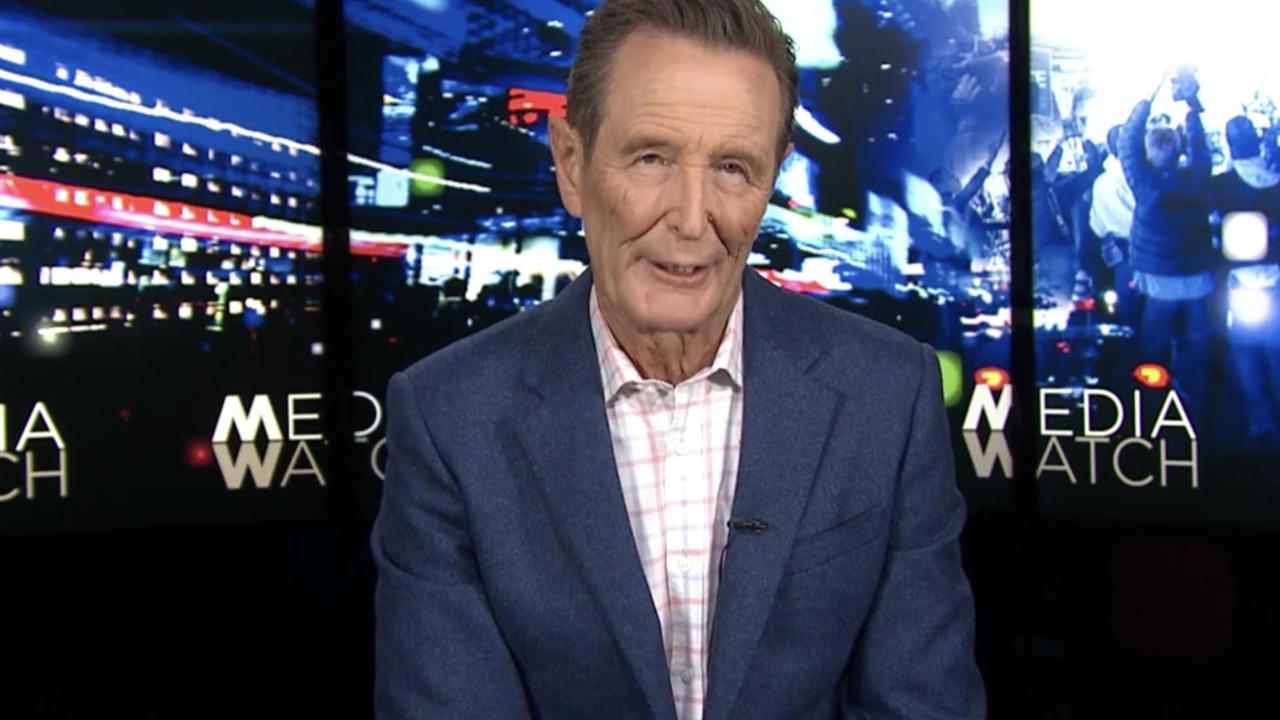
That squinty "host" above is a Leftist, has always been a Leftist and will always be a Leftist. And Leftists are feline predators that do not change their spots. And from Karl Marx on, Leftists have always despised Jews
Jewish leaders have expressed outrage at claims made by the ABC’s Media Watch program that the public broadcaster has been the only news outlet to “give equal coverage to both sides” in the Israel-Hamas war.
On Monday night’s episode of Media Watch, host Paul Barry referenced “preliminary analysis” by the Islamophobia Register that showed the ABC was the only news organisation to have provided impartial coverage of the conflict.
The analysis, by academic Susan Carland for the Islamophobia Register, was based on an undisclosed number of Instagram posts by media outlets.
The research found that the social media posts by The Australian and 9News “all humanised Israeli victims but not Palestinians”, according to Media Watch’s interpretation of Dr Carland’s report.
“So, what do we conclude from all this? Well, simple, really,” Barry told viewers.
“The big Australian newspapers we looked at have failed to cover the Gaza conflict fairly, in terms of giving equal weight to the victims on each side, with the Nine papers (The Sydney Morning Herald, The Age) not too bad, but The Australian failing in spectacular fashion.”
The Media Watch host praised other news sources, including Al Jazeera (which is funded by the Qatari royal family), for covering “human stories of Palestinian suffering”.
But when contacted by The Australian, Dr Carland said her report clearly stated the research “should not be taken as, a definitive analysis of Australian media bias against Palestinians”.
“As this research is limited to the Instagram posts of the six outlets, this report is also not a definitive account of the outlets’ reporting on the Israel-Gaza war, and does not comment on fairness or equality found in any of their other stories on the Israel-Gaza war on their other platforms,” the report says.
Asked if she felt that Media Watch had misrepresented her research, Dr Carland told The Australian: “I cannot comment on the intentions of Media Watch. That would be a question best posed to them.”
NSW Jewish Board of Deputies president David Ossip told The Australian that the Media Watch story was “a joke”.
“If the subject matter wasn’t so serious, Media Watch’s report would have simply been parody,” Mr Ossip said. “Relying on sources such as the rabidly anti-Israel Al Jazeera and other highly partisan publications as evidence of the purported bias of legitimate news publications doesn’t pass the sniff test.”
Colin Rubenstein, executive director of the Australia/Israel & Jewish Affairs Council, said: “It’s no surprise that an ABC program like Media Watch finds The Australian’s coverage of the Israel/Hamas war to be appalling, given that much of the ABC seems to think the story of the war should be told overwhelmingly from a Palestinian perspective.
“It’s also predictable that Media Watch neglected to mention failings by much of the Australian media to the detriment of Israel, such as the failures to cover the links between journalists and Hamas, or UNRWA and Hamas, (stories) that were highlighted by The Australian, which was typical of its overall balanced, comprehensive and factually accurate coverage.”
Media Watch’s executive producer Tim Latham said in a statement: “We stand by our story and what we put to air.”
*****************************************************
‘We made the wrong decisions’: COVID-era mass school closures condemned
Mass school closures that stretched for months during the pandemic were unnecessary and led to a cascade of social and educational problems that threaten a generation of Australian children, top education experts say.
Governments have failed to examine the fallout from one of the most far-reaching decisions prompted by COVID-19, which disrupted the schooling of millions of students and resulted in an attendance crisis and persistent behavioural issues.
A panel of pre-eminent Australian education experts has flagged the profound impacts that school closures during COVID-19 have had on students’ education and wellbeing.
They called for a plan for future closures that puts the long and short-term needs of children at the centre of policy decision-making.
The Sydney Morning Herald convened experts on education and child social development to assess the impact of COVID on students after the federal government failed to include the decision to close schools in its independent inquiry into how the nation managed the pandemic.
They included the chair of the NSW education regulator, Peter Shergold, and the National Children’s Commissioner Anne Hollonds.
Schools in NSW switched to remote learning in 2020 and 2021. Strict infection controls continued to interrupt learning and social interaction for months on end.
The COVID fallout: Education
This month marks four years since China’s COVID-19 outbreak was deemed a public health emergency of international concern, heralding the start of a traumatic period many of us would prefer to forget. While a federal government inquiry is examining some national responses to the crisis, key decisions made by states will not be properly scrutinised.
The Herald is concerned our political leaders have not adequately studied the lessons – good and bad – of our most recent experience, and we plan to ask tough questions over the coming months about the pandemic’s impact on education, health, border closures and lockdowns and policing. This is the first of our three-part series looking at the impact of COVID on education. The forum discussions with nine expert panellists were broken up into two sessions: one examining the wellbeing and behaviour of students, the second on academic and learning disruption.
The panellists warned the aftershocks of the decision to close schools are still being felt in classrooms, playgrounds and homes. Some of the worst aspects were the skyrocketing truancy rate, school refusal and significant issues with student discipline and distraction in the classroom, and self-regulation in the playground.
Shergold, a former top public servant who led an independent review into the pandemic in 2022, said the lingering effects of school shutdowns on students, teachers and parents underscored the importance of scrutinising unilateral decisions by state governments to mandate remote learning.
In September, the federal government announced a long-awaited inquiry into the pandemic response, but school closures are not included in the terms of reference. Former NSW premier Dominic Perrottet has previously joined health experts in urging the inquiry to examine the social damage and repercussions of long periods of remote learning.
“The danger of school closures, which we always knew, was that it was going to accentuate disadvantage,” said Shergold. “After the closures in early 2020, we made the wrong policy decisions about closing school systems.”
In NSW, more than 1.2 million students either learned remotely or had minimal supervision in schools for more than five months. Schools were shut down between March and May in 2020, and then again in 2021 from July to the end of October. Hundreds of schools and childcare centres were closed again in the following months.
Unlike in Victoria, there was minimal supervision at schools for students, but attendance was discouraged. Shergold said the unity of national cabinet fractured as state governments forged ahead with decisions to shut schools, despite the federal government urging parents to send their children to classes.
State decisions were often politically driven, some panellists said, ignoring the risk of long-lasting impacts on young children and teenagers, especially the most disadvantaged students who were most affected by the closures.
“It was clearly the Commonwealth position to keep school systems open,” Shergold said. “It was states that were unpersuaded, and that’s why this present inquiry seems so bizarre that we’re not going to address their policy responses. It’s a crucial part of the story and ensuring that we’re better prepared for the next pandemic.”
He said early in 2020 there “was a fog of war, and there was ill preparation – in Australia between federal and state governments – for a pandemic”, noting it was understandable schools closed in the first months.
But after evidence emerged that children were less likely to spread the virus, and schools were not transmission hotspots, the system-wide closures were unwarranted, he said.
“We had Treasury pleading with us not to shut school systems. Part of the issue was that parents started to voluntarily withdraw their children from schools, and they were voting with their feet ... I think NSW reacted to that,” he said.
The state government also faced persistent pressure from the NSW Teachers Federation to shut down in-person classes, leaving minimal staffing to support essential frontline services workers. Some of Sydney’s private schools began to defy official advice and close, putting pressure on other systems to follow suit.
The advice provided by chief health officers was that attending school represented a low health risk to students, and studies in 2021 reaffirmed transmission between children in schools was minimal.
Hollonds agreed the first closure early in the pandemic, which lasted seven weeks, was unavoidable, but the longer closure of 2021 was unnecessary.
“Maybe they should have only been short term, where there was a ‘hot-spot’, not the 15 weeks we saw across all of NSW,” she said.
She said the public debate over school closures not only ignored the needs of children, but demonised them as “germy super-spreaders”. “It felt Dickensian, some of that discourse,” she said.
Shergold noted that the shift to online learning was implemented well across systems and schools, and effort was made to address the digital divide. But he emphasised that after the first mass closures a more targeted approach should have been taken to only close individual schools when needed.
*************************************************
Universities attack Labor’s new industrial relations law
Universities have come out strongly against Labor’s new “intractable bargaining” provision, which prevents industrial relations umpire the Fair Work Commission from reducing workers’ conditions when it resolves a bargaining impasse.
The provision – part of the Fair Work Legislation Amendment (Closing Loopholes No.2) Bill 2023, which has been passed by both houses and is awaiting royal assent – allows the Fair Work Commission to arbitrate if an enterprise agreement has not been reached after at least nine months of negotiation and there is no prospect of agreement.
An amendment, driven by the Greens and accepted by Labor, means the commission cannot make a ruling about any disputed matter that would reduce an existing employee condition.
The Australian Higher Education Industrial Association, which is the employer association for 33 universities, says the amendment means unions will be able to effectively “grandfather” parts of an enterprise agreement that are no longer fit for purpose and that inhibit productivity gains.
“The new law effectively strips the Fair Work Commission of the ability to genuinely address productivity-related issues,” AHEIA executive director Craig Laughton said.
“The change to the law will result in a ‘term by term’ focus, resulting in antiquated and unproductive provisions being retained to the detriment of staff and employers.”
Mr Laughton said all negotiation involved compromise and trade-offs.
“From now on, this will be limited by law in Australia, with one side calling the shots and an umpire without a whistle,” he said.
“If the independent umpire can’t run community standards across the sector, which is effectively what this prohibition does, how do you get the union to the table to bargain?”
Mr Laughton called for the law to be reconsidered.
However, National Tertiary Education Union general secretary Damien Cahill welcomed the amendment and said it was a major win for workers.
“Now workers will have a guarantee that any final call the workplace umpire makes when arbitrating bargaining disputes will leave no one worse off,” Mr Cahill said. “These changes will make it harder for vice-chancellors and senior executives to game workplace laws in attempts to drive down pay and conditions.
“Unfortunately, we were seeing some universities stalling negotiations in an attempt to push for arbitration.
“The NTEU exposed this agenda last year and it is good to see the government has responded with much-needed changes.
“Now workers will have a guarantee that any final call the workplace umpire makes when arbitrating bargaining disputes will leave no one worse off.”
But Mr Laughton said the new law would allow unions to hold up negotiations in the knowledge they had nothing to lose if the matter went to arbitration.
The new provision will be tested when the next round of university enterprise bargaining starts next year.
*****************************************************
Chris Bowen is way off track on drive for new fuel standards
Climate Change and Energy Minister Chris Bowen is not someone who allows the grass to grow under his feet, or under the industrial-sized solar panels he is so keen to promote, for that matter.
Early this month, he announced the government’s intention to introduce a New Vehicle Efficiency Standard for Australia. At the time, he told us Australia and Russia are the only advanced economies in the world not to have such a policy.
After the standard is implemented here, Russia will be on its own – something that’s not likely to worry the Russian government unduly. Bowen is targeting a start date of next year.
As is the case with many policy settings, the devil is always in the detail. It’s not just about having or not having an efficiency standard; it’s also about the parameters of the policy, other related measures and timing. Bowen plans to accelerate the implementation of the standard here by insisting we catch up to the US by 2028. This is the first problem with Bowen’s announcement.
How these schemes work is that an overall efficiency standard (typically set in terms of CO2 grams per kilometre) applies across a manufacturer’s entire fleet for sale. On average, the standard must be met, with some vehicles above the standard and others below. Credits are generated if the standard is more than met and these are tradable. For those who cannot meet the standard, these credits can be bought.
The expectation is that manufactures will seek to impose higher prices on vehicles that are above the standard and lower prices for those below it.
In other words, the standard induces price cross-subsidisation so the overall standard can be met and penalties won’t be payable. Electric vehicles are highly prized in this setting. But for those models of cars with above-standard efficiency, prices will inevitably rise.
Now if you think this is suppressing consumer sovereignty, you wouldn’t be wrong. Instead of allowing car buyers to take into account fuel efficiency as well as other characteristics, this policy deliberately restricts consumer choice to meet the government’s target. Bear in mind here that the most popular vehicles in Australia – the Ford Ranger ute and the Toyota HiLux – will massively exceed the new standard. There is speculation of price increases of between $10,000 and $25,000 for some models.
Bowen claims everyone will still be able to buy their preferred car; indeed he expects the choice of vehicles to expand even though Australia is known to be one of the best catered-for markets for right-hand-drive cars in the world.
The fact that there is little demand for some very small, fuel-efficient vehicles – those that are common in Europe and the UK – is mainly due to their unsuitability for families as well as being underpowered for Australian conditions. Bear in mind here that in Europe and the UK, petrol/diesel is highly taxed. The high price of petrol/diesel has been a driving force for many years determining the kinds of cars these citizens purchase. And, of course, many of these countries are the size of a handkerchief compared with Australia.
Using his department’s assumption-driven modelling, Bowen is predicting Australians stand to save about $1000 per vehicle per year by 2028. If that sounds unconvincing, it’s because it is. For starters, most people only buy new cars occasionally.
There are also some large leaps of faith about the take-up of electric vehicles – the real heart of this new policy – and the fact that it should be cheaper to charge a vehicle at home and drive a certain distance compared with filling up an internal combustion engine vehicle. Recent data point to it now being more expensive to use paid-for fast chargers between Melbourne and Sydney than driving a petrol-fuelled car.
(A complication that Bowen chooses to ignore about this policy is the fact that EVs use electricity generated still mainly from coal. The modelling doesn’t take into account this second-round effect.)
Had his department been closely watching overseas developments, he would also have been aware of significant problems emerging in a number of countries in relation to vehicle emissions standards, particularly the US.
Notwithstanding the extremely generous subsidies available to EV purchasers and the fact that a number of the car manufacturers have aggressively switched to EVs – think here Ford, General Motors and Volkswagen – EV sales have stalled. There are said to be row upon row of unsold EVs in dealers’ premises in the US and the dealers are now loudly complaining. The Biden administration is now considering watering down its emissions standards.
It turns out early adopters were keen to buy EVs – many had another vehicle in their garage – but demand has since slowed. The combination of high purchase prices, costly insurance and poor resale values, as well as ongoing issues with charging, has contributed to this outcome. (In the UK, this trend is, unbelievably, being blamed on an article written by Rowan Atkinson.)
Some of the car companies are now scrambling to change direction, with GM reintroducing a plug-in hybrid model to kickstart sales as well as deal with the efficiency standard. Toyota has emerged a winner in this race, with its chief always sceptical about rapid consumer acceptance of EVs. Toyota has been a substantial investor in hybrid technology and its hybrid vehicles have emerged as commercial winners in a number of countries.
Another clear trend in the motoring world is the increasing dominance of Chinese car manufacturers, particularly in the EV space. Their factories are churning out reasonable quality cars at much lower prices than the car companies that have dominated world sales for decades. Volkswagen, in particular, is under pressure as its strategic tilt to EV production fails to meet commercial expectations. (The fact that Chinese vehicles are constructed using cheap coal-fired electricity is again something that policymakers such as Bowen chose to ignore.)
So what is really driving Bowen’s decision to run with this new vehicle efficiency standard with its accelerated timetable? There are number of factors at work. The first is that some of the car companies and activists have been strongly pushing this standard. Volkswagen, which was caught up in a significant emissions misreporting incident, is very keen to see the new standard implemented.
Secondly, Bowen now realises the government’s stated emissions reduction target of a 43 per cent cut by 2030 won’t be met with current policy settings and the delayed rollout of renewable energy and new transmission lines. He is seeking some quick abatement from road transport to get closer to the target.
As for the conclusion that the policy will return $3 for every $1 spent, pull the other one. I can come up with an equally plausible set of assumptions that leads to a negative net return. When the government report makes the fatuous claim that “the projected impact of (car) emissions on Australian’s climate outlook cannot be ignored”, you know the bureaucrats are talking through their hat. (Hint: it’s about global emissions.)
Bowen might also be well-advised to admit that Australians love their cars.
************************************
Also see my other blogs. Main ones below:
http://dissectleft.blogspot.com (DISSECTING LEFTISM -- daily)
http://antigreen.blogspot.com (GREENIE WATCH)
http://pcwatch.blogspot.com (POLITICAL CORRECTNESS WATCH)
http://edwatch.blogspot.com (EDUCATION WATCH)
http://snorphty.blogspot.com/ (TONGUE-TIED)
http://jonjayray.com/blogall.html More blogs
***************************************
Tuesday, February 20, 2024
Young menaces, helpless police and no solution
What is not said below is the the offenders are Aboriginal. Taking any measures against them would lead to cries of "racism"
It’s 8pm and the dust is settling across the ranges of Alice Springs when inside the town’s industrial area a group of kids arrive at the Pickles Auctions car yard.
They’re about to steal a car and lead police on a dangerous chase – an all-too-familiar scene here, where children as young as 10 are caught behind the wheel and immediately returned to a “responsible adult” – only to continue to reoffend.
Dozens of cars in the yard are protected by a 2m-high fence topped with razor wire, but the kids have their eyes on one in particular. It’s a Toyota Rav 4 they’ve stolen once before.
The first time ended badly – the car smashed up and ultimately hauled into the car yard, where it was written off by the insurance company.
But the car is drivable – and the kids still have the keys.
Jumping the razor wire fence, they climb into the SUV and drive it headlong into the heavy metal gate. It takes seven attempts to get through.
Soon the car is heading towards the centre of town.
It’s a pattern the residents of Alice Springs are well and truly used to. On one night last December, eight vehicles were being driven around town by out of control children and teenagers.
It’s just over 12 months since this city became the focus of national attention over out-of-control crime, but on the ground, locals say it’s never been worse.
In the early hours of Wednesday last week, there are four boys in the car: one aged 13, two aged 11, and the youngest just 10.
The boys are yelling and screaming from the vehicle, as they speed through town.
The driver can barely see over the steering wheel, the car mounting roundabouts, careening through red lights and on the wrong side of the road as the passengers hang out the windows.
Helpless police sit in their cars and watch as the kids perform donuts on the council lawns.
“You’re going to kill someone, stop,” one officer yells from his car as he flashes his torch at them.
Eventually police try to contain the vehicle with spike strips, but report that nearby youths on foot are tipping off the occupants about the spiking locations.
The vehicle is so badly damaged it struggles to reach its maximum speed, but on other occasions, cars have been clocked at more than 100km/h in some parts of town.
Just before 11pm, the boys abandon the vehicle outside K-Mart.
“With precision and skill, police located and apprehended four youths, aged between 10 and 13,” police say in a statement the following day.
The two 11-year-olds and the 10-year-old are conveyed to their homes and “handed over to a responsible adult”.
The 13-year-old, who was charged with theft, driving a motor vehicle without consent and damage to property, appears before a court the following afternoon. It’s his first time before the court. He sits there, apparently bored, running his hands through his hair. He does his best to avoid eye contact with anyone in the room as a police officer stands beside him.
In applying for bail, the court hears there have been three domestic disturbances at his proposed bail address within the last month.
His family and another family are also having a dispute.
The following day, he withdraws his bail application. He’d rather stay in jail than live at an alternative bail address in a remote community far removed from Alice Springs.
On average, there were 39 vehicles stolen every month in Alice Springs last year. Many of these vehicles ended up abandoned in the desert after they had been taken for a joyride or used in a ram-raid – often at a liquor store.
Northern Territory Country Liberal Party senator Jacinta Nampijinpa Price says entire communities are being left to suffer and Aboriginal children are “fast-tracked into a life of crime and incarceration”.
“This is what happens when children are left neglected, in dysfunction, without the care and supervision they deserve,” Senator Price says.
“This is the result of division, of a new apartheid driven by Labor and their progressive Green allies so they force their agenda onto guilt-ridden Australians.
“If you really want to close the gap, we need less grandstanding in Canberra, and more action on the ground.
“To get real solutions, we need to hold people responsible and enforce consequences.”
A month ago a child care centre was placed into lockdown due to “unsettled protests and riots” in the CBD, with some people armed with weapons.
One late-night CBD proprietor – who asked for his name to be withheld for fear of reprisal – says the situation on the street is “getting worse day by day”.
“They want to kill people, there are public beatings and fights almost every night,” the business owner says.
“They need to do something, the government, otherwise everyone will be leaving here.
“It’s worse than last year, it’s getting worse day by day, they have to do something for the kids.
“This year I lost a lot of friends (who moved away), even my family is worried, they say ‘what am I doing here?’,” the person says.
In April last year, this journalist befriended a group of youths in the early hours of the morning on the streets of Alice Springs.
Soon after, the topic of conversation turned to stolen cars.
They surrounded my car, and joked about stealing it and taking it for a joyride. They took a great interest in my cameras, too, while keeping a watchful eye out for police.
“I don’t give a f..k, I can do anything before I become a man,” one very young boy said.
“Mister, mister, look here, can you see it?” another asked, as he showed me footage from inside a stolen car. “That’s me at the front, brother.”
“F..k the police, FTP, motherf..ker,” another said as they started playing American rap music.
They continued to gloat about breaking into homes and businesses, using tools such as screwdrivers and angle grinders, and claiming they’ve been to “juvie” for months at a time,
They started begging for a lift, pleading that it was cold. “We’ll go try steal a car,” one said.
When we parted company it was 4am – and their search for trouble seemed as if it still had a long way to go.
***********************************************
Eating green ideology: official diet advice to warn of climate impact
The federal government’s official advice on diets will now incorporate the impact of certain foods on climate change, sparking outrage from farmers who fear it is driven by an “ideological agenda” against red meat.
It could lead to consumers being told to reduce steak and lamb chop intakes in favour of alternatives like chicken, which some scientists say has a lower carbon footprint.
Red meat producers are concerned that the move by the National Health and Medical Research Council to incorporate environmental sustainability into Australian Dietary Guidelines will be based on “misinformation” and present an incomplete picture about the industry’s effect on the environment. They have called for it to be scrapped.
The statutory authority’s dietary guidelines expert committee says the change is based on “stakeholder feedback” and has already started setting up a sustainability working group to help its review of the 2013 guidelines, due by the end of 2026.
Red Meat Advisory Council chair John McKillop accused the NHMRC, which is responsible for funding medical research and providing health and nutrition recommendations to the government, of straying beyond its remit. “These developments are an overreach by the dietary guidelines expert committee that go well beyond the policy intent of the Australian Dietary Guidelines to provide recommendations on healthy foods and dietary patterns,” he said.
“The red meat industry has a strong story about sustainability, so our concerns are not because we believe it’s a weakness but because it’s not the role of the dietary guidelines nor is it the expertise of the dietary guidelines expert committee. The nation’s dietary guidelines should be focused on promoting public health, preventing chronic diseases and ensuring that all Australian have access to accurate and reliable information about their basic nutritional requirements.”
Sustainability was included in an appendix of the previous guidelines, but the expert committee says “sustainability messaging should be incorporated within the revised dietary guidelines, and not included as a separate section within the appendices”.
Mr McKillop said expanding the scope of the dietary guidelines into other non-nutritional topics would undermine their purpose and the public’s confidence in them. “This is going to make clear and simple nutritional messaging even more difficult,” he said.
RMAC will ask the NHMRC committee to reconsider the change to the guidelines. “If they refuse, we’ll be asking the federal government to intervene as it’s starting to look like the process is running off the rails,” he said.
“The dietary guidelines review process must not be allowed to be used as a vehicle to drive ideological agendas at the expense of the latest nutritional science.”
The dietary guidelines expert committee has defined sustainable diets as being “accessible, affordable and equitable diets with low environmental impacts”.
In a statement, the NHMRC said including sustainability followed a “stakeholder survey” in which one in three people surveyed listed it as a priority.
“While the 2013 guidelines included messages about the environmental impact of food choices, the placement of the messages in an appendix has made them easy to overlook,” a spokesman said.
“Stakeholder feedback suggests there is low awareness of their existence. The revision of the guidelines provides an opportunity to improve integration of messages about food sustainability into the guidelines.”
The organisation rejected the suggestion that incorporating sustainability messaging would undermine public confidence.
“Developing or updating NHMRC guidelines involves a thorough review of the evidence, methodological advice on the quality of these reviews, drafting of the guidelines, public consultation and independent expert review of the final guidelines,” the spokesman said.
“The dietary guidelines expert committee advised that recommendations for dietary patterns and food groups should firstly consider health impacts in the Australian context, followed by consideration of sustainability and other contextual factors,” the spokesman said. “This is consistent with how sustainability has been incorporated into dietary guidelines in other countries.”
Central Queensland cattle farmer Mark Davie said industry concerns were heightened by perceived misinformation about the health impacts and sustainability of red meat production permeating media, public policy and nutritional advice.
Mr Davie, who chairs the Australian Beef Sustainability Framework, questioned how the NHMRC could measure one food source against another while still accounting for benefits to things like soil or biodiversity.
Meat producers are concerned that an updated version could follow rhetoric from organisations like the UN Food and Agriculture Organisation, which advocates for reduced livestock grazing.
**************************************************
Unaffordable green dream blacked out by reality
When Craig Emerson has finished working out how much Woolies is gouging us for a litre of milk, perhaps he might turn his attention to the exorbitant price of electricity.
The Prime Minister’s price-gouging tsar might ask why energy companies were cashing in on the misery of Victorians last Tuesday by charging up to $2225.50 for a MWh of electricity.
Origin Energy chief executive Frank Calabria joined a conference of investors last week to announce underlying profits of $747m for the first half of the year, up from $44m a year earlier. Origin had grabbed a share of Tuesday afternoon’s bonanza by cranking up its gas-peaking plant at Mortlake.
Profiteering, raising prices at times of scarcity or emergency, would be frowned upon in other circumstances. Not in the National Electricity Market, however, where the fluctuating five-minute spot price balances supply and demand 24 hours a day.
Without it, we could expect many more unserved energy events, as the Australian Energy Market Operator initially described the collapse of half of Victoria’s electricity grid, leaving 540,000 customers powerless, many of them for days.
Like soldiers, doctors and others who run a daily risk of messing up people’s lives, the energy business has its dehumanising euphemisms to describe the things that cause collateral damage or adverse events.
On Tuesday, 90,000 customers were caught in friendly fire when the energy operator deliberately cut their power. The load shedding was vital to cover the drop in supply caused when six giant transmission towers on the state’s main 500kV transmission line buckled in high winds, knocking Victoria’s largest generating plant offline.
Why a break in the line near Geelong would cause the safety switches to trip at Loy Yang, 230km away, is one of life’s mysteries. It’s like asking how a butterfly flapping its wings in Brazil can start a tornado in Texas.
Weather and energy grids are chaotic systems where fixed laws govern complex interactions and feedback loops but lead to seemingly random outcomes. As the late Australian scientist Robert May once said: “Simple models can help us understand complex systems, but they are not a substitute for understanding.”
That’s why a prediction that the average household energy bill will fall by $275 over three years by installing more renewable energy should have been treated with a bucket of salt, even if, as Anthony Albanese claims, it was based on the most ambitious modelling on anything by any opposition party in the 120-year history of the commonwealth.
It is why you can’t draw up a grand plan for a carbon-free electricity grid on a whiteboard in Sydney and expect it to work.
The task of grid engineers is not to design the perfect system but to manage risk. Their task does not stop when they’ve linked enough generators to supply the expected demand. They should follow the example of John Bradfield, who over-engineered the bejesus out of the Sydney Harbour Bridge, which today supports a load he might not have imagined.
The collapse of the steel towers on Victoria’s main transmission line is irrefutable evidence our current transmission network needs upgrading. We should be patient before rushing to build another 10,000km of transmission lines before we’ve found the money to give the 45,000km of lines in operation the Bradfield treatment.
We should review the costings and technical specifications of the ones we plan to build. If we want them to last at least 50 years, underground cables may be cheaper in the long run.
The over-engineering imperative also applies to generation. The relatively stable East Coast Grid that operated reliably before renewables came along had abundant excess capacity from coal generation.
There was no need to synchronise DC power from wind and solar plants so fewer things could go wrong. Transmission line runs were shorter and easier to manage. Inter-connectors played an ancillary role, keeping prices low by increasing competition and balancing supply between states. They were never designed to run at full bore, as the interconnectors do now for growing periods. The 2016 blackout in South Australia occurred after storms damaged transmission lines, and the Heywood interconnector with Victoria became overloaded.
Energy Minister Chris Bowen thinks the answer is to add more intermittent generation and hope we’ll have enough batteries installed in time to save our bacon when the sun fades, and the wind drops. Yet battery boosters should take a reality check. The NEM supplied 3.2TWh of electricity to customers in the last seven days. A mere 7.7GWh, or 0.24 per cent, was supplied from batteries. A little over two-thirds (64.4 per cent) came from coal.
This raises the question: How will the grid be managed if Australia’s largest generator, Origin’s coal-fired plant at Eraring, NSW, closes next August as the company says it will?
“Running baseload these days is just getting more and more difficult,” Calabria said last week, noting low prices particularly in the middle of the day, when wind and solar are eating coal’s lunch.
No problem, say the boosters. “Analysts have said that there is no need for Eraring to stay open, given the number of new renewable and battery storage projects currently under construction,” wrote the editor of Renew Economy last week.
Really? What analysts? When? Would they like to show us their modelling? Any government that bases its decisions on that kind of advice should be prepared for a very wild ride. Which is why NSW Labor Premier Chris Minns will do almost anything to keep Eraring open.
The NSW government has gone to drastic lengths to ensure the state’s remaining coal-fired power stations remain supplied with coal. Coalminers are obliged by law to reserve 10 per cent of their output for domestic generators and are forbidden from charging more than $125 per tonne.
On the one hand, the government gears policy to shut the coal generators out by privileging renewables in the NEM, pushing spot prices negative in the middle of the day. It subsidises unreliable, intermittent generators by allowing them to sell renewable energy certificates, so they can operate profitably even if spot prices fall below zero.
On the other hand, governments are using a mixture of pleading and coercion to keep coal-power stations open because even the starry-eyed people at AEMO know the chance of blackouts will increase in NSW if Eraring closes.
One hates to be the bearer of bad news to the Tesla drivers of Mosman, but around 80 per cent of your electricity on Saturday night was produced from black coal, more than a third of it from Eraring.
*****************************************************
SEQ youth crime: Chilling warning as ex-Army security guard patrols blue-chip Brisbane suburbs
Desperate residents in the blue-chip Brisbane suburb of Chelmer and nearby Graceville and Sherwood are paying thousands of dollars a week for a private security guard and highly trained dogs to deter youth criminals, accusing the government of doing “jack shit”.
Since taking neighbourhood safety into their own hands from mid-November 2023, they say the incidence of crime has dropped by up to 80 per cent.
A young father – who said he set-up the community effort after a Sherwood mother of three had her house broken into allegedly by juveniles wielding machetes – said the government and the courts’ response to youth crime was an “absolute joke”.
“The government is doing jack shit and people are fed up and scared,” he said.
“Once we started this and saw how much was going on, it was like, ‘holy shit, this is out of control’.
It comes as Premier Steven Miles said he wasn’t surprised by alarming findings in a poll commissioned by The Courier-Mail showing 45 per cent of Queenslanders don’t feel safe in their home or community.
“I know what that poll was telling us because I talk to Queenslanders and they have been saying the same thing to me,” Mr Miles said.
But the Sherwood father said it was clear the Premier wasn’t listening.
“The problem is getting worse but it is falling on deaf ears,” he said.
“It’s not the police’s fault, but we are refusing to stick our heads in the sand – only fools believe they won’t eventually become a target of youth crime.
“Every single night and early morning there is something happening, whether it’s groups of kids in dark clothing on foot or cars with lights dimmed and driving slowly scoping places out.”
The man, who has joined some patrols, receives daily reports from Walker Security, run by ex-army reservist Dan Walker, then passes updates to among 30 families each paying up to $100 per week for the service.
Mr Walker travels in a vehicle painted camo-style and with high-vis reflective white signage and spotlights – accompanied by one of three trained protection dogs, Dutch shepherd Xee or Belgian Malinois Mercy and Captain.
His texts include times and sightings such as this, on February 19: 0200: 5 x males in their teens, headed into park after seeing me; and this, on February 18: 2310: sedan turned around and left after seeing me on Laurel Ave.
Mr Walker said the crime statistics didn’t lie. “Houses were getting broken into left, right and centre but this is now becoming almost non-existent when I’m on duty,” he said.
“My high-vis vehicle lights up the whole countryside and as soon as the teens see it they bugger off – we don’t want to go hands on, we aim to be preventive, but I am more than willing to deal with a situation if it presents itself.
“Hence why I have the dogs, they will bite and hold if they have to.”
In Chelmer, where the median price for a four-bedroom home is $1.95m, figures from the Queensland Police Service online crime map show the number of offences reported in January and February are the lowest since November 2023.
In Graceville and Sherwood, February figures are the lowest compared with any month last year.
The Premier met with his Cabinet in Ipswich on Monday as community calls grow for increased police presence at the Redbank Plains Town Square shopping centre where grandmother Vyleen White was allegedly murdered.
“They have been concerned about community safety, especially concerned in the wake of that awful murder we saw at Redbank Plains just a couple of weeks ago,” Mr Miles said.
“I don’t think those survey results (of The Courier-Mail poll) are surprising.
“You’ll know that we’ve heard that message just by how much we’ve been focused on community safety, how much we’ve been talking about community safety.
“It’s my job to work with the police to rebuild that sense of community safety and that’s absolutely what we’re focused on.”
************************************
Also see my other blogs. Main ones below:
http://dissectleft.blogspot.com (DISSECTING LEFTISM -- daily)
http://antigreen.blogspot.com (GREENIE WATCH)
http://pcwatch.blogspot.com (POLITICAL CORRECTNESS WATCH)
http://edwatch.blogspot.com (EDUCATION WATCH)
http://snorphty.blogspot.com/ (TONGUE-TIED)
http://jonjayray.com/blogall.html More blogs
***************************************
Monday, February 19, 2024
Move to rename Magnetic Island National Park to Indigenous name, Yunbenun
Why are our names not good enough? Why must they be renamed to please a tiny minority? Does it in fact please anybody? Our names are easier to remember, for a start. All the change achieves is for Leftists to look good in their own eyes. It also deflects attention from history and its lessons. History tends to discredit what passes for ideas among the Left so they avoid it like the plague
A push by the Queensland Government to rename Magnetic Island’s iconic national park to an Indigenous name has been slammed as a ‘meaningless gesture’ by angry residents.
The Department of Environment, Science and Innovation (DESI) is proposing to change the name of Magnetic Island National Park to Yunbenun in a nod to traditional owners.
Yunbenun — pronounced Yuhn-beh-nin — is the preferred name for the island by the Wulgurukaba, or the ‘canoe people.’
It’s understood the proposed renaming relates to the national park only, not the name of the island itself, but many residents fear it’s only a matter of time before that changes too.
It comes after the state government reinstated Fraser Island’s Indigenous name, K’gari, in 2023.
Magnetic Island resident and writer Mary Vernon anticipates a massive local backlash to the renaming. “A lot of people are concerned about it because it’s just a meaningless gesture really,” she said.
“I think people are also worried about where it might lead and the possibility of renaming the entire island.
“I know there’s a group of people on the island who are very keen for it to be renamed, but they don’t represent the majority.”
In a statement, DESI said the proposed change to the name of the national park “recognises the rich cultural history of the area and the ongoing, deep connection to the island for the Wulgurukaba people.”
“DESI has recently unveiled an updated management statement for the national park, which outlines strategic directions for conserving key natural social and cultural values of the World Heritage Area,” it said.
“This includes Wulgurukaba cultural sites and places as well as the heritage-listed World War II fort complex, significant vine thickets and the iconic hoop pine of Magnetic Island.”
The public is invited to have their say on the proposed renaming of the national park between now and 5pm on April 19.
*********************************************************
#MeToo has driven young men into an opposing stance of bullish conservatism
Feminism has driven men and women apart -- a loss for both
We have a problem. As a species. Particularly in the western world. An ideological divide is opening up in many countries that goes to the heart of the human race, the future of us. It is a problematic divide between girls and boys, a widening philosophical gap in terms of aspiration/outlook that’s having impacts in many arenas. Not least in our high schools.
Recent research shows that girls are becoming more progressive; boys, more conservative. The rift is demonstrated in a study from the Gallup Poll Social Series, which shows that political ideology for females aged 18-29 in countries such as the US, Germany, the UK and South Korea is veering towards a small-l liberal ideology, but boys, in opposition, are cleaving to conservatism.
So, Gen Z is split. Two separate worlds. Of increasingly aware girls not afraid to call it out, and frustrated boys trying to deal with the new voices roaring at them. What will the future be, for all of them, together? How will these findings affect marriage rates, birth trends, the politics of the schoolyard, workplace relations, societal harmony? The new dynamic is already being demonstrated in elections here – the rise of the Teals was thanks in large part to women. The trend will continue as females search for representatives who understand them, listen.
And ahead, an even more dramatically cleaved society. I watch, perturbed, feeling for both sides. The impetus for the girls is towards fairness and equality; a move away from subservience. A natural step for the educated, and why the Taliban wants to stop females from being educated at all. Ignorance keeps the female subjugated, in servitude to the male; it removes the threat of women with a voice.
The impetus for boys, understandably, is to preserve what they had. Which was power and control, for millennia. My heart goes out to males because so many are hurting, raging, lost. Imagine it. A person born to be at the top of the tree, who has expected this all their childhood, and who steps into adulthood wanting this cosy arrangement to continue. But girls are now digging in their heels, saying enough, we want those chances too. Life’s been unfair for usfor a very long time, and we’re just as competent.
Why all this now, so fractiously? A theory. The very loud #MeToo movement, which galvanised young women, has driven young men into an opposing stance of bullish conservatism. We all have to work through it, with compassion and sensitivity, until equality is normalised and young males don’t see this new way of being as a threat. But it will take many years. Generations.
What we have now is the fulcrum, the tipping point. Boys flinching into conservatism, into what’s been comfortable and known throughout history; conservatism by nature means a cleaving to traditional models, the status quo. Progressivism is about social reform. Embracing it, facilitating it. Which is where a lot of educated young women are now and there’s no going back from it. #MeToo and the first and second wave feminist movements before it are exploding the parameters that kept females in their place.
Meanwhile boys and girls retreat into their siloed worlds online, with little crossover. There’s a lack of tolerance for the “other” on both sides, a scorning and sneering at these divergent environments. Some boys find their Andrew Tates to cling to, while for girls the messaging all around them is that they can now be anything, do anything, and as well as the boys. Female teens are unstoppable and school boys have to concede some of their traditional power. But it’s messy. I feel for teachers in co-ed high schools right now, the cauldrons of this vast societal shift. What’s needed, urgently, is empathy and understanding. From both sides.
**************************************************
Company has a $2bn pipeline of retirement living projects, but says it’s being stymied by red tape
The boss of EQT-backed retirement living provider Levande says the sector can play a central role in easing the country’s housing shortage, but onerous planning regimes in some states and hefty foreign investment charges in others are delaying much-needed investment in new developments.
Kevin McCoy, who took over as Levande chief executive a year ago, said the retirement sector itself was facing a ballooning shortage of units, and fast-tracking development would help to ease that shortage, while also releasing more homes into the general housing supply.
The Levande brand was created by Sweden-based investment firm EQT after it acquired Stockland’s retirement living business for $987m in 2022.
Mr McCoy said EQT was looking to spend up to $2bn on new developments and redevelopments of existing sites over the next five to 10 years as it looked to cater to the rising number of Australian baby boomers reaching retirement.
He said EQT would ramp up its investment in Australia over the next five years, by which time it hoped to deliver up to 800 new retirement units annually.
But several obstacles currently stood in the way, he said, including lengthy development approval processes in some states and foreign investment surcharges in states including South Australia and NSW.
“We think retirement living is perfectly placed as a product to tackle both availability and affordability,” he said.
“One of the biggest challenges is the amount of time it takes to get through development planning, getting bogged down in councils – in the construction of a village the longest period of time is spent on getting the planning permission.
“This is a system-wide problem and so I think we should look at solutions where all housing development can get a bit more nimble.”
Levande has a target of acquiring 20 new development sites within the next three years, following its first land acquisition earlier this month, when it snapped up a 1.75ha site in Bentleigh East, in Melbourne’s southeast, where it plans to build a new retirement community for around 400 residents.
Mr McCoy, who spent 10 years at Australian Unity before joining Levande, said a mix of infill and greenfield developments formed part of Levande’s aggressive expansion plan, as well as redevelopments of some of the 58 villages in its portfolio, which currently had an occupancy rate of about 95 per cent.
“Pretty central to it (strategy) is development, and in five to six years time we’d want to be bringing 500 to 800 units onto the market every year,” he said.
“The demographics are going the industry’s way. If you think of market penetration in Australia – about 8 or 9 per cent of people turning 75 are likely to choose retirement living as the setting for their next 10, 15, 20 years.
“If you think of the people turning 75 every week as the baby boomers come through, that’s growing exponentially, and so even if market penetration holds, that demand is going to go increasingly higher.
“And because there’s been a lag in construction for quite a few years, particularly around that Covid time, there’s a shortage of product.
“EQT has looked at the theme of ageing, and looked at the opportunity to invest, looked at the demographics in Australia, the product of retirement living, quite a big market take-up and that’s what they’ve invested in.”
Other projects in Levande’s pipeline include a $200m, 28-storey vertical retirement village and aged care facility currently under construction in Epping, in Sydney’s northwest.
Redevelopments of existing sites are also part of the expansion plan, while 10 villages have been earmarked for a complete knock down and rebuild, including three projects in Melbourne and Sydney that are in advanced stages of planning.
In Adelaide, Levande is considering investing up to $100m to convert a disused six-storey aged care facility at its Somerton Park site into retirement apartments.
Levande owns 11 retirement villages in South Australia, and is currently running the rule over three additional development sites in the state.
However, Mr McCoy said foreign investor surcharges on residential land and property purchases in SA and NSW made projects in those two states a little harder to stack up.
“Because we’re foreign owned we have to effectively pay double stamp duty on anything,” he said.
“We’re trying to work with policy makers and governments and treasuries on that.”
Recent figures released by the Retirement Living council suggest the sector is heading towards a 49,000 shortage of units by 2030.
Retirement Living Council executive director Daniel Gannon said it was important the federal government recognised the role retirement living could play in its ambitious housing plan, given Housing Industry Association forecasts that suggest the government’s promise to build 1.2 million new homes in five years is on track to fall short by 200,000 without radical policy reforms.
“Between now and 2030 the retirement industry requires 67,000 homes to be built to meet existing levels of demand from older Australians, with only 18,000 currently in the planning pipeline,” he said.
“These 67,000 homes would represent 34 per cent of the gap identified by the HIA, meaning retirement communities can help the government solve Australia’s housing supply problem.
“There are currently 2 million Australians over the age of 75, a cohort which is set to increase to 3.4 million by 2024. This demographic shift will cause further pressure on housing supply, healthcare systems and an already struggling aged care sector.”
The Retirement Living Council is also calling on state governments to set minimum land allocations for retirement communities in greenfield and master-planned developments, in a similar way to social and affordable housing targets.
************************************************
Doctors fearful as rising psychosis cases linked to medical cannabis
Years ago I knew some people who used pot a lot. Eventually they seemed switched off most of the time
A shocking numbers of patients who have never had a mental health problem in their lives are turning up to hospitals with psychosis after being prescribed popular “cure all” medical cannabis, psychiatrists warn.
And half of those patients are at risk of ending up with serious, lifelong conditions like schizophrenia.
In an extraordinary move, a Brisbane public hospital doctor has broken the silence on a disturbing trend showing an upswing in patients presenting with psychosis after recently being prescribed medical cannabis.
Research from Associate Professor Stephen Parker, psychiatrist and clinical lead at the Metro North Hospital and Health Service’s early psychosis service shows one in 10 people referred to his services at the Royal Brisbane and Women’s Hospital and Prince Charles Hospital for support had been prescribed medical cannabis in the three months prior, for issues like anxiety.
The doctor said that the public perception of medical cannabis production as a harmless panacea is understandable due to extensive marketing but the risks are under-recognised.
“Over the last 18 months I have seen more and more young people on a great life trajectory suddenly finding that their lives are falling apart after being prescribed high-dose cannabis,” he said.
The most common cannabinoids found in the cannabis plant are tetrahydrocannabinol (THC) and cannabidiol (CBD). THC is psychoactive, while CBD interacts with the immune and nervous systems.
The Royal Australian and New Zealand College of Psychiatrists Queensland Chair Professor Brett Emmerson is so concerned by emerging surges in psychosis cases he is calling for a ban on products that contain tetrahydrocannabinol (THC), which can lead to psychosis.
And the Australian Medical Association Queensland is demanding that the Therapeutic Goods Administration launches an urgent review into all medical cannabis products.
Professor Emmerson told The Sunday Mail that the problem is statewide and the college has waved the red flag “to every possible medical board”.
“When medical cannabis was first available it was for childhood epilepsy or pain from cancer now it’s regularly used for insomnia or anxiety when there are much better ways to treat these conditions. Now there are a large number of products available that have high levels of THC,” he said.
“I believe that a number of GP prescribers are being investigated by the Health Ombudsman,” Prof Emmerson said.
Medical cannabis dispensaries have become increasingly accessible via brief web consultations or via self-assessment of pre-existing conditions
AMAQ chief Maria Boulton said that members have been worried about the regulatory controls over the medical cannabis market for some time and have raised the issue with the chief health officer.
Medical cannabis was legalised in the state in 2016 and demand has soared. There are over 700 different products on the market with oils, tablets, lozenges and creams.
Dr Boulton said that there’s no evidence that medical cannabis is effective for some of the conditions it is being prescribed for and the effect on patients with some psychotic illnesses can be severe.
“We need the federal and state governments to work together, as the current controls do not appear to be working to prevent harm. We need federal action from the TGA to review these products,” she said.
A TGA spokesperson warned “the majority of medicinal cannabis products supplied in Australia are ‘unapproved’ medicines”.
“It is important to note that the nature of unapproved medicines is that the TGA has not evaluated them for safety, quality or effectiveness,” the spokesperson said.
Dr Laurence Kemp, Medical Lead for medical cannabis clinic Cann I Help said that there is a risk with medical cannabis with high levels of THC but it was the duty of the prescribing doctor to properly assess the correct levels for patients and also assess patients who may be susceptible to psychosis.
“Patient selection for medical cannabis is very important and there must be robust follow up arrangements. Some people do better with the CBD element in the cannabis. It is not something that is the same across the board for everyone,” he said.
The expert said that the black market for medical cannabis was bigger than the medical market and that was a real concern.
“We mostly prescribe for conditions like muscular pain, anxiety and insomnia and people can get some great results,” he said.
************************************
Also see my other blogs. Main ones below:
http://dissectleft.blogspot.com (DISSECTING LEFTISM -- daily)
http://antigreen.blogspot.com (GREENIE WATCH)
http://pcwatch.blogspot.com (POLITICAL CORRECTNESS WATCH)
http://edwatch.blogspot.com (EDUCATION WATCH)
http://snorphty.blogspot.com/ (TONGUE-TIED)
http://jonjayray.com/blogall.html More blogs
***************************************
Sunday, February 18, 2024
Hundreds more immigration detainees could be released in sequel to NZYQ high court ruling
The Albanese government has asked the high court to rule on a major case that could extend the NZYQ ruling on indefinite detention to release hundreds more long-term detainees, including refugees and asylum seekers.
At stake is whether people in immigration detention must be released if their refusal to cooperate has prevented them being deported.
The attorney general, Mark Dreyfus, has applied to remove a federal court appeal and have it heard by the high court to settle the legal uncertainty. The commonwealth will argue for the right to continue detaining those who refuse to cooperate.
In November, the high court unanimously ruled that immigration detention is unlawful where there is “no real prospect” of it becoming practical to deport the person “in the reasonably foreseeable future”.
In that case the solicitor general, Stephen Donaghue, had warned that up to 340 people in long-term detention may have to be released as a result. So far 149 people have been released.
Many of the remainder have been kept in detention because the government’s legal advice states the NZYQ decision does not require their release if deportation is being frustrated by a lack of cooperation, such as refusing to meet government officials from their country of origin or obtaining a travel document.
The federal court has issued contradictory judgments on that point, ordering the release of Ned Kelly Emeralds on 30 November but refusing release in the case of a plaintiff known by the pseudonym ASF17.
In both cases the government argued deportation had been frustrated – in ASF17’s case because he refused to meet with Iranian authorities to get travel documents.
According to the judgment of Justice Craig Colvin on 11 January, ASF17 submitted that he had “no obligation to cooperate and that he has good reasons for not” doing so.
ASF17 had said he “fears for his life if he is removed to Iran” because he is bisexual, Christian, a Faili Kurd and because he had opposed “the mistreatment of women by the government in Iran”.
Colvin ruled that ASF17’s continued detention was lawful, refusing his application to be released.
“Where ongoing detention is to arrange removal from Australia as soon as practicable, that lawful purpose is served for so long as there is a practicable way that the person may be removed, even if it requires cooperation from the detainee for it to be achieved,” he said.
ASF17’s lawyers signalled an intention to appeal to the full federal court, prompting Dreyfus to apply on Thursday to have the matter removed to the high court for final determination.
On Thursday the Coalition targeted the immigration minister, Andrew Giles, for a fourth straight day in question time over the handling of the NZYQ court case and subsequent releases from immigration detention.
The Coalition’s attacks have been fuelled by documents tabled in Senate estimates detailing the criminal offending of those released, and the fact that seven have been charged with breach of visa conditions and 18 with breach of state or territory offences since release.
In an unsuccessful motion to suspend standing orders on Wednesday, the opposition leader Peter Dutton accused Giles of “failing to know where released detainee criminals are”.
In question time on Wednesday and Thursday, Giles said that “the location of every individual in this cohort is known” because they are “continuously monitored” through conditions including ankle bracelets or a requirement to report their address to authorities.
He cited evidence from the Australian federal police at Senate estimates that there wasn’t “any difficulty knowing where they are”.
Dutton’s motion called on “the prime minister to dismiss this incompetent minister who has proven entirely inadequate to the task of keeping Australians safe” – reiterating a demand he made in November. The motion was defeated 87 to 53.
Earlier on Wednesday the leader of the house, Tony Burke, said the Coalition’s question time tactics were designed to avoid talking about the fact the “the government is making sure that people earn more and keep more of what they earn in tax reform”.
Burke said “of course” Giles retains his and the prime minister’s confidence, describing Giles “a serious immigration lawyer looking after these issues”.
In response to the motion, the home affairs minister, Clare O’Neil, noted Dutton had lifted a bar to allow NZYQ, the original high court plaintiff, to apply for a visa and had failed to deport him.
On Thursday Dutton continued to call for Giles’ resignation over his handling of the NZYQ case.
“You need somebody who can make tough decisions and can act in our national interest and keep Australians safe,” Dutton told 2GB Radio.
*************************************************
The lost presunption of innocence
In a sweltering, steamy Queensland summer, strange things happen when it gets too hot to handle. Violent crime was the front page of the Brisbane Courier Mail as the city was rocked by the senseless murder of a grandmother, allegedly by a 16-year-old on bail for a number of alleged offences. Several members of the Queensland Police were calling for tougher measures:
‘Legislation must be introduced to remove the offenders from society in the interests of community safety. It can’t go on…’
Yet the main headline could not have been more revealing in terms of the corollary to the Queensland Police position.
In one example, a woman was held in detention for 6 years without trial or conviction, while the Crown alleged she had overdosed her child with drugs in a smoothie. The Judge took the unusual step to instruct the jury that the prosecution case relied on the evidence of another child who was ‘mentally compromised’, allegedly had a motivation to lie about her mother, and had given inconsistent testimony.
When your only tool is a hammer, everything starts looks like a nail. According to the Australian Bureau of Statistics, 15,182 prisoners are held in Australian jails were on remand, held without trial or a conviction. That’s an annual increase of 16 per cent and represents 37 per cent of the entire prison population. In this respect Australia is following a trend in the USA where in some counties up to 90 per cent of prisoners are pretrial detainees, often unable to afford their bail.
Australia has imported and implemented American-style tribunals, where the normal rules of evidence don’t apply and power is ultimately left in the hands of the judge or magistrate to make a determination, based on the ‘balance of probabilities’. Often this leads to a reversal in the onus of proof, where the accused has to prove his or her innocence, rather than the prosecution proving guilt.
According to the Australian Attorney-General’s Department:
‘Some laws, commonly called reverse onus provisions, shift the burden of proof to the accused or apply a presumption of fact or law operating against the accused. Under international human rights law, a reverse onus provision will not necessarily violate the presumption of innocence provided that the law is not unreasonable in the circumstances and maintains the rights of the accused. The purpose of the reverse onus provision would be important in determining its justification. Such a provision may be justified if the nature of the offence makes it very difficult for the prosecution to prove each element, or if it is clearly more practical for the accused to prove a fact than for the prosecution to disprove it.’
In 2023 there were 193 homicides in Australia, meaning 79 individuals were held in detention without trial or conviction for every 1 murder. According to the Australian Institute of Criminology, 50 per cent of suicide victims were on remand at the time of their suicide. Suicide is the leading cause of death in Australia under the age of 45 and in 2023 there were 798 deaths from suicide according to the Australian Institute of Health and Welfare.
This means of the 15,000 or more individuals held in Australian jails without trial or conviction, 400 are likely to die from suicide. Twice as many individuals held in remand will die from suicide as a result of their experience as there are murders in the entirety of Australia. A person is 41 times more likely to die from his or her own hand than from an intimate partner. Sometimes we have to ask whether the cure is worse than the disease? Sometimes a bigger hammer is not the answer.
In Australia, over 90 per cent of prisoners are male and evidence shows that children with absentee fathers are 3 times more likely to commit crime and to spend time in jail themselves. In Queensland every year there are twice as many Domestic Violence Orders (DVO) issued than there are male births. There are also more than twice as many DVOs issued than there are marriages. Since the introduction of the new legislation in 2012 the number of DVO violations has increased from around 65 per cent to over 95 per cent. A DVO violation potentially constitutes a criminal act and often fathers desperate to see their children unwittingly end up with a criminal conviction through such a violation. Even an innocuous inquiry about whether a rates bill has been paid may constitute a criminal act under the legislation. Normal behaviour is becoming increasingly criminalised.
Queensland has one of the highest rates of incarceration in the country, with many prisoners being held in private jails owned by large multinational corporations from the UK and the USA returning multi-billion dollar returns. Young men are voting with their feet with almost a third choosing to remain single. Indeed, it is becoming increasingly difficult to see how the institution of marriage, our cultural bedrock for more than 2,000 years, can survive such weight of legislative scrutiny. The exercise of coercive control is ubiquitous in our increasingly bureaucratised society, yet it is in only in coupled relationships that it is deemed to be a criminal offence requiring extensive jail time.
Whilst the principle of the presumption has been sacrificed on the altar of ‘absolute safetyism’, there has been no reduction in intimate partner homicide in Queensland, no change in the incidence domestic violence, but a surge in prisoners held on remand without conviction and an unprecedented surge in youth crime throughout the state. There is a sense that the current system is exacerbating crime, if not entrenching the problem. Furthermore, there is strong evidence that individuals held in remand become increasingly likely to commit crimes, particularly sexual offences.
The corrosive abrogation of the principle of the presumption of innocence has been relentless so that today it effectively only applies at criminal trial. The consequence for society is the erosion of our democratic rights and freedoms. Where we once believed we elected government to serve its people, it is clear that government regards its entire people as potential criminals. Just as the onus of guilt has reversed, so too has the position of government to its people.
The vast majority of detainees accept criminal charges simply to get out of the system. Most buckle despite their innocence and accept a charge in return for ‘leniency’. In the current system it serves no purpose to expedite or resolve matters until the 11th hour because there are no pressures on the police to do so. Quite the contrary, exoneration poses a media hazard. Recently in New South Wales an innocent individual was awarded $150,000 costs by a judge after he had been held in pretrial detention for 18 months without bail.
In a rapidly changing world, it is becoming increasingly difficult to understand what actually constitutes a crime. As in medicine the number of diagnosis in the DSM catalogue of disease has increased inexorably over the years, so too the legislative burden expands relentlessly so that the space that remains in which to retain a normal life is becoming increasingly confined. To quote Martin Luther King:
‘Injustice anywhere is a threat to justice everywhere. We are caught in an inescapable network of mutuality, tied in a single garment of destiny. Whatever affects one directly, affects all indirectly.’
https://www.spectator.com.au/2024/02/the-presumption-of-guilt/
******************************************************University chiefs lecture schools on maths and science teaching
University chiefs have caned schools for failing to prepare “Zoomers” for tertiary education, with domestic enrolments diving 10 per cent as Gen Z teenagers shun study for gap years, jobs and travel.
As the Albanese government prepares to launch its landmark Universities Accord reforms, cash-strapped universities are demanding more financial assistance for students struggling to pay the rent during a cost of living crisis that is pushing poorer teenagers straight from school into the workforce.
University of Sydney vice-chancellor Mark Scott – a former teacher and director-general of the NSW Education Department – said schools were struggling with a shortage of maths and science teachers to prepare teenagers for university.
“Students at some schools are being discouraged from attempting that more demanding maths, perhaps not linked to the ability of the student, but more the availability of staff,’’ he said.
“There’s a chronic, entrenched shortage of mathematics teachers around the country now. I think the true shortage is often concealed because … there are plenty of PE (physical education) teachers who are being retrained in maths to just try and get a qualified teacher in front of the class.’’
Professor Scott said universities might need to offer more summer schools and intensive tutoring to get school leavers “up to speed’’ for university degrees.
“We are increasingly concerned, as we target students from low SES (socio-economic) backgrounds, that they are not getting the opportunity to study maths at a level that has been an important prerequisite for entry to some of our courses,’’ he said.
“There are a range of courses, from economics and business to science and engineering, that have required maths prerequisites, that we can see fewer and fewer students reaching because fewer students are doing maths at that advanced level.’’
Australian National University deputy vice-chancellor Grady Venville, a former high school teacher, said schools must ensure more students were taught maths and science at the highest level.
“We’ve got kids coming right through from primary school and falling behind, and when they get to high school … they’re often not encouraged or supported to do the higher level mathematics,’’ Professor Venville said.
“We don’t have enough highly qualified maths teaching staff (in schools), so that means it’s easier for the school to encourage the students to do an easier maths. What that does is narrow down the pipeline of students who can go into things like physics or engineering, pure mathematics and even our science subjects.’’
Professor Scott said his sandstone university – renowned for its medicine and engineering faculties – was considering removing the prerequisite for advanced high school mathematics for some degrees. “We wouldn’t be decreasing the standards for our programs, but providing more help for students … without watering down our courses,’’ he said.
“Perhaps more summer programs, more introductory programs, where the university takes on a greater responsibility to get students up to speed.’’
Professor Scott said the high cost of living was discouraging students from enrolling at university, or studying full-time.
He said the University of Sydney was lobbying the NSW government to grant it social housing development concessions to build more student accommodation.
“When I was a student here in the 1980s, some of the cheapest accommodation anywhere in the Greater Sydney area was surrounding the university,’’ he said.
“You could live cheaply in Glebe and Redfern and Newtown in a way that is often not possible now at all. We’re talking to our alumni about making more scholarships available that provide accommodation support.’’
Professor Venville said university students were taking longer to finish degrees as they juggle study with part-time work or travel. She said Gen-Zs, known as “Zoomers’’, seemed less mature than previous generations of university students and were keen to take a “gap year’’ after school.
In Brisbane, Griffith University vice-chancellor Carolyn Evans said schools were encouraging too many students to take vocational subjects, rather than the more difficult academic subjects.
“(This) means perhaps not as many people are as well prepared for university as they used to be,’’ Professor Evans said. “We’re quite concerned about the decline in the number of students taking high-level maths and some of the harder science subjects. There are a lot of applied subjects being done at school level, which are appropriate for some students. But they don’t necessarily get a really strong foundation to go on and do some of the things that we critically need in this country … like engineering, medicine and some of the health disciplines.”
Professor Scott noted that teenagers were dropping out of high school at the highest rate in 30 years. In public schools, 26.4 per cent of high school students had left before finishing Year 12 last year – up from 17 per cent in 2018, the Australian Bureau of Statistics revealed this week.
The latest federal Education Department data shows the number of students starting a degree fell 10.4 per cent last year to a nine-year low. First-year enrolments by domestic students fell 5.5 per cent between 2018 and 2022 – a trend that is sabotaging the federal government’s ambition to increase student numbers by one-third, to 1.2 million, over the next decade.
Federal Education Minister Jason Clare said skilling school-leavers for work was “not just the job of universities’’. “We need more people to finish school,’’ he said. “We need to fully fund all schools and tie that money to the reforms that will help kids who fall behind to catch up, keep up and finish school and then be able to go to TAFE or university.’’
Mr Clare said that “going to university opened up opportunities and makes you money’’.
***********************************************
Nickel isn’t worth a brass razoo without fossil fuel
There is an under-reported and avoidable economic tragedy occurring in our nation’s west.
Already 1000 nickel miners have lost their jobs and another 3000 face the same sad fate after BHP announced this week it may mothball its entire Nickel West operations. Many more small businesses and workers in the town of Kambalda (600km east of Perth) face economic ruin too.
These hardworking Australians should not be losing their jobs or businesses. But thanks to the ineptitude, naivety and cowardice of our mining and political leaders we risk losing an entire Australian industry to Indonesia.
Nickel West is one of the crowning achievements of our nation’s pioneers. In the 1960s, an Estonian migrant to Australia, Sir Arvi Parbo, achieved a superhuman feat. In just 18 months he and his team at the Western Mining Corporation built a mine, a refinery, a rail line and a town, and delivered nickel concentrate to Japan. Parbo’s team had to work fast because the ’60s boom in nickel prices was short-lived as nickel supplies from around the world competed to meet booming demand for stainless steel.
Under our Byzantine mining regulations we would not have finished counting the trees for the compulsory environmental survey in 18 months. Indeed, in later life Parbo said he would never have built his nickel mine under today’s regulatory conditions.
As in the ’60s, there has been a boom in nickel prices in the past few years, this time driven by electric vehicles (nickel is used in the batteries). BHP chief executive Mike Henry told the Financial Times in 2021 he wanted to weight “the portfolio towards future-facing commodities like potash, copper and nickel”.
Australia and Indonesia have the largest nickel reserves. BHP backed Australian nickel because Indonesia’s laterite reserves have lower nickel content and hence take more energy to extract. In BHP’s imagined brave new green world, climate-conscious customers were going to prefer to drive an EV – filled with Australian clean, green nickel – to their next Extinction Rebellion protest. BHP’s assessment looked safe when Indonesia signed up to net-zero emissions at the Glasgow climate conference in late 2021.
Indonesia then increased its use of coal by an astounding 32 per cent the year after Glasgow, enough coal to power five large coal-fired power stations. The International Energy Agency recently noted Indonesian “nickel production has become an important driver of coal demand”. Indonesia increased nickel production at an annual rate of more than 50 per cent last year. Prabowo Subianto, who claimed victory in Indonesia’s presidential election this week, has promised to continue the nickel policies of Joko Widodo’s government, and even expand them to bauxite and copper.
It is embarrassing that our corporate leaders could be so hoodwinked by the cheap talk at a climate conference. Thousands of Australians will lose their jobs because Indonesia builds coal-fired power stations and we do not.
That makes our political leaders complicit in this shambles too. Our state and federal governments sit back and let other countries take us for mugs. Other countries go nowhere near meeting their climate commitments while we honour them to the letter. We are losing our manufacturing industry thanks to the net-zero mind virus that deludes people into acting as if Australia alone can change the globe’s temperature.
To rub salt into this wound, the Labor government imposed a carbon tax on Australian nickel in July last year (the so-called safeguard mechanism). It may be too late to save Australian nickel jobs but the least Labor could do would be to belatedly exempt the Australian nickel industry from its carbon tax. I, and some of my Liberal and Nationals colleagues, have written to the Resources Minister asking her to do this immediately.
On coming to government, the Labor Party focused its mining policy on so-called critical (or strategic) minerals, which includes nickel. Labor has done nothing to attract new coal, oil or gas investment (even though these make up more than half of our mining exports). The (now broken) Labor promise to workers in fossil fuel industries was that it was OK if you lost your jobs because there would be lots of other jobs in nickel and other critical mineral industries.
As resources minister in 2019, I developed the nation’s first critical minerals strategy and signed the first agreement with the US on critical minerals. We should develop these industries, but we should not develop them at the expense of our coal, oil and gas sectors. And we won’t develop critical minerals, in any case, if we do not have affordable and reliable energy supplies. Mining (especially critical minerals mining) requires a lot of energy.
There is a reason BHP is not proposing to keep Nickel West open by converting all of its power needs to wind, solar and batteries. That is because renewable energy is not cheaper than coal-fired power. All the spin that “renewable energy is the cheapest form of power” just had a real-world test and it failed miserably.
The Labor government’s “all eggs in one basket” mining policy has been an abject failure. Even the Biden administration ignores its climate promises. Last year the US hit a record level of oil production and it is doubling its liquefied natural gas capacity across the next five years. Last year the US overtook Australia as the largest LNG exporter. The US was smart enough to take advantage of high oil and gas prices post the Ukraine war to attract investment. This Labor government has pushed away gas investors by imposing draconian price controls and red tape.
If the Australian government instead had rolled out the red carpet for gas, at least the retrenched nickel miners might have some other jobs to go to in Western Australia. Unfortunately, as gas prices fall we have missed the (LNG) boat. Lithium, the other great critical minerals hope, is also facing a slump in prices.
The worst sin that has caused this mess is cowardice. Many of our corporate and political elite know how mad our net-zero goal is. But few will say so publicly. They are worried they will lose their jobs, even though their cowardice will cost the jobs of many others.
The least the bosses could do would be to go at the same time as they lay off thousands of their workers. That would be the honourable thing to do rather than making their own workers pay the price for their errors. That would also deliver some accountability to ensure that our next leaders are more Arvi Parbo than Anthony Albanese.
************************************
Also see my other blogs. Main ones below:
http://dissectleft.blogspot.com (DISSECTING LEFTISM -- daily)
http://antigreen.blogspot.com (GREENIE WATCH)
http://pcwatch.blogspot.com (POLITICAL CORRECTNESS WATCH)
http://edwatch.blogspot.com (EDUCATION WATCH)
http://snorphty.blogspot.com/ (TONGUE-TIED)
http://jonjayray.com/blogall.html More blogs
***************************************
Subscribe to:
Posts (Atom)


 Evelyn Rae, a conservative Australian political commentator


 Margo Robbie -- a beautiful australian
 My son Joe at ANU
 One of the happiest pictures ever -- Cleo Smith, aged 4


